
The Abdication That Changed Everything
Inside Life Magazine's May 3, 1937 Coronation Issue
When half a million people cross oceans for a single ceremony, you're witnessing more than pageantry. You're watching an empire assert itself against the gathering dark.
The May 3, 1937 issue of Life Magazine opens a window onto one of the twentieth century's most fraught royal transitions—the coronation of a king who never expected to reign. George VI ascended the throne only because his brother chose love over duty, and the scandal of Edward VIII's abdication still hung in the air that spring. But Life's cameras didn't focus on anxiety or constitutional crisis. They captured something stranger and more revealing: the extraordinary collision of cultures that converged on London for twelve days in May.
Archive Details
Historical Figure: King George VI of the United Kingdom
Issue Date: May 3, 1937
Event: Coronation of George VI (May 12, 1937)
Archive Source: Life Magazine Photo-Essay Collection
Featured Story: "England Fills Up With Outlanders Come for the Coronation"
The Empire Comes Home
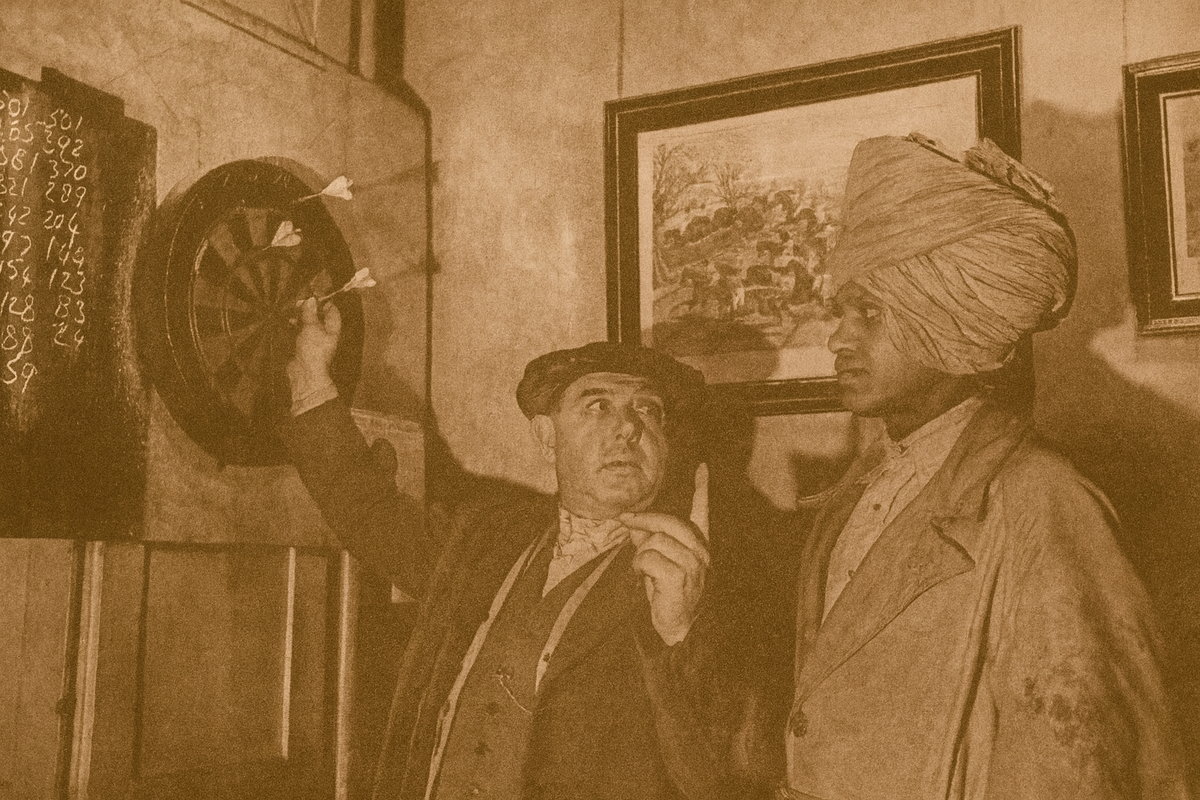
Life's photo-essay "England Fills Up With Outlanders Come for the Coronation" reads today like a dispatch from a vanishing world. The Nawab of Bhopal arrived with fifty turbaned grooms, thirty-eight polo ponies worth $140,000, and a personal Brahmin cook—because his Muslim staff required proper meals. Indian horsemen trotted through Gloucestershire lanes while English villagers watched. A turbaned groom tried his hand at darts in a country pub. The young heir to Bhopal sat in bed reading coronation souvenirs, wrapped in both privilege and the weight of imperial protocol.
This wasn't tourist season. It was theater on a geopolitical scale. Delegations poured in from Canada, Australia, New Zealand, South Africa, India, and the colonies—a parade of the Commonwealth arriving to witness monarchy renew itself. The message was clear: Britain remained the center, and the empire still held.
But empires, like photographs, reveal more than their subjects intend.
Spectacle as Statecraft
The coronation took place against a backdrop most readers preferred to ignore. Hitler had remilitarized the Rhineland. Mussolini had taken Ethiopia. Japan was tightening its grip on Manchuria and eyeing wider conquest in China. In this context, the pomp surrounding George VI wasn't mere ceremony—it was a demonstration. Britain wanted the world to see cohesion, stability, and strength.
Life understood this instinctively. The magazine's genius lay in translating abstract political stakes into human-scale drama. Where newspapers printed words and static images, Life created narrative through photography. The May 3 issue showed London transforming itself: temporary grandstands rising along parade routes, hospitals renting window seats overlooking Pall Mall, decorative crowns stacked in warehouses waiting to festoon lampposts. Even George III's statue got boarded over to make room for viewing platforms.
The magazine made readers feel the magnitude. When Life reported that the Nawab's entourage cost $75,000 to maintain in England, Americans in the grip of the Depression could grasp both the extravagance and the stakes. This was wealth on a scale that mapped power itself.
Photojournalism as Cultural Translation
Life Magazine had only launched the previous November, but by May 1937, it had already perfected its formula: combine Hollywood glamour with global consequence, wrap them in images that told stories without words. The cover of the May 3 issue featured Jean Harlow, not the king—a deliberate choice that announced Life's editorial philosophy. This was a magazine about life in all its forms, from movie stars to monarchs, from Sunset Boulevard to Pall Mall.
Inside, the coronation coverage demonstrated what made Life indispensable. The photographs didn't just document; they interpreted. Indian princes in full regalia looked out from the page, their presence both magnificent and slightly incongruous against the English countryside. The captions walked a careful line between admiration and bemusement, humor and solemnity. Life was teaching Americans how to read empire—not as distant policy but as lived experience, full of contrasts and contradictions.
A turbaned groom learning pub games. Colonial officials in morning dress. The quiet absorption of the young Bhopal heir with his souvenir booklet. These images revealed empire as something more complex than maps colored pink: a system of relationships, hierarchies, and cultural exchanges that spanned continents but came together, awkwardly and magnificently, in one city for two weeks in spring.
Imperial Spectacle
The coronation as Britain's assertion of empire cohesion in an unstable world on the brink of global war.
Cultural Collision
Indian princes, colonial delegations, and international dignitaries converging on London in unprecedented display.
Photojournalism Revolution
Life's signature blend of narrative and image that transformed how Americans consumed world news.
Monarchy in Crisis
George VI's unexpected ascension following Edward VIII's abdication scandal just months earlier.
History You Can Hold
Vintage Life magazines offer something increasingly rare: tactile connection to the past. In an age when news evaporates into digital archives, these pages—complete with photographs, captions, advertisements, and the faint smell of aged paper—anchor history in physical space.
The May 3, 1937 issue remains particularly potent because it captures a world balanced between eras. Two years before World War II would redraw every boundary, Life's cameras found London preparing for a ritual that reached back centuries. The magazine didn't know what was coming. Neither did the hundreds of thousands who lined the parade routes or crossed oceans to witness George VI take his vows.
That innocence, preserved in halftone photographs and confident prose, makes the issue more than historical document. It becomes a portal—a way to stand in London that spring and feel the tension between tradition and the approaching storm.
Why Collectors Treasure This Issue
Pivot Point in Monarchy
Documents George VI's coronation—the beginning of a reign that would carry Britain through its darkest hours. This issue captures the moment before anyone knew what kind of king he would become.
Empire at Its Zenith
Preserves the British Empire at its ceremonial peak, just years before the structure began its inevitable collapse as independence movements swept Asia and Africa.
Photojournalism Masterclass
Exemplifies Life's revolutionary approach—the seamless marriage of image and narrative that changed how Americans consumed news and understood the world.
Cultural Time Capsule
The juxtaposition of Jean Harlow on the cover with imperial grandeur inside demonstrates the magazine's cultural range and editorial ambition in full flower.
Explore the Collection
Thousands of original Life magazines from the 1930s through the 1970s are available in our collection. Whether you're a seasoned collector, a student of royal history, or simply curious about how previous generations experienced world events, these magazines offer something irreplaceable: history as it was first reported, before hindsight rewrote the narrative.
Browse Life Magazine CollectionThe past still speaks. You just need to know where to listen.