
The Sister Who Defied a Dictator
Inside Life Magazine's Most Dangerous Family Portrait
June 1964. A woman boards a flight from Havana to Mexico City carrying almost nothing—no suitcase full of belongings, no carefully planned escape route, just the weight of a decision that could cost her life. Juana Castro knew what happened to people who betrayed her brother. She was about to become one of them anyway.
Two months later, Americans opening their mail would find the August 28, 1964 issue of Life Magazine waiting for them. The headline didn't mince words: "My Brother Is a Tyrant and He Must Go." The byline belonged not to a CIA operative or a political exile, but to Fidel Castro's own sister.
It remains one of the most audacious acts of Cold War journalism—a blood relative's public execution of a dictator's carefully constructed mythology, published for 7 million American households to read over breakfast.
Archive Details
Historical Figure: Juana Castro, sister of Fidel Castro
Issue Date: August 28, 1964
Archive Source: Life Magazine
Article Title: "My Brother Is a Tyrant and He Must Go"
When Family Loyalty Becomes Treason
By 1964, Fidel Castro had survived a CIA-backed invasion, nuclear brinksmanship with the United States, and countless assassination attempts. He commanded absolute authority over Cuba, backed by Soviet missiles and revolutionary fervor. His image—bearded guerrilla turned statesman, champion of the dispossessed—had captivated leftist intellectuals worldwide.
Then his sister called him a liar.
Juana's defection shattered something more valuable than military intelligence: the illusion of unanimity. Dictatorships thrive on the appearance of inevitability, the sense that resistance is futile because even families stand united behind the leader. When a Castro rejected Castro, the mythology cracked.
Life Magazine understood the story's explosive potential. This wasn't another foreign correspondent's analysis of Communist Cuba. This was testimony from inside the fortress, delivered by someone who had watched Fidel transform from privileged law student to Maximum Leader, who knew which parts of his origin story were true and which were propaganda.
The Magazine That Made History Visible
Life Magazine in 1964 operated at the peak of its cultural authority. Before cable news, before the internet, before smartphones turned everyone into a photographer, Life was how Americans saw the world. Its photojournalists had documented D-Day, the liberation of concentration camps, the Kennedy assassination. When Life covered a story, it became real in a way that text alone could never achieve.
The Castro feature deployed Life's full arsenal. Childhood photographs showed Fidel and Raúl as boys from a wealthy family—hardly the humble origins their propaganda machine claimed. Their father had owned land, provided cars and money, given his children opportunities that most Cubans could only imagine. Juana's testimony stripped away the revolutionary mystique, revealing a man who grew up with privilege and weaponized resentment.
Candid portraits of Juana in exile captured something Life's photographers excelled at: the human cost of historical forces. Her face told the story—resolve mixed with exhaustion, conviction shadowed by loss. She had chosen principle over family, truth over safety.
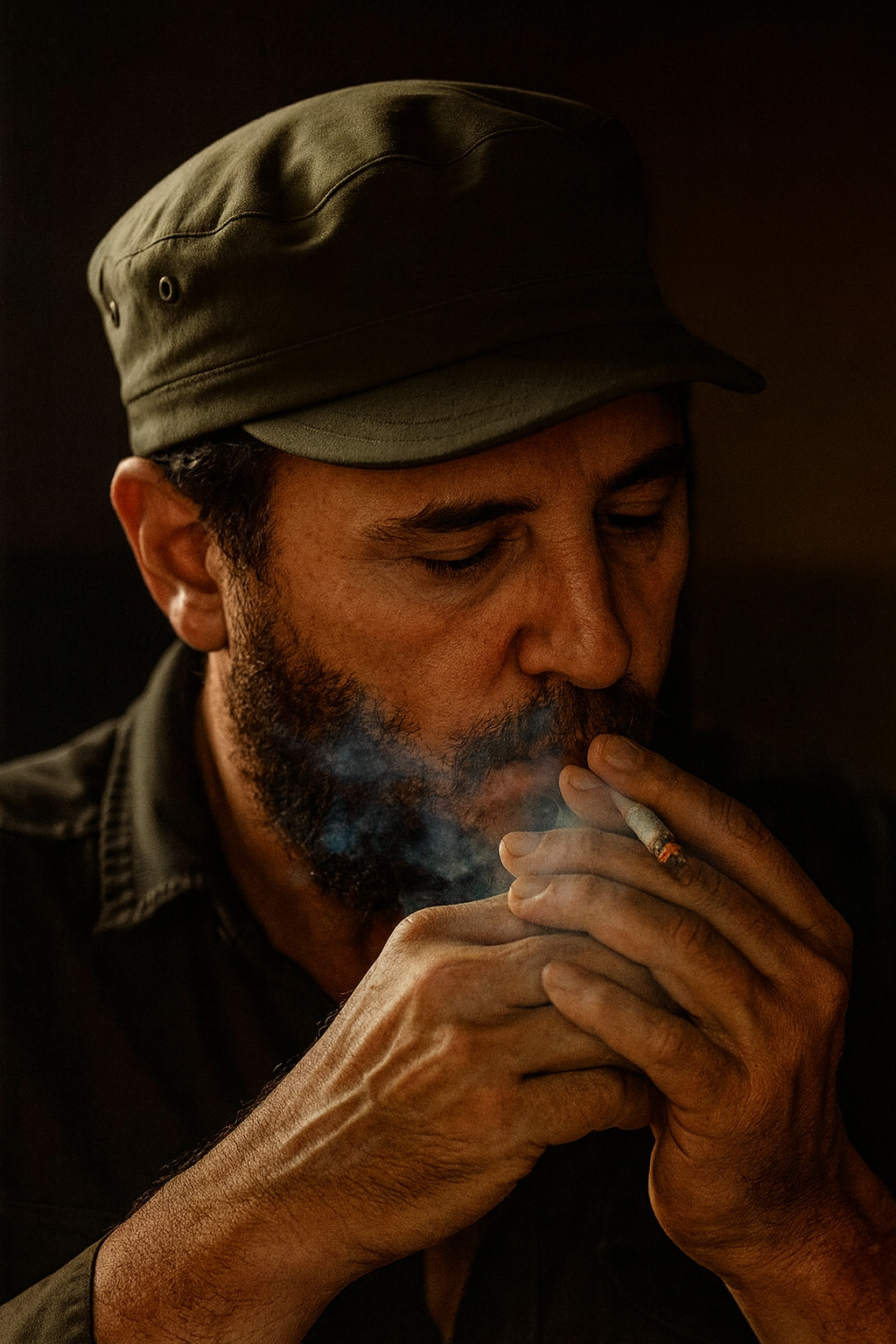
Then came the images of Fidel in power: charismatic in military fatigues, cigar perpetually lit, gesturing to adoring crowds. Life's visual storytelling created devastating irony. The same man who appeared jovial and accessible in public had, according to his sister, once told associates: "This time I'm going to liquidate Juana."
A Portrait of Power and Paranoia
Juana's account reads like psychological case study disguised as political exposé. She described a brother capable of mesmerizing crowds yet terrorizing his own family, a man whose volcanic temper could erupt without warning. Intelligence and charm coexisted with ruthlessness.
She documented the revolution's betrayal of its own promises. Catholic processions in Havana disrupted by militia forces. Families appearing at her door, desperate for help locating imprisoned relatives. The regime's surveillance apparatus turning even grief into a political weapon—their mother's death overshadowed by Fidel's maneuvering and monitoring.
Raúl emerged as Fidel's shadow, inseparable and loyal, already positioned as the revolution's second-in-command. Family members who questioned the direction faced imprisonment—Juana recounted their sister Angelita's detention, a warning to anyone who might consider dissent.
The most chilling moments came when ideology collided with kinship. Juana described how her home became an unofficial refuge for Cubans seeking intervention from someone close to power, people who still believed that family connections might offer protection. They were wrong. In Fidel's Cuba, loyalty to the revolution superseded all other bonds.
Privileged Origins
Juana exposed Fidel's wealthy upbringing—cars, money, opportunities—undermining his "man of the people" mythology.
Family Conflict
From Angelita's imprisonment to heated confrontations, the Castro family fractured under revolutionary pressure.
Religious Suppression
Militia disruption of Catholic processions became Juana's breaking point with the regime.
Personal Threats
Fidel's chilling warning—"This time I'm going to liquidate Juana"—revealed the danger of speaking out.
Why This Issue Matters to Collectors
The August 28, 1964 Life Magazine occupies rarified space in Cold War ephemera. Published barely 22 months after the Cuban Missile Crisis, when nuclear annihilation had seemed imminent, it captured the sustained anxiety of Soviet-American confrontation through the most intimate lens possible: family betrayal.
Collector Significance
Documentary Uniqueness
Few historical figures have been denounced by their own siblings in major publications. Juana's testimony exists nowhere else with this combination of immediacy, detail, and visual documentation.
Photographic Archive
The issue preserves images that function as primary sources: Castro family portraits, pre-revolution Cuba, early revolutionary iconography. For researchers and collectors, these photographs are irreplaceable.
Cultural Timestamp
The magazine captures how Americans understood Cuba in 1964—not through government briefings or academic analysis, but through mass-market photojournalism that shaped public consciousness.
Material Scarcity
Six decades of attic floods, recycling drives, and casual disposal have winnowed the surviving population of intact copies. Issues with crisp covers, unfaded photographs, and complete spreads grow harder to find.
Historical Resonance
As Cuba's post-Castro era unfolds, primary documents from the revolution's height gain scholarly and commercial value. This issue offers both propaganda and its rebuttal, myth and counter-myth.
The Power of Original Artifacts
Life Magazine didn't just report history—it created visual memories that outlasted the events themselves. The magazine's genius lay in understanding that photographs make abstract geopolitics tangible, that family drama humanizes ideological conflict.
Juana Castro's testimony, framed by Life's editorial vision, gave Americans something they rarely received: complexity. Fidel wasn't reduced to cartoon villain or revolutionary hero. He emerged as a recognizable type—the brilliant, charismatic family member whose hunger for control destroys everyone close to him.
That human dimension is why original issues retain their power. Digital scans and reprints can reproduce the text and images, but they can't replicate the experience of holding an artifact that millions of Americans held, that sat on coffee tables and sparked dinner table arguments, that helped shape how a generation understood one of the century's defining conflicts.
For Collectors and Historians
This issue represents more than Cold War memorabilia. It's a case study in how photojournalism shapes political narrative, how family ties intersect with ideology, how one woman's courage created a historical document that still resonates.
From the 1930s through the 1970s, Life Magazine chronicled every seismic shift in American and global culture—war and peace, scientific breakthroughs, civil rights struggles, artistic movements, and the intimate texture of everyday life across four decades.
Browse Life Magazine CollectionLegacy of a Defector
The August 28, 1964 Life Magazine endures because it captured something rare: the moment when family loyalty collided with moral conviction, when personal history became political testimony, when one woman decided that truth mattered more than safety.
Juana Castro's defection didn't topple her brother's regime—Fidel would rule Cuba for another 42 years. But her testimony achieved something equally important: it preserved a counter-narrative, a reminder that revolutions are made and unmade by individual choices, that even the most powerful dictators answer to someone, even if only to the judgment of those who knew them before they became myths.
For collectors, historians, and anyone who values primary sources, this issue represents what great journalism looks like when it refuses to simplify, when it uses every tool available—words, images, human testimony—to make distant events feel immediate and undeniable.
It's history you can hold in your hands. And it's still speaking.