
The Day Forbes Declared Japan's Miracle Dead
How the April 13, 1992 issue captured the unraveling of an economic superpower
April 13, 1992. Commuters grabbed their morning coffee, flipped open Forbes Magazine, and found themselves staring at the financial equivalent of a crime scene photograph.
The cover story—"Finance Shokku"—wasn't reporting news. It was performing an autopsy. On a living patient.
For a decade, Japan had been the envy of every economy on Earth. Its banks were fortresses. Its stock market was a money-printing machine. The Imperial Palace grounds in Tokyo were worth more than all of California's real estate—a statistic so absurd it became gospel. Wall Street executives studied Japanese management books like sacred texts. America's rust belt blamed Japan for everything from unemployment to the death of the family sedan.
And then, in the span of twenty-seven months, the Nikkei Index lost nearly half its value.
Forbes didn't break the story of Japan's banking crisis. But it did something more lasting: it named it, framed it, and turned it into a parable about hubris that still echoes in business schools today.
When Skyscrapers Became Tombstones
The genius of Forbes' April 1992 coverage wasn't just the numbers—though the numbers were catastrophic. Japanese banks were drowning in an estimated $300 billion in bad loans. Property values in Tokyo and Osaka had cratered 20–30% from their peaks. The Nikkei, once considered as solid as the steel-and-glass towers of downtown Tokyo, had fallen below 20,000.
But Forbes understood something other publications missed: financial collapse is theater. It's visual. It's human.
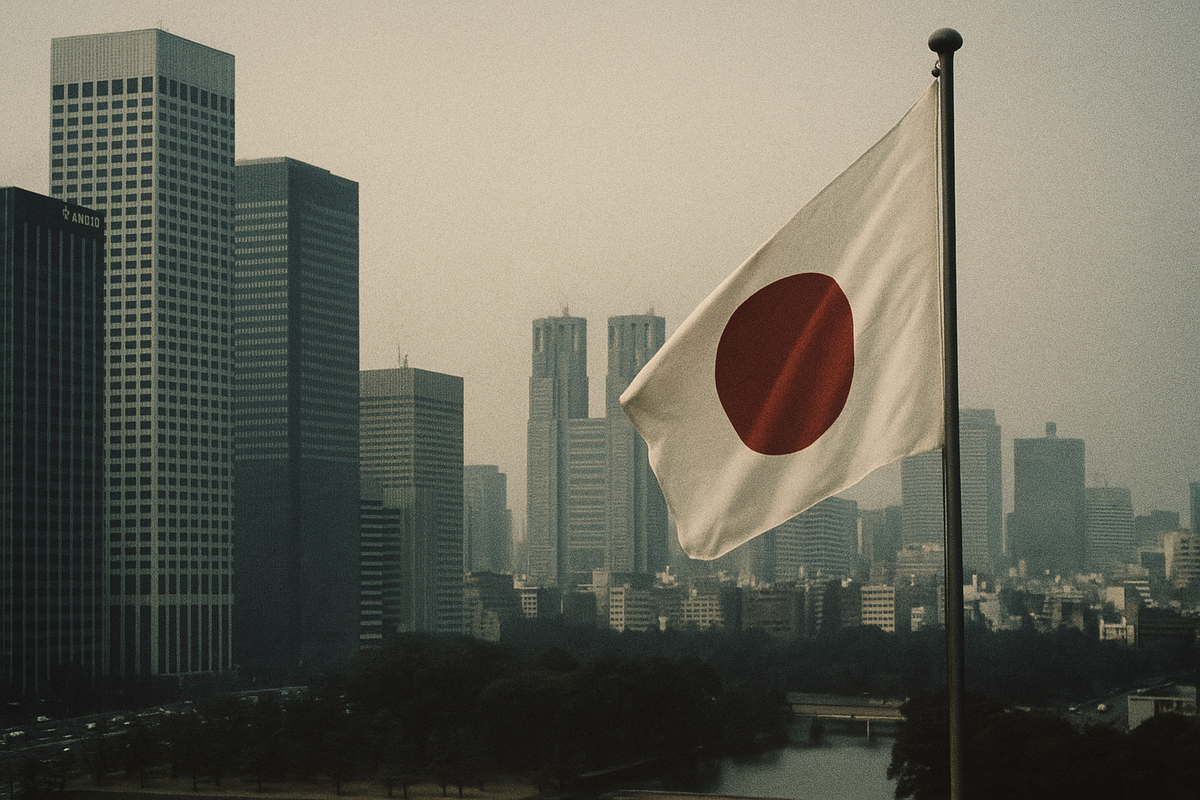
Inside the issue, a photograph captured the moment perfectly—the Japanese flag set against Tokyo's skyline, towers that once symbolized invincibility now looming like monuments to overreach. The caption drove the blade home: "Once Japanese businessmen thought the Nikkei was as solid as the buildings in downtown Tokyo. No longer."
Another image showed traders, faces illuminated by flickering stock tickers, watching their confidence evaporate in real time. This wasn't just data visualization. This was documentation of a national psychology in freefall.
Archive Details
Publication: Forbes Magazine
Issue Date: April 13, 1992
Cover Story: "Finance Shokku"
Historical Context: Japan's banking crisis and the beginning of the Lost Decade
Featured Institutions: Industrial Bank of Japan, Mitsubishi Trust, Bank of Tokyo
The Anatomy of a Miracle's Death
How does the world's second-largest economy go from unstoppable to unraveling?
The answer, as Forbes methodically dissected, was a toxic cocktail of arrogance, cheap credit, and regulatory blindness.
Throughout the 1980s, Japanese banks had operated under an assumption that proved fatal: land prices would never fall. With that premise locked in place, they lent with abandon—to real estate developers in Tokyo, to golf course projects in Australia, to commercial developments in Manhattan, even to the crumbling Soviet Union. The collateral backing these loans? Property and stocks that were, by 1992, worth a fraction of the outstanding debt.
The 1991 global recession exposed the rot. As exports slowed and investment dried up, the scaffolding propping up Japan's bubble economy collapsed. The Bank for International Settlements began demanding that banks maintain 8% capital ratios—a standard Japanese institutions couldn't meet without creative accounting that bordered on fraud.
International investors smelled blood. George Noble, quoted in the article, delivered what would become the crisis's most memorable soundbite: "I wouldn't touch a Japanese bank stock with a barge pole." Hedge fund titans like George Soros and Julian Robertson began shorting Japan's largest financial institutions, betting fortunes that the miracle was over.
They were right.
The Cultural Earthquake
For Western readers, the numbers were staggering. For Japan, the psychological damage cut deeper.
Japanese business culture had been built on secrecy, saving face, and the illusion of infallibility. Banks didn't admit to bad loans. The Ministry of Finance didn't encourage transparency. Weakness was simply not discussed in public.
Forbes captured the significance of what happened next: the Ministry of Finance asked banks to disclose their dud loans. In a culture where institutional pride was sacred, this was tantamount to national surrender. The facade had cracked. The world was watching. And there was no hiding anymore.
International capital markets, once deferential to Japanese financial prowess, turned brutal. Japanese bankers found themselves dismissed as "the mugs of international capital markets"—a humiliation that would have been unthinkable five years earlier.
Key Revelations from the Forbes Investigation
From record highs in the late 1980s, the Nikkei Index had fallen below 20,000, wiping out enormous amounts of wealth in just twenty-seven months.
Japanese banks held $50 billion in overseas loans that were sour, plus trillions in domestic property loans backed by plummeting collateral values.
Loans to U.S. developers, British firms, Australian projects, and even the Soviet Union added layers of complexity to an already catastrophic situation.
Property prices in major Japanese cities had fallen 20–30% from their peaks, destroying the fundamental assumption behind decades of lending.
The Ministry of Finance encouraged banks to disclose dud loans, a remarkable shift in a culture once obsessed with saving face.
The once-solid Nikkei was now described as a hollow structure, and even Japanese businessmen were losing faith in their own institutions.
International investors mocked Japanese bankers as "the mugs of international capital markets," a stunning reversal from the deference of the 1980s.
Meeting BIS capital requirements forced banks to confront weaknesses they had long ignored through creative accounting.
Figures like George Soros and Julian Robertson saw opportunities to profit from Japan's decline, shorting major institutions.
Forbes suggested this was not a temporary correction but a long-term systemic problem, presaging what would be called Japan's Lost Decade.
The Lessons That Refuse to Age
Thirty-plus years later, "Finance Shokku" reads like a warning label that every generation ignores.
No economy is immune to gravity. Japan wasn't some Third World speculation gone wrong. It was the second-largest economy on Earth, backed by industrial might, technological dominance, and institutional discipline. None of it mattered when the fundamentals were hollow.
Asset bubbles follow a script. Replace "Tokyo real estate" with "dot-com stocks" or "subprime mortgages" or "cryptocurrency," and the pattern repeats. Cheap money. Irrational confidence. Collateral based on faith. Collapse.
Journalism shapes memory. Without Forbes' coverage—the photographs, the biting quotes, the refusal to soften the blow—Japan's banking crisis might have faded into technical footnotes. Instead, "Finance Shokku" gave the world a phrase, an image, and a narrative that endures.
Why This Issue Became a Collector's Grail
Historic Timing
It captured the moment of recognition—not the crisis itself, but the instant when denial became impossible and Japan's Lost Decade began.
Cultural Significance
Japan's crisis reshaped global business thinking, proving that even the strongest economies could falter when built on hollow assumptions.
Iconic Imagery
The photos of the Japanese flag, the skyscrapers, and the traders staring at falling stock prices are now symbols of a lost era of overconfidence.
Investor Relevance
For historians of finance, this issue stands as a case study in what happens when asset bubbles burst and regulatory oversight fails.
Journalistic Prophecy
Forbes married journalism with prophecy, warning what was coming: a long, grinding stagnation that would reshape global finance.
Collectible Status
Vintage Forbes magazines from turning points in world history are sought after, not only for their reporting but as artifacts of economic memory.
The Artifact of Economic Memory
The cover story "Finance Shokku" stands as one of the most important pieces of business journalism from the early 1990s—not because it predicted the future, but because it named the present with brutal honesty.
Japan's banking giants fell. The asset bubble burst. The Lost Decade began.
And Forbes was there, camera in hand, pen sharpened, ready to write the first draft of a history that Wall Street, Tokyo, and every financial capital since has been forced to relearn.
This isn't just a magazine. It's a monument to the fragility of confidence and the permanence of truth.
Own the Moment the World Changed
The April 13, 1992 issue of Forbes Magazine documented Japan's fall from grace with unflinching clarity and visual power. For historians of finance, collectors of business journalism, and anyone fascinated by how empires crack, this is as close as you can get to holding history in your hands.
Browse Forbes Magazine CollectionEach issue is a fragment of the 20th century—the CEOs, the scandals, the booms, the busts. Forbes didn't just report business. It created the language we still use to understand it.