
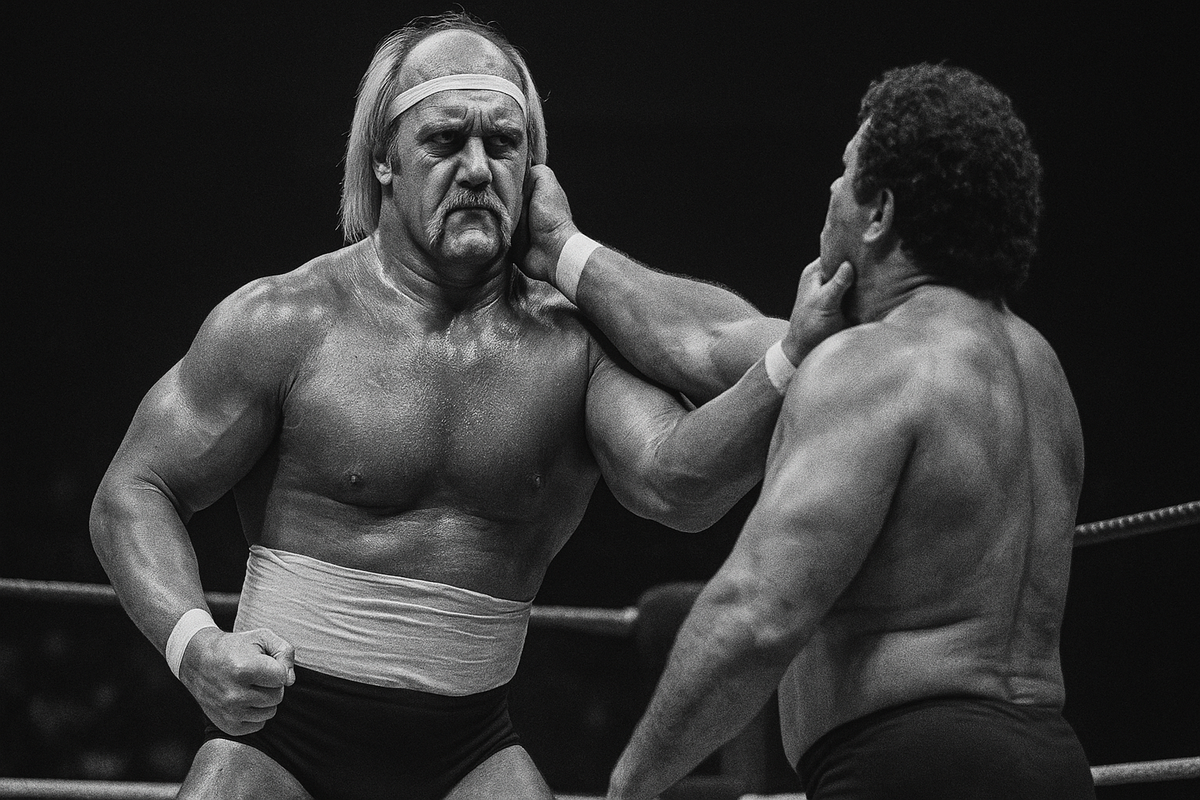
The Body That Built an Empire
Inside the 1986 WWF Magazine That Dared to Question Hulkamania
August 1986. Hulk Hogan stood atop the wrestling world, red and yellow draped across arenas from Madison Square Garden to the Tokyo Dome. Two years into a championship reign that had transformed professional wrestling from regional territory sport into MTV-fueled spectacle, the Hulkster was untouchable—a 6'7" embodiment of American invincibility who'd just survived a steel cage war with King Kong Bundy at WrestleMania II.
But inside the August–September 1986 issue of WWF Magazine, beneath action shots of Hogan's sweat-slicked battles and triumphant poses, ran a question no promoter wanted asked: "How Long Will He Stay on Top? Will Brutal Competition Wear Him Down?"
For fans clutching that glossy issue at newsstands, it wasn't just provocative journalism. It was heresy. And it was brilliant.
Archive Snapshot
Featured Subject: Hulk Hogan
Publication: WWF Magazine, August–September 1986
Historical Context: Rock 'n' Wrestling Era at its commercial peak
Championship Reign: January 1984 – February 1988
Cultural Significance: Published between WrestleMania II and III
When the Magazine Became the Myth-Maker
WWF Magazine in 1986 operated in a unique space—part kayfabe chronicle, part cultural documentation. This wasn't a dirt sheet peddling backstage gossip. It was the official scripture of Vince McMahon's expanding empire, where championships were holy relics and storylines unfolded with the narrative weight of biblical epics.
The Hogan feature exemplified this tightrope walk between myth and mortality. The opening spread hit readers with visceral imagery: Hogan's muscular arm flexed against a bold orange background, the headline challenging them to consider the unthinkable. Turn the page, and you'd find action photography that captured legitimate brutality—Hogan mid-brawl with Don Muraco, ribs taped beneath his 24-inch pythons, the physical cost of 300+ nights a year defending a title that had become synonymous with American machismo.
The captions told their own story: "Courageous champ—Hogan wrestling injured, left, and taking on top-flight competition such as Muraco." Not "Hogan dominates." Not "The immortal champion prevails." The magazine was selling drama through vulnerability, and in doing so, captured something raw about the Rock 'n' Wrestling Era that sanitized highlight reels never could.
The Anatomy of Doubt
What made this article exceptional wasn't its answer—of course Hogan would endure, would bodyslam Andre the Giant at WrestleMania III, would carry WWF into the 1990s. It was the questions the magazine had the audacity to print.
The Body Question
Hogan himself provided the soundbite that anchored the piece: "This body, man. As long as it keeps going, I'll keep winning." Not stamina. Not skill. Not even the power of Hulkamania. Just the biological reality of muscle, bone, and ligament holding together under 400-pound avalanche splashes.
The Comparative Framework
The article reached beyond wrestling's carnival origins to invoke Ali and Frazier, positioning Hogan's title defenses within the same endurance calculus that governed heavyweight boxing. Could Hogan recover from accumulated damage the way legendary fighters did?
The Roster Threat
King Kong Bundy. Big John Studd. Randy "Macho Man" Savage. The magazine catalogued challengers not as disposable heels but as legitimate physical threats, each bringing their own brand of punishment to Hogan's already battered frame.
The Relentless Schedule
The article didn't shy from the reality: 300+ nights a year, television tapings, house shows, international tours, media appearances. This wasn't just booking. It was biological warfare waged against Hogan's own physiology.
The magazine's genius lay in framing these threats as genuinely unresolved questions. Readers in August '86 didn't know WrestleMania III was coming. The doubt was real, the stakes tangible, the physical toll documented in every taped rib and grimace caught on film.
Why August–September 1986 Matters Now
For collectors and historians, this issue represents more than Hulkamania at its commercial zenith. It's a cultural artifact positioned at a pivotal crossroads—published between WrestleMania II (April 1986) and the slow build toward WrestleMania III (March 1987), when Hogan's bodyslam of Andre would draw 93,173 to the Pontiac Silverdome and cement wrestling's mainstream legitimacy.
Historical Timing: This issue captured Hogan before the Andre match rewrote his legend. Readers in August '86 didn't know the Silverdome was coming. The doubt the magazine cultivated was genuine, the stakes unresolved.
Photographic Authenticity: The action shots of Hogan battling Bundy and Muraco weren't posed publicity stills. They were in-ring documentation—sweat, grimaces, taped ribs visible beneath his torn T-shirt—that revealed the physical tax even scripted entertainment exacted.
Cultural Synchronicity: By late summer 1986, wrestling had crashed MTV's rotation with the "Brawl to End It All," pulled Cyndi Lauper and Mr. T into WrestleMania's orbit, and turned Saturday morning cartoons into merchandising gold mines. WWF Magazine served as both cheerleader and chronicler of this transformation, and this Hogan feature balanced boosterism with just enough realism to feel substantive.
The Magazine That Understood Its Assignment
WWF Magazine thrived because it grasped something fundamental: wrestling fans didn't want objective journalism. They wanted immersion. They wanted the storylines extended beyond Saturday morning television, the personalities rendered larger than the 19-inch screen could contain, the mythology given texture and weight.
This Hogan feature delivered precisely that. It acknowledged the man beneath the bandana—the injuries, the exhaustion, the friends who begged him to rest—while never puncturing the superhero mythos. The result was a piece that read as both hagiography and survival narrative, a profile that celebrated Hogan's dominance while planting seeds of doubt that would bloom across the next twelve months of booking.
Decades later, that balance remains the issue's legacy. It captured Hogan not as the invincible cartoon character he'd become by 1990, but as a champion grinding through the physical and psychological reality of carrying an entire company's expansion on his deltoids.
The Artifact Today
For those who grew up watching Hogan tear his shirt before dropping the leg drop, this issue is pure nostalgia—a return to Saturday mornings and action figures and believing that prayers and vitamins could make you invincible.
For wrestling historians, it's primary source material documenting the exact moment WWF transitioned from Northeastern territory to global entertainment conglomerate, with Hogan as both spearhead and sacrifice.
For magazine collectors, it's a time capsule: glossy paper, bold typography, unironic hero worship from an era before irony dominated pop culture.
Collector Significance
Historical Timing
Positioned between WrestleMania II and III, this issue reflects Hogan's dominance before his legendary clash with Andre the Giant in 1987—capturing him at the precise moment when his legend was still being written.
Iconic Photography
Action shots of Hogan battling Bundy and Muraco showcase the gritty, physical side of his reign—sweat-slicked authenticity that modern publicity stills can't replicate.
Cultural Significance
This issue represents the heart of the Rock 'n' Wrestling Era, when WWF transitioned from niche sport to global spectacle through MTV integration and mainstream celebrity partnerships.
Collector Demand
Issues featuring Hulk Hogan during his championship peak remain among the most sought-after WWF publications of the 1980s, with the Aug–Sept '86 edition commanding premium prices for its exceptional content and photography.
Battered but Unbroken
The question WWF Magazine posed in August 1986—"How long will he stay on top?"—got its answer. Hogan would hold the championship until February 1988, defend it against Andre, headline four WrestleManias, and define professional wrestling for a generation.
But the magazine's genius wasn't in predicting the future. It was in capturing a singular moment when even Hulkamania seemed mortal, when the body that built an empire looked fragile beneath the spotlights, when millions of fans held their breath and wondered if this time, finally, the pythons would give out.
That moment—printed on glossy paper, preserved in plastic sleeves, traded among collectors for four decades—still resonates. Not because Hogan fell, but because the magazine had the courage to suggest he might.
And in that suggestion, in that flicker of doubt beneath the orange headline, lies the entire architecture of professional wrestling: the myth and the man, forever locked in combat, neither able to win.
Explore the Archive
Whether you're cataloging the Rock 'n' Wrestling Era, hunting for investment-grade sports entertainment memorabilia, or simply chasing the dopamine hit of 1986, the August–September issue belongs in the archive.
Browse WWF Magazine Collection