
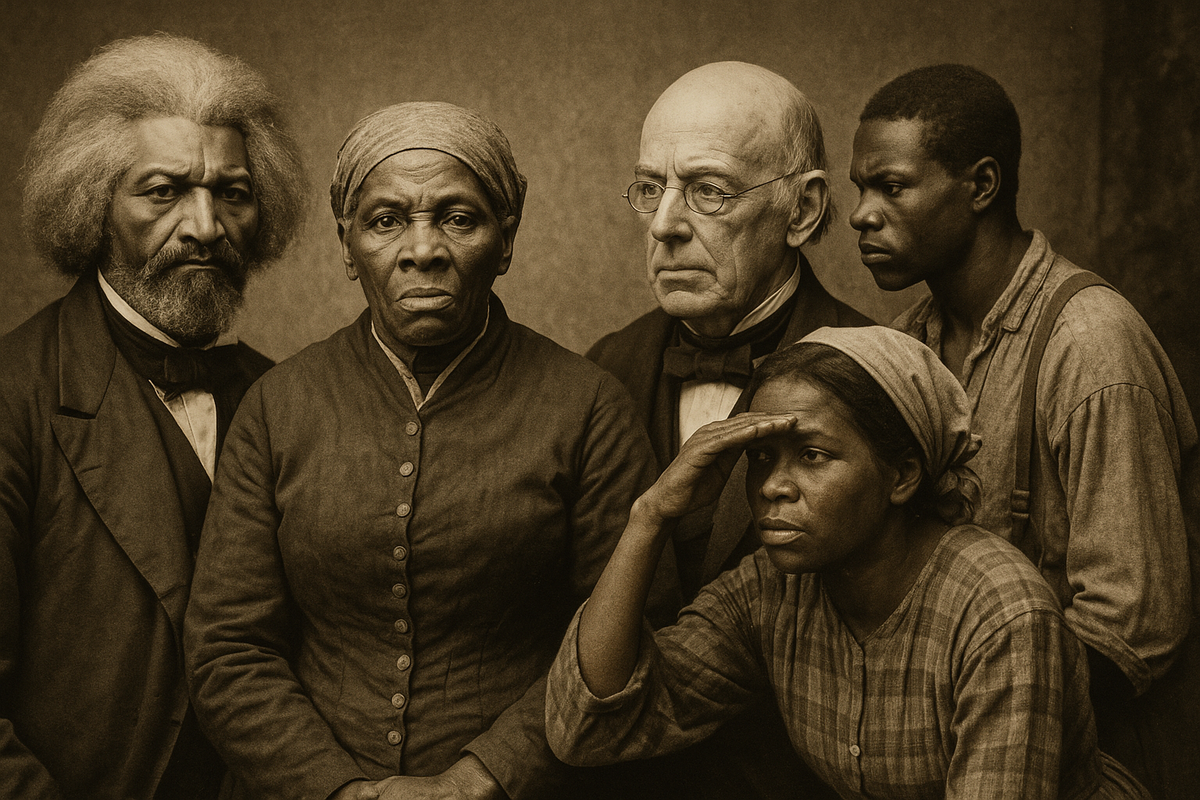
When Ebony Magazine Turned Abolition Into a Battle Cry for 1962
How Lerone Bennett Jr.'s "Generation of Crisis" connected fugitive slaves, freedom fighters, and the Civil Rights Movement in a single historic issue
In May 1962, a reader opening their copy of Ebony magazine found themselves holding two centuries at once.
On the cover: glamour, style, the polished confidence of Black America in the heart of the Civil Rights era. Inside: the sixth installment of Lerone Bennett Jr.'s "Generation of Crisis"—a searing chronicle of the thirty years before the Civil War, when fugitive slaves, abolitionists, and free Black organizers waged what Bennett called a "cold war" against slavery.
This wasn't nostalgia. It was ammunition.
While Freedom Riders were boarding buses in the South and sit-in protesters were filling Southern jails, Bennett was reminding Ebony's readers that the fight for dignity had always demanded generations—not moments. Frederick Douglass didn't dismantle slavery with a single speech. Harriet Tubman didn't liberate 300 souls in a single night. The abolitionist movement wasn't a spark; it was a sustained fire that burned for three decades before the nation finally broke.
For readers in 1962, this history wasn't academic. It was a mirror and a mandate.
Archive Details
Publication: Ebony Magazine
Issue: May 1962
Feature: "Generation of Crisis" by Lerone Bennett Jr. (Part 6)
Historical Focus: The abolitionist movement, 1830s–1850s
Key Figures: Frederick Douglass, Harriet Tubman, Sojourner Truth, William Lloyd Garrison, Henry "Box" Brown, Martin Delany
The Thirty-Year War That Cracked a Nation
Bennett chose his era carefully. The 1830s through the 1850s represented the most volatile chapter in American history before the Civil War—a period when slavery was no longer a regional "peculiarity" but a national crisis that politicians could neither ignore nor solve.
The Fugitive Slave Act of 1850 had shattered any pretense of neutrality. Free states were now legally obligated to return escaped slaves to bondage, turning Northern citizens into reluctant enforcers of Southern cruelty. Public outrage exploded. Abolition shifted from a fringe cause to a moral emergency.
Frederick Douglass, who had escaped slavery in 1838, brought firsthand testimony that no white orator could match. His question—"What to the Slave is the Fourth of July?"—exposed the hypocrisy of a nation that proclaimed liberty while trafficking in human beings.
Harriet Tubman made nineteen trips into slave territory, guiding some 300 people to freedom along the Underground Railroad. Each journey was a calculated act of defiance that could have ended in her death.
Sojourner Truth became the first Black woman to gain national recognition as an anti-slavery speaker, fusing racial justice with the fight for women's rights.
Henry "Box" Brown mailed himself in a crate from Richmond to Philadelphia—a gamble that turned him into a symbol of desperation and ingenuity.
White allies like William Lloyd Garrison, editor of The Liberator, refused compromise: "I will not equivocate—I will be heard." Alongside African American leaders like Martin Delany, Ellen and William Craft, and Samuel Cornish, they built a movement that pushed the nation toward its breaking point.
Bennett's thesis was clear: the Civil War wasn't an accident. It was the inevitable result of decades of unrelenting resistance.
Why Ebony Was the Perfect Platform
By 1962, Ebony was more than a magazine—it was the premier archive of Black American life. Founded by John H. Johnson in 1945, it combined glossy photography, celebrity profiles, and investigative reporting in a format no other publication could replicate.
The May 1962 issue embodied this balance. Readers moved seamlessly from fashion spreads and Magic Shaving Powder ads to Bennett's deeply researched narrative on abolition, illustrated with portraits of Douglass, Tubman, Truth, and Garrison. The juxtaposition wasn't jarring—it was essential. Ebony presented Black life as whole and interconnected, where culture, style, and ancestral struggle existed side by side.
Traditional textbooks in 1962 often sanitized or erased the abolitionist movement. When they mentioned slavery at all, they framed it as a regional dispute solved by white politicians. Bennett restored Black agency to the story. He centered fugitive slaves and African American organizers as the driving force of change—not footnotes, but architects.
For Ebony's audience, this wasn't just education. It was validation.
What Bennett Captured That History Books Missed
Bennett's "Generation of Crisis" didn't rehash dry political timelines. It dramatized the moral stakes and personal costs of abolition through vivid storytelling:
The Missouri Compromise and Its Failures
Political compromises couldn't silence the moral question of slavery. They only delayed the reckoning.
Fugitive Slave Resistance
Accounts of Henry Box Brown and Ellen and William Craft turned escape into epic drama, underscoring the risks enslaved people accepted for freedom.
Frederick Douglass's Voice
Douglass fused moral clarity with political urgency, becoming one of America's greatest orators without ever attending a day of formal school.
Harriet Tubman's Missions
Tubman's nineteen trips into the South symbolized both faith and fearless resistance, reminding readers that abolition was built on everyday heroism, not just famous speeches.
Sojourner Truth's Lectures
Truth combined advocacy for racial and gender justice, proving that liberation movements could not be siloed.
Garrison's Defiance
White allies like Garrison were portrayed not as saviors but as partners who amplified Black voices rather than drowning them out.
Generational Struggles
Bennett emphasized that abolition required decades of sustained effort—a direct parallel to the Civil Rights Movement, which had already been grinding forward for years by 1962.
Each story reinforced a larger truth: the abolitionist fight wasn't the work of a few famous names. It was a generational struggle that reshaped the nation.
The Magazine as Cultural Artifact
The May 1962 Ebony is a study in how the magazine merged visual storytelling, cultural pride, and rigorous history into a single artifact.
Cover and Visuals – The cover projected beauty and Black excellence. Inside, readers encountered stark engravings and portraits of abolitionists. This duality gave Ebony its singular power: it celebrated the present while anchoring readers in the past.
Narrative Tone – Bennett's prose was urgent and unflinching. He didn't sanitize slavery's brutality or excuse politicians' moral compromises. He placed enslaved people and their allies at the center of the nation's destiny.
Juxtaposition with Advertisements – A reader might turn from a fashion spread directly into a harrowing account of a fugitive's escape. This wasn't editorial chaos—it was genius. Ebony presented African American life as interconnected, where culture, style, and history couldn't be separated.
Cultural Function – Ebony wasn't just documenting history. It was actively shaping how African Americans in the 1960s understood their inheritance. At a moment when the Civil Rights Movement was fighting segregation, Bennett's series reminded readers that the struggle for dignity had been waged for generations.
Representation – By publishing portraits of Douglass, Truth, Tubman, and Garrison, Ebony visually asserted that Black history was American history. The faces gave human form to stories too often left abstract in textbooks.
The May 1962 issue isn't just an account of the abolitionist struggle—it's a cultural artifact that demonstrates Ebony's unmatched ability to weave history, pride, and everyday life into a single narrative.
Why Collectors Prize This Issue
Historical Timing
Published at the height of the Civil Rights Movement, the article drew a direct line between past and present struggles for freedom. Readers in 1962 weren't studying history—they were finding a blueprint.
Lerone Bennett Jr.'s Authorship
Bennett's history series remains among the most significant popular writing on African American history of the 20th century. His work later culminated in landmark books like Before the Mayflower, but this serialized format in Ebony reached millions who would never enter a university library.
Iconic Figures
Content on Douglass, Tubman, Truth, Garrison, and others makes this issue indispensable for collectors, educators, and historians focused on abolition or Civil Rights.
Cultural Time Capsule
Beyond the history, the magazine captured 1960s Black life through advertisements, fashion spreads, and cultural commentary. It's a fuller portrait of an era than any textbook can provide.
Milestone Ebony issues featuring civil rights leaders, entertainers, athletes, and cultural icons consistently draw collector interest. This one—blending abolitionist history with Civil Rights context—ranks among the most sought-after.
Why This Issue Still Matters
Like Life magazine's wartime issues, Ebony's history features endure because they are more than journalism. They are time capsules that captured the urgency of a moment while preserving the deeper roots of African American identity.
For modern readers, the May 1962 issue functions as both a teaching tool and a collector's treasure. It reminds us that freedom struggles were—and remain—multi-generational. It also demonstrates how media like Ebony shaped pride, resistance, and collective memory during one of the most consequential decades in American history.
To hold this issue today is to hold two histories at once: the story of enslaved men and women who demanded freedom in the 19th century, and the story of African Americans in the 1960s who carried that struggle forward.
Own a Piece of the Archive
Vintage Ebony magazines are indispensable for anyone serious about African American history. They bring together culture, politics, and lived experience in a way few other sources can.
Browse Ebony Magazine CollectionFrom the 1940s through the 1980s, these magazines trace the evolution of African American life—through fashion, music, politics, and history. Whether you're a seasoned collector, a student, or someone honoring family heritage, these issues are living artifacts that connect past and present.
The May 1962 issue of Ebony magazine and Lerone Bennett Jr.'s "Generation of Crisis" remain among the most significant works of popular history published in the 20th century. Through them, the past still speaks—and collectors, historians, and readers continue to listen.