
The Showman Who Sold America to the World
Inside Forbes' 1980 Portrait of Philip Morris at Its Peak
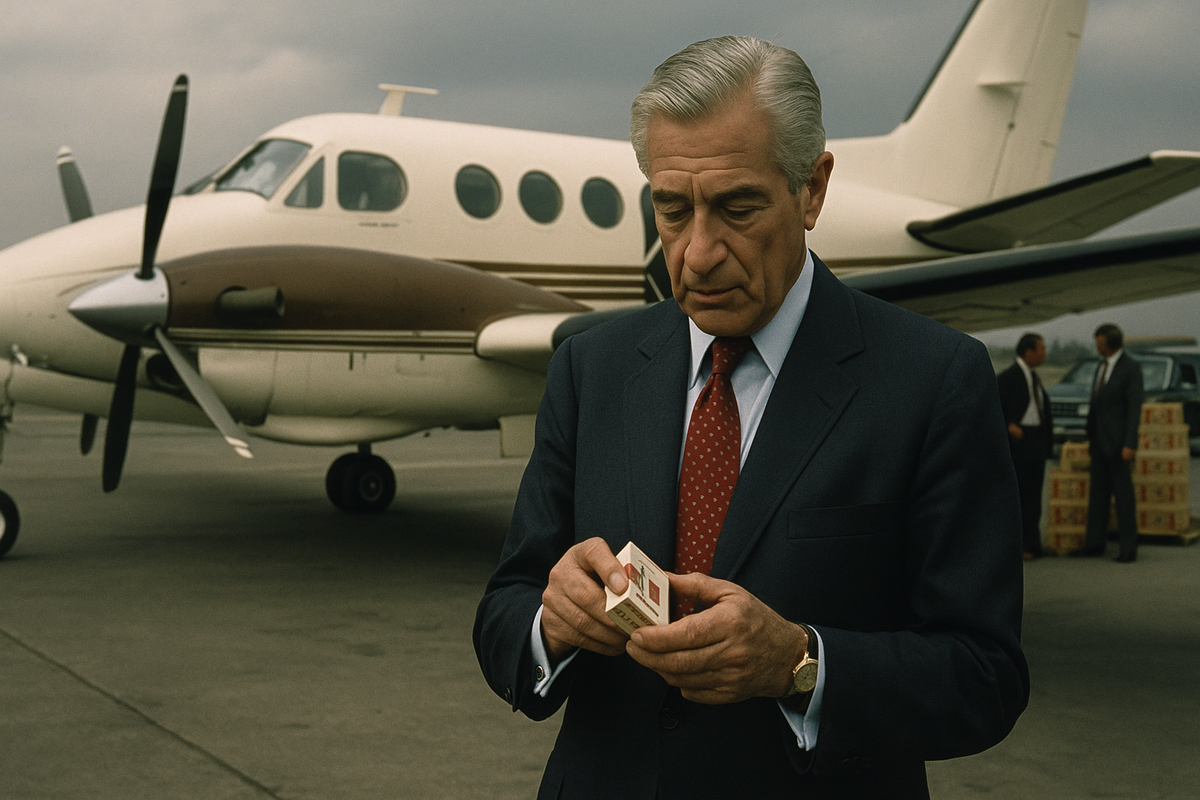
George Weissman stepped off the plane at Paris' Le Bourget Airport in the fall of 1980, flanked by executives, photographers trailing behind. He wasn't there to close a factory or announce layoffs. He was there to sell—Marlboro cigarettes to French smokers, Miller Lite to German drinkers, the very idea of American branding to a world that didn't yet know it was hungry for it.
Forbes was watching. And on November 10, 1980, the magazine published what it called "The George Weissman Road Show"—a sprawling profile of how one former Hollywood publicist had transformed Philip Morris from a tobacco company into a global marketing empire spanning cigarettes, beer, and soft drinks. The article wasn't just business reporting. It was a front-row seat to the birth of modern brand warfare.
Archive Details
Historical Figure: George Weissman, CEO of Philip Morris
Issue Date: Forbes Magazine, November 10, 1980
Feature Story: "The George Weissman Road Show"
Archive Source: Original Forbes Magazine Collection
The Paradox of 1980
The timing could not have been worse—or more revealing.
The United States was crawling out of stagflation. Interest rates were climbing. Consumer confidence was shot. Cigarettes faced mounting health criticism. Beer was a bloodbath dominated by Anheuser-Busch. Soft drinks belonged to Coke and Pepsi, and everyone else was fighting for scraps.
Philip Morris had all three problems at once.
Yet Weissman—who once promoted Sam Goldwyn films in Hollywood—saw something his competitors didn't. He understood that selling Marlboro wasn't fundamentally different from selling movies. Both required a story. Both required relentless promotion. Both required believing that the brand could outgrow the product.
So while other companies retrenched, Philip Morris doubled down. It pushed Marlboro aggressively into Europe and Asia, turning the cowboy imagery once dismissed as "too American" into a global icon. It launched Miller Lite as the first successful light beer, redefining an entire category. And it tried—unsuccessfully, as Forbes documented—to salvage 7-Up from the wreckage of the cola wars.
Hollywood Discipline Meets Wall Street Grit
Forbes built its reputation on profiling the people behind the balance sheets, and George Weissman was their kind of subject.
Before Philip Morris, Weissman had been a publicist, a showman who understood presentation. That background shaped everything. His management philosophy centered on what he called the "one ass-to-kick" principle—centralized accountability, clear ownership of results, no hiding behind committees. When something failed, someone owned it. When something succeeded, the credit was just as clear.
The magazine captured him in motion: jetting between Paris and New York, inspecting tobacco leaves at the Richmond plant, reviewing production lines at the Miller Brewing facilities, studying bottling operations at 7-Up's St. Louis headquarters. He was everywhere, always performing, always selling.
But Forbes didn't just celebrate. It questioned.
Philip Morris carried unusually heavy debt compared to rivals—was this sustainable? 7-Up was "going flat," losing ground to Coke and Pepsi despite creative marketing—could Weissman turn it around? Anheuser-Busch was fighting back ferociously against Miller Lite—how long could Philip Morris hold its gains in the beer wars?
The article balanced admiration with skepticism, presenting Weissman as both visionary and risk-taker, a man whose Hollywood polish couldn't completely mask the financial tightrope he was walking.
The Visual Archive of Corporate Power
The November 10, 1980 issue wasn't just text. It was a visual document of American industrial might.
Photographs showed Weissman at Le Bourget Airport, the international statesman of consumer goods. Production shots captured stacked cases of Miller Lite, 7-Up bottling lines, tobacco leaf inspection in Virginia. Graphs tracked Marlboro's rise against Winston, Miller's battle with Anheuser-Busch, 7-Up's slide against the cola giants.
Forbes understood that business wasn't abstract. It was factories, supply chains, advertising campaigns, people in airports. The magazine made Philip Morris tangible—both the glamour of the brand and the grit of the operations behind it.
This is what makes the issue valuable to collectors today. It's not just analysis. It's primary source material, showing what corporate America looked like, how it presented itself, what it believed about growth and markets and the future.
What Marlboro, Miller, and 7-Up Reveal
The three brands tell three different stories about 1980s corporate strategy.
Marlboro was the triumph. The cowboy imagery worked globally in ways Philip Morris hadn't predicted. France, Asia, markets that theoretically had no connection to American Western mythology—they bought it anyway. Marlboro became one of the most valuable brands on earth, and Forbes documented the exact moment that transition was happening.
Miller Lite was the innovation. Before Miller, light beer didn't exist as a mainstream category. Weissman and his team created it, marketed it, made it acceptable for men to order. The beer wars that followed—Anheuser-Busch launching its own lights, the fierce competition for market share—shaped the industry for decades.
7-Up was the warning. Not every acquisition works. Not every brand can be saved through marketing alone. Forbes showed 7-Up's declining market share in unflinching graphs, evidence that even Weissman's Hollywood magic had limits.
Why This Issue Matters Now
Forbes in 1980 was documenting the invention of modern global branding, even if the participants didn't fully understand what they were building.
Weissman's Philip Morris pioneered strategies that became standard: international expansion through brand recognition, category creation through marketing, portfolio diversification to hedge against industry-specific risks. The magazine captured these tactics in real time, before business schools codified them into case studies.
For collectors, the November 1980 issue represents more than nostalgia. It's a primary source on how American corporations learned to thrive in mature industries by focusing on marketing, global reach, and financial engineering. It shows the aesthetic of 1980 corporate America—the photography, the advertising campaigns, the executive style. It preserves the language business leaders used to describe their strategies before that language became cliché.
And it's a reminder that Forbes understood something essential: business journalism works best when it profiles people, not just companies. George Weissman wasn't Philip Morris, but he embodied its ambitions, its risks, its particular blend of glamour and calculation.
Deep Dive: Key Themes
Global Conquest
Marlboro's cowboy imagery became a worldwide phenomenon, pushing Philip Morris' international sales to record highs despite being dismissed as "too American."
The Beer Wars
Miller Lite redefined American beer culture, creating the light beer category and sparking fierce brand battles with Anheuser-Busch.
7-Up's Struggles
Despite creative marketing, Philip Morris' soft drink acquisition couldn't compete with Coke and Pepsi, becoming the portfolio's weak link.
Leadership Philosophy
Weissman's "one ass-to-kick" principle centralized accountability, ensuring clear ownership of both failures and successes.
Financial Risk
Philip Morris carried unusually heavy debt compared to rivals, raising questions about long-term sustainability.
Hollywood Showmanship
Weissman's background as a Sam Goldwyn publicist gave him a presentation flair few CEOs could match.
The Collector's Case
Historic Documentation
Captures Philip Morris and George Weissman at their peak, before health lawsuits reshaped the tobacco industry and before the diversification strategy fully played out.
Industry Wars
Documents the beer wars and cola rivalry when outcomes were still uncertain, when Miller Lite was innovation rather than fixture.
Visual Archive
Preserves the photography, charts, and executive portraits that defined business culture before digital disruption.
Editorial Excellence
Represents Forbes' philosophy at its finest: blending financial analysis with character-driven narrative.
Explore the Archive
These aren't reproductions or digital scans. They're original artifacts—the actual issues that executives, investors, and readers held in 1980, filled with insights that still resonate in today's global economy.
Browse Forbes Collection