
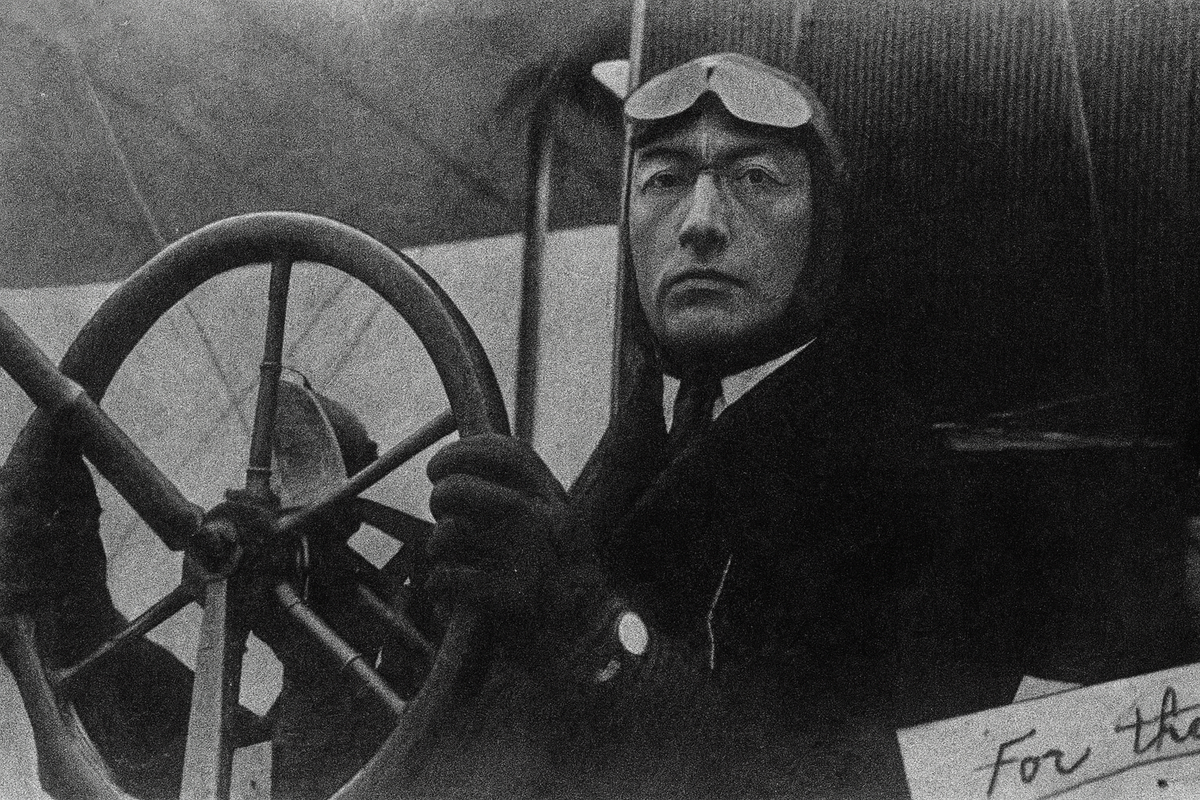
When America Looked Skyward: The Glenn Martin Feature That Captured Aviation's Industrial Revolution
How Life Magazine's May 10, 1937 issue documented the transformation of flight from barnstorming spectacle to global industry—two years before the world went to war
On May 10, 1937, Americans who picked up their copies of Life Magazine weren't reading a puff piece about another eccentric aviator. They were witnessing the exact moment aviation shed its barnstorming past and became an industrial juggernaut capable of reshaping global power.
The feature subject was Glenn Luther Martin—the Iowa-born builder whose factories were churning out Pan Am Clippers and bombers for half the world. But the real story was what those photographs revealed: America had learned to mass-produce the future.
Two years before Hitler invaded Poland, Life was showing readers the machinery of the coming war.
Archive Details
Historical Figure: Glenn Luther Martin
Issue Date: May 10, 1937
Archive Source: Life Magazine
Historical Context: Pre-WWII Aviation Industry
The Man Who Built Fleets While Others Built Planes
By 1937, Glenn L. Martin had already lived several careers. At 26, he'd flown a primitive hydroplane from Balboa to Catalina's Avalon—an overwater gamble that made headlines and established him as one of America's original daredevils. But Martin didn't chase records after that. He chased scale.
His company, sprawling across Middle River near Baltimore, had become one of the world's premier aircraft manufacturers. The same hands that once bolted together planes in a converted California church now oversaw production lines building the B-10 bomber—a 200-mph machine carrying a ton of ordnance, ordered by governments from Turkey to China to Argentina. Foreign contracts alone totaled millions.
Then there were the Clippers. Martin's massive flying boats for Pan American Airways weren't just aircraft—they were floating art deco hotels that turned ocean crossings into luxury experiences. When Pan Am's routes stretched across the Pacific, it was Martin's engineering that made the journey possible.
At 51, unmarried, and fiercely devoted to his work, Martin was described as brilliant and temperamental in equal measure. He didn't smoke, didn't drink, didn't attend church. What he did was build aircraft that governments needed and passengers wanted. Life captured him at the apex of that obsession.
Photojournalism as Industrial Theatre
Life had relaunched under Henry Luce just one year earlier, but by May 1937, it had already revolutionized American journalism. The magazine didn't just report stories—it showed them. Pictures carried the narrative weight.
The Martin spread exemplified this approach. Readers saw the skeletal interiors of bombers mid-assembly, workers adjusting massive Wright engines, rows of gleaming powerplants awaiting installation. They saw the China Clipper resting on water, its four engines promising transpacific voyages that would have seemed impossible a decade earlier.
The visual storytelling was deliberate. One page displayed Martin's 1912 hydroplane—fragile, primitive, barely airworthy by modern standards. The facing page showed a four-engine Clipper capable of carrying dozens in pressurized comfort. The message was unmistakable: aviation had grown up.
Life also understood that readers craved human drama alongside technical prowess. One photograph showed Martin's mother, quietly knitting while her son prepared to pilot a Clipper on an anniversary flight. It was the perfect counterweight to images of bombers marked with Turkish crescents and Russian insignia—a reminder that even industrial titans came from somewhere.
The Bombers That Foretold the Storm
If you knew where to look in 1937, the Martin feature was a warning.
The B-10 wasn't just fast—it was too fast for existing fighter aircraft to intercept. Its range and payload made it a strategic weapon, not just a tactical tool. And every nation preparing for conflict wanted them. The photographs of Martin bombers bearing foreign markings told their own story: the world was arming itself, and American factories were supplying both sides.
Life framed Martin's success as entrepreneurial triumph, which it was. But the subtext was darker. These weren't crop dusters or mail planes. These were instruments designed to deliver destruction at scale. Within two years, aircraft like Martin's would define the European theater. Within five, American industrial capacity—the same capacity Martin embodied—would become the deciding factor in the war.
The magazine's readers in May 1937 couldn't have known this with certainty. But they could feel it. The photographs of those assembly lines carried an unmistakable weight.
What Made This Issue Endure
Today, the May 10, 1937 Life remains highly sought after, and not just because it's old. It's collectible because it froze a hinge moment in history.
Historical Timing
Published 28 months before Germany invaded Poland, this issue captures the acceleration phase—when rearmament was still justified as "defense" and aviation expansion felt optimistic rather than ominous.
Primary Source Documentation
For historians of aviation, Pan Am, or pre-war industry, these photographs are irreplaceable. They show bomber interiors, factory layouts, and engine configurations that would soon be classified.
The Clipper Legacy
Pan Am collectors prize this issue for its China Clipper coverage. Those flying boats represented the pinnacle of 1930s luxury travel—a brief window before war converted passenger routes into military supply lines.
Cultural Artifact
This isn't just journalism. It's evidence of how Americans understood progress in 1937—through industrial might, technological supremacy, and the assumption that building bigger meant building better.
For collectors, owning this issue means possessing a window into the last moment before everything changed.
Why Life Got Aviation Right
Life succeeded where other publications failed because it grasped that aviation wasn't just about pilots—it was about production. The magazine showed readers the infrastructure, the workers, the capital investment. It made factory floors feel as heroic as cockpits.
The Glenn Martin feature embodied this philosophy. It wasn't a hagiography of a lone genius. It was a portrait of industrial capitalism in its most confident phase, when American manufacturing believed it could build anything, for anyone, faster and better than the rest of the world.
That confidence would be tested within two years. But in May 1937, standing in Martin's factories, watching Clippers and bombers take shape, it must have felt unshakeable.
Browse the Archive
If this issue resonates with you—or if you're searching for other moments when journalism captured history in real time—explore our full collection of original Life magazines.
Browse Life Magazine CollectionCollector Significance
Historical Value
From the Spanish Civil War to the Space Race, Life documented the 20th century with unmatched visual authority. Each issue is a primary source, a collectible, and a conversation with the past.
Investment Quality
Whether you're building a collection, researching a specific era, or honoring a family member's history, vintage Life magazines offer something increasingly rare: unmediated access to how the world looked through American eyes.
Archival Preservation
The May 10, 1937 Life Magazine doesn't just profile Glenn Luther Martin. It profiles America's belief in itself—in its capacity to engineer solutions, dominate markets, and shape global events through sheer productive force.
Final Frame
That belief would be tested in ways Martin's readers couldn't yet imagine. But for one issue, on one spring day in 1937, the skies were still limitless and American industry was still climbing.
More than 85 years later, holding this magazine means holding that moment—before the world burned, before aviation became synonymous with warfare, when Clippers still carried passengers and bombers were still someone else's problem.
It's a window into optimism that wouldn't survive the decade. That's what makes it worth preserving.