
The Magazine That Dared to Interview the Imperial Wizard
When Playboy sat down with the Ku Klux Klan's Robert Shelton in August 1965, America was forced to confront hate in its living rooms
August 1965. America stood at a crossroads.
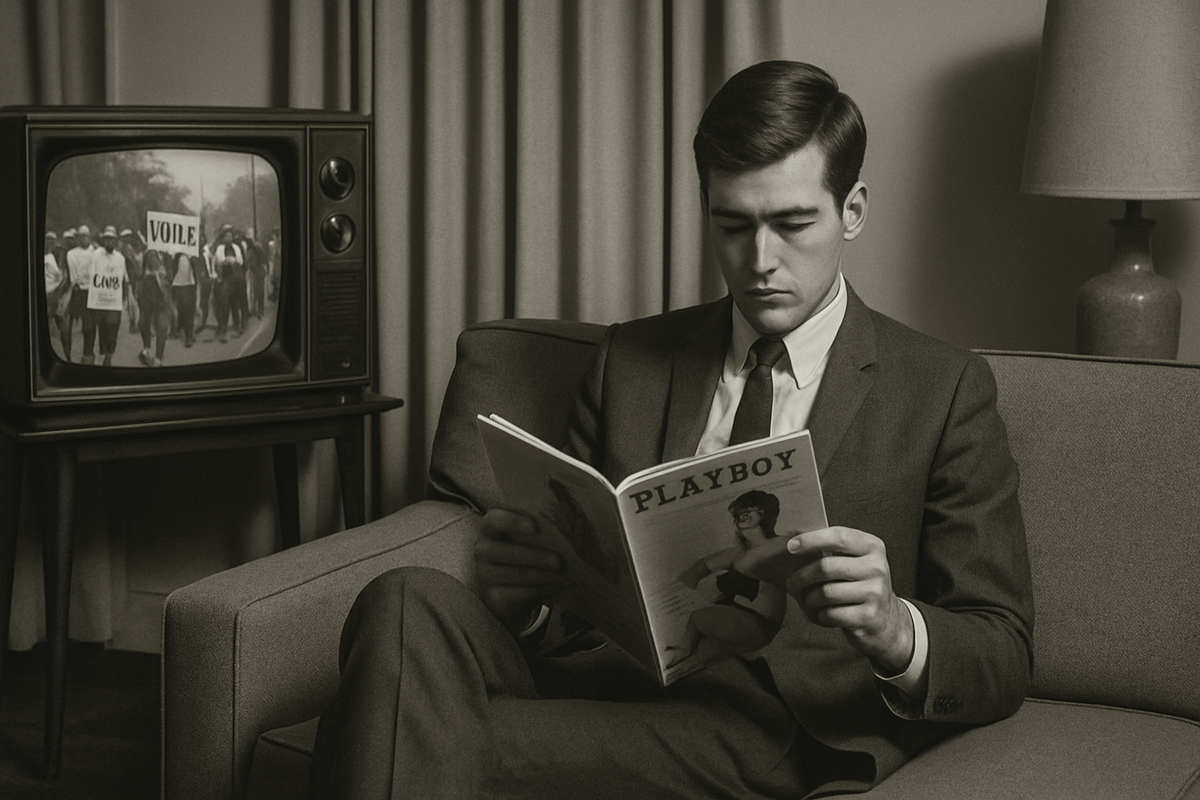
The Voting Rights Act had just become law. Blood still stained the Edmund Pettus Bridge. And on newsstands across the country, beneath a playful pink cover featuring the Playmate of the Year, Playboy published one of the most controversial editorial decisions in magazine history: a full interview with Robert Shelton, Imperial Wizard of the Ku Klux Klan.
This wasn't journalism as usual. This was a calculated confrontation—a decision to drag American hate into the light and force millions of readers to reckon with it over their morning coffee.
Archive Details
Historical Figure: Robert Shelton, Imperial Wizard of the Ku Klux Klan
Issue Date: August 1965
Historical Context: Published days after the Voting Rights Act of 1965
Archive Source: Playboy Magazine
When Sophistication Met the Southern Cross
By 1965, Hugh Hefner had transformed Playboy from a pinup magazine into something far more dangerous to the establishment: a forum. Malcolm X, Martin Luther King Jr., Fidel Castro—Hefner's interview series had become required reading for anyone who wanted to understand power in America. The questions were sharp. The subjects unfiltered. The contradictions laid bare.
But Shelton was different.
The Klan had surged back from dormancy, riding a wave of terror across the South. Bombings. Burnings. Assassinations meant to halt integration at any cost. And here was its leader, given the same platform as philosophers and presidents.
The decision sparked fury. But it also did something crucial: it exposed the machinery of hate.
The Juxtaposition America Needed to See
Open the August 1965 issue and you experience cognitive dissonance as design. The cover radiates optimism—a woman in a form-fitting red dress stepping through a paper tear in the iconic rabbit logo, all against that vivid pink backdrop. Pure mid-century modernism. Youth. Pleasure. The American Dream made glossy.
Turn the pages and you find something else entirely.
The interview format stripped Shelton of mystique. No burning crosses. No hooded anonymity. Just questions and answers that revealed how "tradition" became code for terror, how Christianity was weaponized to defend racism, how organized violence masqueraded as patriotism.
Playboy didn't endorse. It dissected.
Every answer Shelton gave became evidence—not of strength, but of the desperate, violent resistance to a changing America. The magazine's editors probed the Klan's methods, its justifications, its vision of the future. And in doing so, they created a document that couldn't be ignored or dismissed.
This was journalism as autopsy.
The Themes That Defined a Moment
The Resurgence of the Klan
Shelton's leadership symbolized how the Klan of the 1960s tried to rebrand itself not as a relic of the past, but as a defender of "American tradition" against integration.
Violence and Intimidation
The interview revealed how terror, threats, and organized intimidation were used to resist desegregation and maintain white supremacy.
Religion and Hypocrisy
Shelton often cloaked his views in religious language, highlighting how Christianity was weaponized to defend racism—a contradiction that resonated deeply in a supposedly moral nation.
Civil Rights Backlash
The conversation underscored how gains made by African Americans in 1965 were met with equally fierce attempts to strip them away.
The Legacy of Bold Publishing
What made Playboy revolutionary in the 1960s wasn't just its photography or fiction. It was the magazine's refusal to separate pleasure from politics, entertainment from ethics, style from substance.
Other publications picked sides. Playboy chose complexity.
The August 1965 issue demonstrated that freedom of the press means more than amplifying voices you agree with. It means creating space for Americans to witness—and judge—the forces threatening democracy itself.
Shelton's words, preserved in those pages, became a confession. Not of crimes (he admitted none), but of an ideology so deeply threatened by equality that violence became its only response.
These magazines endure as more than nostalgia. They're evidence of how we got here.
Why This Issue Still Matters
Historical Precision
Published days after the Voting Rights Act, this issue documented the collision between legislative progress and violent backlash in real time.
Editorial Courage
Few publications would risk their brand platforming hate—not to celebrate it, but to expose it. Playboy bet that its readers were sophisticated enough to understand the difference.
Cultural Evidence
This magazine proves that America's racial reckoning wasn't abstract or distant. It was happening in living rooms, on coffee tables, in barbershops—everywhere this issue reached.
Collector Demand
Issues that mark inflection points in American history—especially those that combined cultural controversy with social upheaval—remain among the most sought-after by serious collectors.
Explore the Archive
Thousands of original Playboy magazines from the 1950s through the 1970s document entire decades of American culture as it unfolded—the politics, the sexuality, the art, the arguments that shaped modern life.
Browse Playboy Magazine CollectionHold History in Your Hands
The August 1965 issue of Playboy remains what it was then: controversial, uncomfortable, and essential.
It proved that even a magazine famous for glamour could pierce the heart of American darkness. That entertainment and enlightenment weren't opposites. That journalism's highest calling wasn't comfort—it was truth, however ugly.
For anyone who values the artifacts of cultural memory, this isn't just a magazine. It's proof that once upon a time, American media believed its readers were brave enough to face what needed facing.
The question it posed in 1965 still echoes: What will we do with the truth once we see it?