
Hollywood's Whiz Kids: When America Fell for Its Youngest Stars
The August 13, 1979 Time Magazine cover story that captured Hollywood's most controversial moment
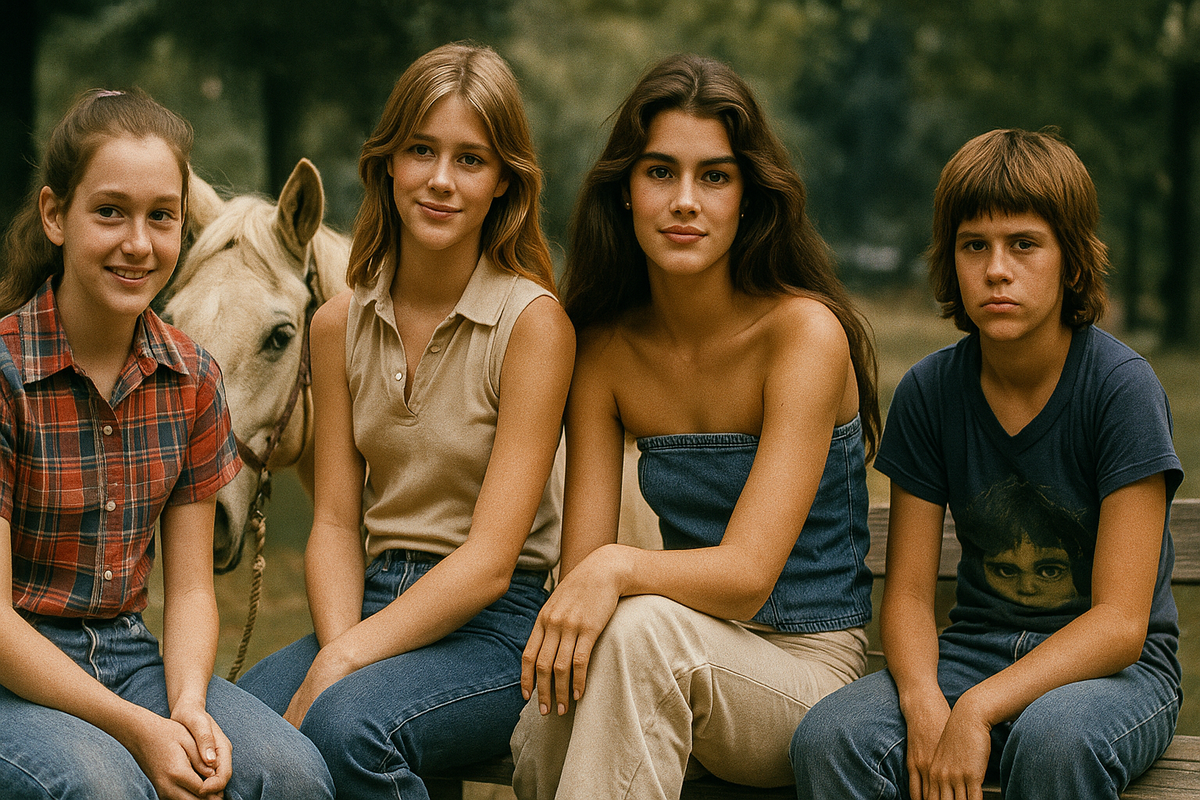
August 13, 1979. A Monday morning. Across America, subscribers pulled Time Magazine from their mailboxes and found themselves staring at something unexpected: not politicians, not war, not economic doom—but four teenage girls who were about to force the country into an uncomfortable conversation about childhood, fame, and how far Hollywood should be allowed to go.
The cover story, "Hollywood's Whiz Kids: A Bouquet of Fresh Faces to Light Up the Screen," profiled Brooke Shields, Mariel Hemingway, Diane Lane, and Linda Manz—actresses barely into adolescence who were already carrying films with adult themes, adult controversy, and adult consequences. This wasn't innocent entertainment. This was Time holding up a mirror to an industry that had decided teenagers could sell tickets by playing roles their own parents weren't sure they should see.
More than four decades later, this issue remains one of the most revealing documents of 1970s Hollywood—a snapshot of the exact moment when youth stopped being protected and started being packaged.
Archive Details
Publication: Time Magazine
Issue Date: August 13, 1979
Cover Story: "Hollywood's Whiz Kids: A Bouquet of Fresh Faces to Light Up the Screen"
Featured: Brooke Shields, Mariel Hemingway, Diane Lane, Linda Manz
The Summer Hollywood Stopped Playing It Safe
By 1979, the game had changed. Three years earlier, Jodie Foster had stunned audiences in Taxi Driver (1976), playing a 12-year-old prostitute with such unnerving authenticity that critics didn't know whether to applaud her talent or denounce the filmmakers. Brooke Shields followed with Pretty Baby (1978), cast at age 12 as a girl raised in a New Orleans brothel. The performances were extraordinary. The ethics were questionable.
This was Hollywood's new calculus: teen stars in complex, controversial narratives that blurred every line between art and exploitation. Diane Lane, just 13, had debuted in A Little Romance with what Time called "a braces-just-came-off prettiness." Mariel Hemingway had just finished shooting Woody Allen's Manhattan (1979), playing the teenage girlfriend of a 42-year-old man. Linda Manz brought raw, unpolished energy to Days of Heaven and The Wanderers, a different kind of stardom—one rooted in authenticity instead of glamour.
The Disney formula was dead. The new Hollywood bet on precocity, controversy, and box office heat generated by youth in roles that made adults squirm.
Why Time Mattered in 1979
Time wasn't a gossip rag. It was the magazine that presidents read, that shaped national conversation, that turned entertainment into cultural analysis. When Time covered Hollywood, it wasn't about celebrity worship—it was about asking what our obsessions revealed about us.
The "Hollywood's Whiz Kids" feature combined striking photography with sharp-edged profiles. Brooke Shields roller-skating through Manhattan. Diane Lane on horseback. Mariel Hemingway projecting confidence that seemed borrowed from someone twice her age. The images were bright, youthful, kinetic—and they stood in jarring contrast to the heavy subject matter of the films these actresses were promoting.
For American families reading over breakfast, Time made one thing clear: this wasn't just about movies. This was about what we were willing to accept, what we were willing to pay for, and what we were asking of children in the name of art.
The Cover That Captured a Turning Point
The August 13, 1979 cover used bold typography—Hollywood's Whiz Kids—paired with fresh-faced images that conveyed lightness and promise. But the editorial inside delivered something far more complex. Time's writers balanced admiration for these young actresses with pointed questions about the industry exploiting them.
Were audiences complicit in rewarding films that commodified childhood? Was Hollywood pushing boundaries or simply cashing in on taboo? And what did it mean that America's newest cultural icons were barely teenagers?
Time didn't answer those questions. It simply laid them out—alongside studio portraits and candid lifestyle shots that emphasized both the glamour and the vulnerability of its subjects.
The Four Who Changed Everything
Brooke Shields
At 14, she was already a veteran. Time described her as "unawed by fame and beauty," having starred in Pretty Baby and preparing for The Blue Lagoon. She was the face of the movement: beautiful, controversial, impossible to ignore.
Mariel Hemingway
Praised for her "cheekbones and spring-fed soul," Hemingway's role in Manhattan made her both a breakout star and a symbol of Hollywood's fixation on pairing youth with adult desire.
Diane Lane
At just 13, she carried A Little Romance with natural screen presence that signaled a new generation of actresses who didn't need to wait for adulthood to command a film.
Linda Manz
Quirky, raw, unconventional. She offered an alternative to the polished beauty of her peers—a reminder that teen stardom didn't have to be pretty to be powerful.
Together, they represented both the promise and the cost of Hollywood's gamble on youth.
The Authority That Endures
Time's 1970s Hollywood coverage matters because it wasn't disposable. It was read by policymakers, educators, critics—people who shaped how America understood its own culture. These weren't fan magazine puff pieces. They were cultural documents that contextualized cinema within broader shifts: feminism, changing family structures, censorship debates, the rise of the blockbuster.
That authority is what makes vintage Time magazines powerful artifacts. They don't just report history. They are history—offering direct access to the anxieties, aspirations, and arguments of their era.
Why Collectors Covet This Issue
Historical Timing
Published at the peak of debates over child stardom, it documents the exact moment when Hollywood's treatment of young actors became a national conversation.
Iconic Photography
Images of Brooke Shields, Mariel Hemingway, Diane Lane, and Linda Manz at the very beginning of their careers remain some of the most striking visual records of early celebrity.
Cultural Significance
This issue captures late-1970s Hollywood in transition—moving away from studio-era innocence toward the darker, more daring storytelling that would define the 1980s.
Collector Demand
Entertainment-focused Time issues, especially those profiling actors at career-defining moments, command strong interest among film historians, cultural archivists, and vintage magazine collectors.
Owning this issue means owning a primary source—the magazine that introduced middle America to the faces who would dominate the next decade of cinema.
A Moment Preserved
The August 13, 1979 issue of Time Magazine didn't just celebrate four young actresses. It asked America to look at itself—at what we demanded from children, what we paid to see, and what we were willing to overlook in the name of art.
More than 40 years later, that conversation hasn't ended. But this issue remains—a document of the exact moment when Hollywood's future was being written by its youngest, most controversial stars. And thanks to Time's unmatched reporting and photography, that moment hasn't faded.
For anyone who values film history, this isn't just a magazine. It's evidence of the day America realized it had fallen for its whiz kids—and wasn't sure whether to be proud or ashamed.
Explore the Archive
Thousands of original Time magazines spanning the 1930s through the 1970s are available in our collection. Trace entire decades of culture, politics, and cinema as they were documented in real time—before hindsight revised the narrative.
Browse Time Magazine CollectionWhether you're a seasoned collector, a film historian, or simply fascinated by the moments when culture shifted beneath our feet, these magazines offer something irreplaceable: the chance to see history as it was first written.