
When Salinger Killed the Laughing Man
March 19, 1949: The New Yorker Story That Diagnosed Postwar America
On a spring Saturday in 1949, New Yorkers picked up their weekly magazine and discovered a children's story that ended in murder. J.D. Salinger's "The Laughing Man" appeared in the March 19 issue—two years before The Catcher in the Rye would make him a literary icon. But readers who turned to page 27 that weekend found something more unsettling than entertainment: a postwar meditation on how quickly innocence collapses when adults stop pretending.
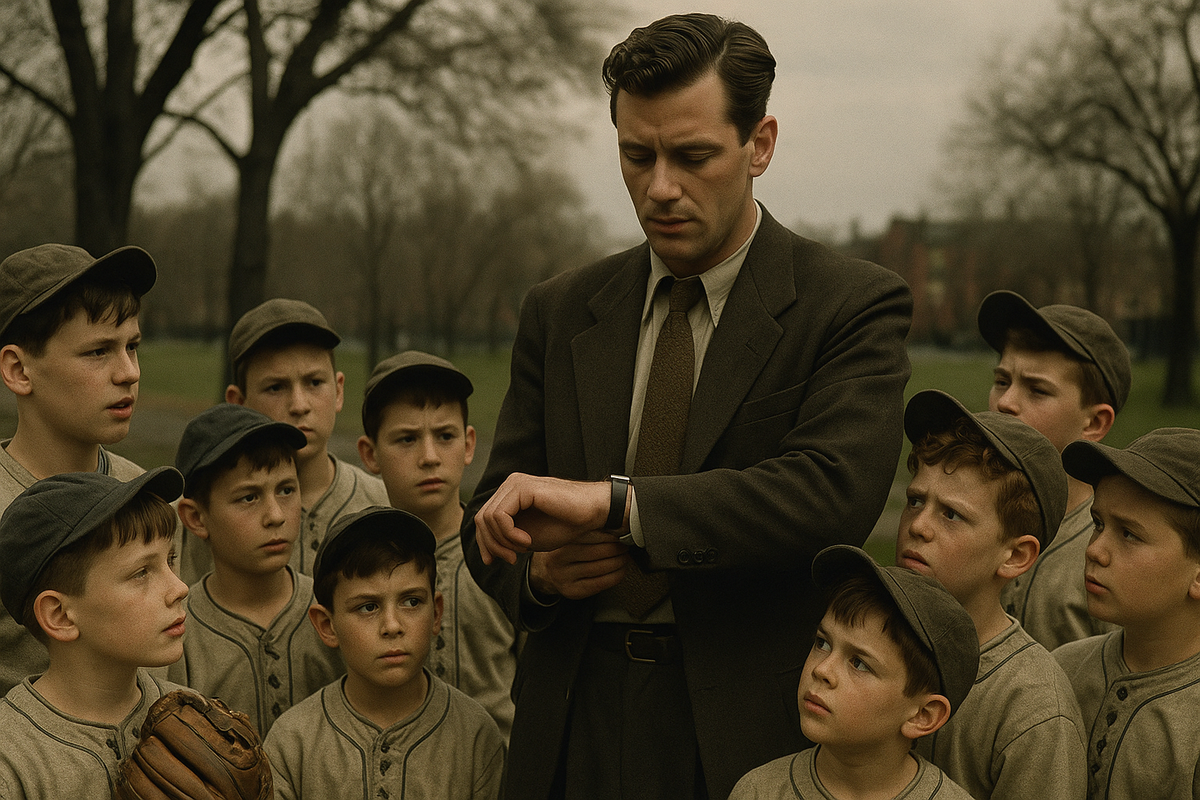
The story still cuts. A beloved camp counselor spins adventure yarns about a disfigured outlaw hero for his young charges in the Comanche Club. When his romance sours, he murders his fictional creation mid-tale, leaving the boys—and readers—to reckon with an ending that refuses consolation. Salinger wasn't just writing fiction. He was diagnosing the emotional condition of 1949 America.
Archive Details
Historical Figure: J.D. Salinger
Issue Date: March 19, 1949
Archive Source: The New Yorker Magazine
Story Title: "The Laughing Man"
The Uneasy Calm of 1949
Four years after V-J Day, America was still metabolizing the war. Veterans cycled through college on the G.I. Bill. Families reconstituted themselves around kitchen tables. The Cold War calcified across two continents. Jazz spilled out of basement clubs while paperback racks multiplied in drugstores. Baseball heroes signed autographs. Writers began questioning every inherited narrative.
Into this moment came "The Laughing Man"—a story structured like a nest of boxes. The outer frame: boys on a bus, playing stickball, listening to their Chief's ongoing saga. The inner frame: the Chief's faltering relationship with Mary Hudson. The deepest layer: the serialized adventures of the Laughing Man himself, a grotesque bandit-hero who lives in a forest and battles Chinese warlords.
When the Chief's romance fails, the fiction dies with it. The Laughing Man meets a violent end. The boys absorb the lesson that fantasy cannot outlast heartbreak. Salinger's genius was structural—he made form mirror theme. The collapse of the serial adventure parallels the collapse of childhood's protective stories. No comfort. No mercy. Just the abrupt recognition that adults lie, even in the stories they tell to shield you.
Why The New Yorker Published It
By 1949, The New Yorker had become the apex predator of American literary magazines. Where competitors chased headlines, editor Harold Ross and his successor William Shawn cultivated fiction that interrogated modern consciousness. They wanted stories that felt like overheard conversations—urban, ironic, psychologically alert.
Salinger delivered exactly that. His prose moved with the rhythms of spoken English, but underneath ran darker currents: alienation, class anxiety, the fraudulence of adult social performance. The New Yorker recognized him as a writer who could make postwar disillusionment feel intimate rather than abstract.
Publishing "The Laughing Man" in March 1949 was a statement. The magazine wasn't interested in tidy resolutions or sentimental nostalgia. It wanted fiction that acknowledged what the war had actually done to American emotional life—how it had shattered the comforting myths about innocence, heroism, and happy endings.
The March 19 Issue: Green Parade, Gray Mood
The cover that week showed an Irish parade figure striding forward against a bold green background—The New Yorker's nod to St. Patrick's Day and the city's immigrant pageantry. Witty. Understated. Pure New York.
Inside, the tonal whiplash was intentional. Cartoons satirized suburban conformity. Essays parsed cultural trends with surgical precision. And then came Salinger, delivering a story about children confronting adult failure through the death of a fictional hero.
This was the magazine's formula: sandwich literature between cartoons and commentary, trusting readers to navigate the shifts. The March 19 issue exemplified the method. You could flip from a drawing of a businessman trapped in his commute to a story about how love collapses and takes imagination with it. Both were documenting the same postwar world—one through humor, one through heartbreak.
The Architecture of Loss
The Comanche Club
Nine boys, one Chief, bus rides to ballgames. Ritual. Loyalty. The texture of male adolescence before everything gets complicated.
The Serial Adventures
Every week, the Chief adds another chapter to the saga of the Laughing Man: kidnapped as a child, disfigured, trained by bandits, now a forest-dwelling outlaw who raids the rich and eludes the authorities. The boys hunger for these installments the way kids now binge streaming series.
Mary Hudson
She enters the Chief's life and disrupts the Comanche Club's equilibrium. Romance intrudes. The boys sense something shifting but can't name it. When she exits—painfully, messily—the Chief's anguish bleeds into his storytelling.
The Ending
The Laughing Man, previously invincible, suddenly dies. Shot. Betrayed. The Chief terminates the serial without warning, without reprieve. The boys experience their first lesson in how adult emotions can destroy the stories that sustain childhood wonder.
Salinger's parallel structure wasn't subtle, but it was devastating. The fiction-within-the-fiction dies because the man telling it can no longer sustain the performance. Innocence doesn't fade—it gets executed.
What Makes This Issue Valuable
For collectors, the March 19, 1949 New Yorker occupies a specific position in literary history.
Timing – This is Salinger before global fame, testing the themes that would explode in The Catcher in the Rye two years later. You can see Holden Caulfield forming in the emotional DNA of this story—the distrust of adult phoniness, the longing for authenticity, the sense that growing up means losing something irreplaceable.
First Appearance – Original New Yorker printings of Salinger stories command serious collector interest. Later anthologies and reprints exist, but the magazine debut carries unique authority. This is where "The Laughing Man" first entered American consciousness.
Cultural Snapshot – The issue captures a singular moment: postwar prosperity shadowed by anxiety, literary modernism going mainstream, and The New Yorker at peak influence. Every cartoon, every essay, every advertisement reflects 1949's contradictions.
Preservation – Unlike daily newspapers, The New Yorker was designed to be kept. Subscribers saved issues. Libraries archived them. The magazine's physical durability and cultural prestige meant that copies survived, but pristine examples remain scarce.
Owning this issue means possessing the original context—the cover art, the surrounding content, the advertisements for products long vanished. It's not just a Salinger artifact. It's a window into how Americans were reading, thinking, and questioning in the uncertain spring of 1949.
Why These Pages Still Matter
The New Yorker's postwar fiction endures because it refused easy answers. Salinger's contemporaries—John Cheever, Shirley Jackson, John O'Hara—were all wrestling with the same tension: how to write about modern life when traditional narratives about progress, virtue, and meaning had collapsed along with everything else.
"The Laughing Man" crystallizes this tension. The Chief's serialized adventures represent the old consoling stories—heroes triumph, villains fall, justice prevails. But adult reality doesn't cooperate. Romance fails. Disappointment intrudes. And when the storyteller can no longer maintain the illusion, the story simply ends. No moral. No redemption. Just the recognition that fiction cannot forever shield us from experience.
These issues weren't throwaway entertainment. They were designed to be discussed, reread, argued over. Seven decades later, they remain among the most precise records we have of how Americans processed the gap between wartime sacrifice and peacetime ambiguity.
Collector Significance
Historical Timing
Published at a turning point when postwar fiction was redefining itself, this issue captures Salinger before his global fame, making it a milestone in American literature.
Early Salinger
Original appearances of Salinger's short stories in The New Yorker are highly collectible, as they reveal the evolution of his style leading to The Catcher in the Rye.
Cultural Significance
The issue reflects not only Salinger's artistry but also the broader mood of America on the cusp of the 1950s.
Collector Demand
Vintage New Yorker issues featuring major authors—Salinger, John Cheever, John Updike—are highly sought after by scholars, collectors, and literary enthusiasts.
Find Your Own Piece of 1949
The March 19, 1949 issue represents everything that made vintage New Yorker magazines indispensable to American cultural life:
A cover that captures the city's wit and ethnic vitality.
J.D. Salinger working out the themes that would define postwar American fiction.
The magazine's signature blend of humor, literature, and cultural intelligence—all preserved in a single artifact.
Explore the Archive
From the Roaring Twenties through the postwar years, these issues preserve decades of American thought, style, and creative ambition.
Browse The New Yorker Magazine CollectionThe Moment Before Fame
The March 19, 1949 New Yorker captures J.D. Salinger at a pivot point—accomplished enough to command The New Yorker's pages, but still two years away from the novel that would make him a cultural phenomenon and, eventually, a recluse.
"The Laughing Man" shows him perfecting his method: using children's perspectives to expose adult failures, structuring stories to make form embody meaning, and refusing sentimental consolation even when it would be easier. The Comanche Club boys don't get an explanation for why their hero died. They just learn that stories end when the person telling them can no longer bear to continue.
That's the lesson of 1949, preserved in newsprint and ink. Innocence is fragile. Disillusionment is structural. And the best fiction doesn't cushion the blow—it makes you feel the full weight of the fall.
For collectors, historians, and anyone who values the intersection of literature and cultural memory, this issue isn't just reading material. It's evidence. It's testimony. It's the exact moment when one of America's most influential writers put his vision of postwar loss into circulation—and found an audience ready to recognize their own experience in his fiction.