
The Magazine That Taught What Textbooks Buried
How Ebony's February 1962 Issue Reclaimed the History of Slave Rebellions During the Height of the Civil Rights Movement
In February 1962, while American schools were still teaching that enslaved people passively accepted their bondage, a glossy magazine landed on kitchen tables across Black America with a different story.
The cover showed Garcel "Cookie" Cole—Nat King Cole's daughter—styled in youthful elegance. But inside, past the spring fashion spreads and entertainment news, readers found something explosive: Lerone Bennett Jr.'s "Slave Revolts and Insurrections," Part V of his landmark Negro History series.
Bennett didn't ask permission to rewrite American mythology. He simply did it.
Archive Details
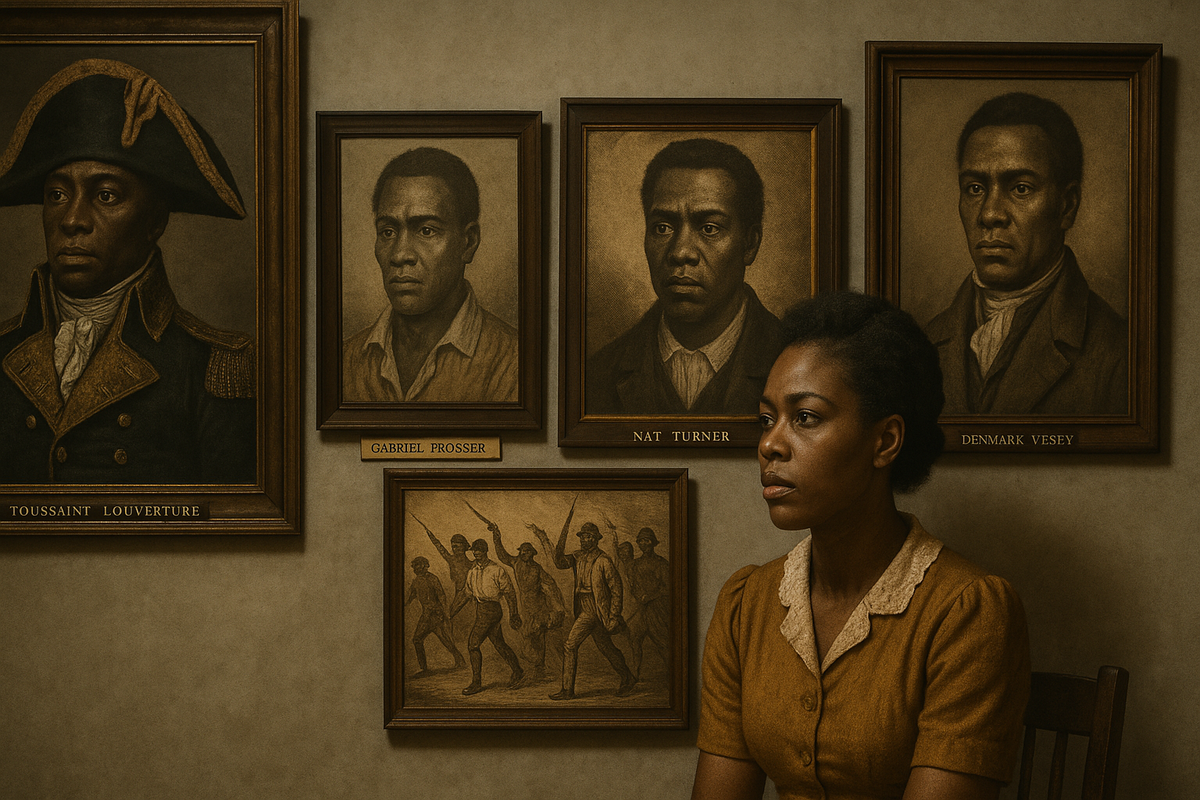
Historical Figures: Nat Turner, Toussaint L'Ouverture, Gabriel Prosser, Denmark Vesey
Issue Date: February 1962
Archive Source: Ebony Magazine
Author: Lerone Bennett Jr.
Series: Negro History, Part V
When History Became Weaponized Memory
The timing was surgical. Two years after Greensboro. One year after the Freedom Rides. One year before Birmingham would burn and Malcolm X would stand at the crossroads of the movement's future. African Americans were marching into fire hoses and police dogs, and Ebony was reminding them why: their ancestors had never stopped fighting.
While white textbooks mumbled vague phrases about the "peculiar institution," Bennett laid out the architecture of resistance. Toussaint L'Ouverture didn't just rebel—he dismantled Napoleon's western empire and forced France to sell the Louisiana Territory. Gabriel Prosser's 1,000-man army nearly took Virginia under the banner "Death or Liberty." Denmark Vesey, a free Black carpenter in Charleston, organized a conspiracy so vast that its discovery sent shockwaves through the entire slaveholding South.
And then there was Nat Turner.
The Prophet Who Terrified a Nation
Bennett's treatment of Turner was neither apology nor hagiography—it was reckoning. Guided by visions and celestial signs, Turner led a rebellion in Southampton County, Virginia, that killed approximately sixty whites before its suppression. Ebony called it "a landmark in the history of slavery." Where other publications framed Turner as a fanatic, Ebony presented him as a visionary preacher whose rebellion exposed the terror slaveholders lived with daily: the knowledge that their entire world rested on stolen labor and suppressed rage.
The article came illustrated with stark engravings—Toussaint facing Napoleon's generals, maps of Turner's route through Virginia, portraits of condemned rebels. These weren't decorative. They were proof. They said: This happened. These men existed. They fought back.
For readers in 1962, the message landed like a second education. The sit-ins weren't the beginning of Black resistance. They were the continuation.
The Genius of the Ebony Formula
What made this issue—and the entire Bennett series—so culturally seismic was Ebony's refusal to separate struggle from style. The same issue that detailed Haitian revolutionaries defeating French armies also featured "The Eased Look for Spring" and profiles of entertainers. This wasn't tonal whiplash. It was strategic.
Publisher John H. Johnson understood that Black life contained multitudes. Ebony readers deserved to see themselves as freedom fighters and fashion icons, as heirs to Toussaint L'Ouverture and as modern, aspirational Americans. The magazine's blend of glamour and gravitas was its own form of resistance—a rejection of the one-dimensional portrayals white media offered.
Where mainstream magazines ignored Black history or reduced it to footnotes, Ebony made it the centerpiece. Where white-owned publications might cover slave revolts as cautionary tales of violence, Ebony elevated them as chapters in a centuries-long freedom movement that stretched from Saint-Domingue to Selma.
Editorial Vision
Blending history, culture, and aspiration in ways no other publication attempted—creating a holistic portrait of Black American life.
Cultural Timing
Published during the Civil Rights Movement's acceleration, connecting past rebellions to present resistance.
Historical Reclamation
Placing enslaved Africans as agents of change rather than passive victims of circumstance.
Narrative Control
Black Americans telling their own story on their own terms, without waiting for white approval.
Beyond Turner: The Pattern of Resistance
Bennett's article didn't stop with the famous names. He traced smaller revolts across New York, South Carolina, Florida, and throughout the Caribbean—a relentless drumbeat of rebellion that proved resistance was neither isolated nor rare. The Gullah Jack conspiracy. The New York uprising of 1712. The Stono Rebellion. Each story built on the last, constructing an alternate American history where enslaved Africans were never passive victims but constant threats to the system designed to contain them.
This was the revelation: American slavery didn't end because of northern benevolence or Lincoln's signature alone. It crumbled under the weight of centuries of resistance, rebellion, escape, and refusal. The Civil War was the climax of a story that began the moment the first shackles were forged.
For Ebony's 1962 readers—many of whom were risking jobs, safety, and lives to integrate lunch counters and voting booths—this history wasn't abstract. It was lineage. It was permission. It was proof that their struggle was righteous because it was ancestral.
The Unbroken Arc
Ebony's February 1962 issue did something textbooks still struggle to accomplish: it connected past resistance to present action without flattening either into symbol or sentiment. Toussaint, Gabriel, Vesey, and Turner weren't martyrs frozen in amber. They were predecessors whose courage echoed in every march, every voter registration drive, every refusal to move to the back of the bus.
Bennett's article reminded readers that freedom was never granted. It was seized, again and again, across generations and geographies. That lesson made the Civil Rights Movement comprehensible not as an isolated moment of moral awakening, but as the latest chapter in a much longer war.
The magazine's cultural work extended beyond its pages. By placing slave rebellions alongside fashion spreads and celebrity profiles, Ebony insisted that Black history was American history—central, not peripheral. Dignified, not shameful. Heroic, not tragic.
That editorial vision is why vintage Ebony issues remain vital artifacts. They don't just document the past. They show how the past was understood, taught, and weaponized by those who lived it.
Why This Issue Matters to Collectors
Historical Pivot Point
Represents a watershed moment in how African American history was told and who controlled the narrative. Before Bennett's series, comprehensive accounts of slave resistance were confined to academic circles.
Cultural Significance
Ebony brought this history into homes, barbershops, and beauty salons—into the everyday spaces where cultural memory is formed. This issue didn't just report history. It shaped it.
Milestone Content
Issues featuring Bennett's Negro History series are among the most sought-after in the Ebony catalog, alongside coverage of major civil rights events and profiles of transformative figures.
Perfect Timing
Published during the Civil Rights Movement's acceleration, combining landmark historical content with iconic cover photography and cultural relevance.
Primary Source Value
These are the exact pages that families in 1962 read at kitchen tables, extracting strength and historical knowledge while planning their next march or sit-in.
Living Artifact
Not a retrospective or a historian's later interpretation, but the artifact itself, preserved in newsprint and glossy photography—a direct link to how history was lived.
Explore the Full Archive
The February 1962 issue represents one chapter in Ebony's decades-long documentation of African American life, culture, and resistance. From the 1940s through the 1980s, the magazine chronicled everything from political movements and social justice campaigns to fashion, sports, and entertainment—always with the same commitment to dignity, aspiration, and truth-telling.
For collectors, historians, and families honoring their heritage, each issue is a direct link to how Black Americans saw themselves and shaped their own narratives during the 20th century's most transformative decades.
Browse Ebony Magazine CollectionTo hold the February 1962 issue of Ebony is to hold a moment when history was reclaimed. When Lerone Bennett Jr. wrote about Nat Turner's visions and Gabriel Prosser's army, he wasn't just documenting the past—he was arming his readers with knowledge that mainstream America had deliberately withheld.
Sixty years later, that knowledge still carries weight. The slave revolts Bennett detailed weren't preludes to freedom. They were freedom—fought for in blood, vision, and unbreakable will, long before Emancipation made it law.
This magazine didn't ask for a seat at the table of American historiography. It built its own table, and millions of readers pulled up chairs.
That's the artifact you're holding. That's the legacy preserved in print.