
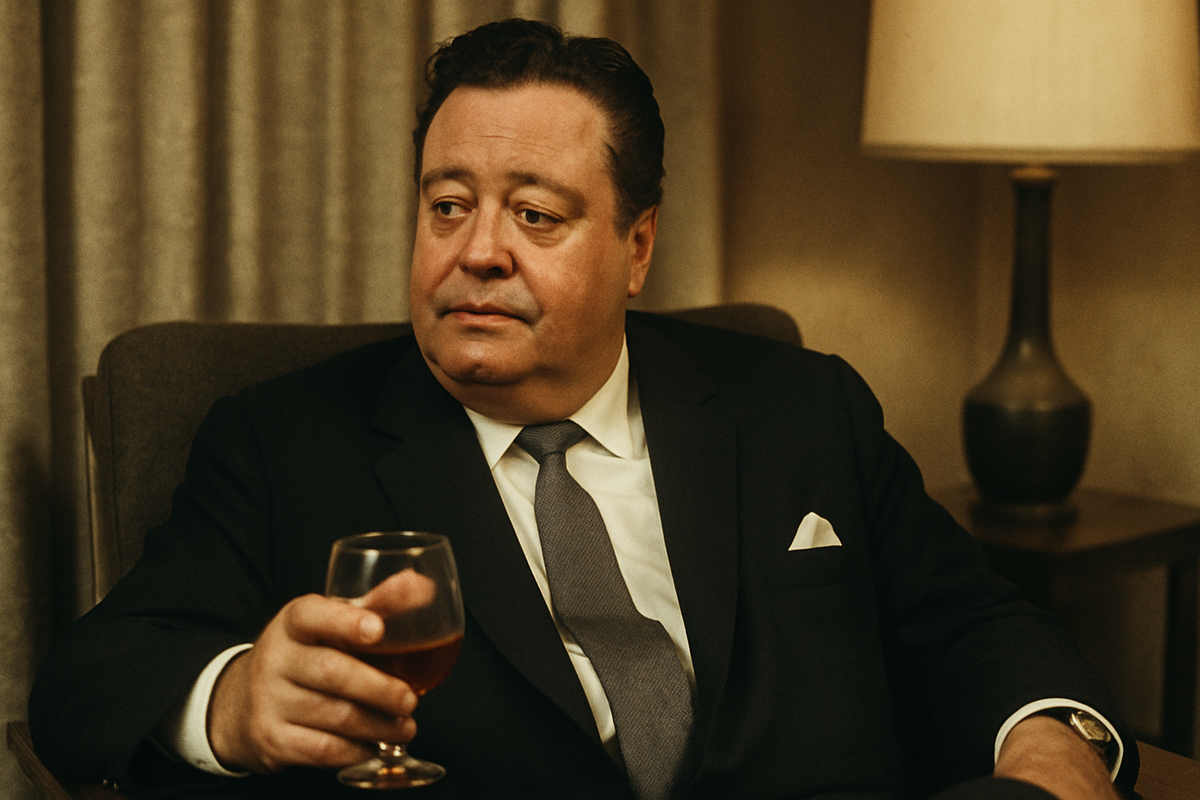
The Night Jackie Gleason Told America the Truth About Being Famous
Inside the December 1962 Playboy Interview that redefined celebrity journalism and captured television's takeover of American culture
December 1962. American living rooms still hummed with the aftershock of nuclear brinkmanship—the Cuban Missile Crisis had brought the world thirteen days from annihilation only weeks earlier. Yet inside those same homes, something else was happening: a quieter revolution, broadcast nightly through the blue glow of television sets.
Jackie Gleason owned that glow.
When the December 1962 issue of Playboy arrived on newsstands, it carried something unprecedented—a full-length, unfiltered conversation with "The Great One" himself. No scripts. No network censors. Just Gleason, in his own words, explaining what it meant to be famous in the age of television. For readers who'd watched Ralph Kramden threaten to send Alice "to the moon" every Saturday night, this was something different entirely: the man behind the character, stripped of pretense, talking about money, excess, insecurity, and the strange machinery of American celebrity.
It was the kind of intimacy television couldn't deliver. And it changed what Americans expected from fame.
Archive Details
Historical Figure: Jackie Gleason, "The Great One"
Issue Date: December 1962 (Playboy's Ninth Anniversary Issue)
Cultural Context: Post-Cuban Missile Crisis, height of television's dominance
Archive Source: Original Magazines Collection
Television's New Aristocracy
By 1962, the old Hollywood star system was dying. Film actors still commanded prestige, but television stars commanded something more powerful: presence. They weren't distant gods on silver screens—they were guests in your home, week after week, building a strange familiarity that no movie star could match.
Gleason understood this instinctively. His variety show and The Honeymooners hadn't just made him famous—they'd made him a fixture of American domestic life. His catchphrases became national idioms. His characters reflected the dreams and frustrations of working-class America. He was everywhere and nowhere at once: intimate yet untouchable, a television star in the truest sense.
But who was he when the cameras went dark?
That's what Playboy set out to answer. And in doing so, Hugh Hefner's magazine—then nine years old and already a cultural juggernaut—proved that long-form celebrity journalism could do what television never could: reveal the human machinery behind the public performance.
The Magazine That Made Celebrity Real
Playboy in 1962 was not what its critics claimed. Yes, it featured provocative photography. But it also published Ray Bradbury and James Thurber, ran incisive satire by Art Buchwald and Shel Silverstein, and pioneered a form of interview journalism that treated celebrities as thinking, contradictory, fully dimensional human beings.
The Playboy Interview—launched just a year earlier in 1962 with Miles Davis—was already becoming legendary. Unlike the soft-focus profiles in fan magazines or the stilted press junket quotes in newspapers, these conversations ran long, sharp, and unvarnished. They gave readers something unprecedented: celebrities speaking with the candor usually reserved for late-night conversations among friends.
The Gleason interview exemplified this approach. Across its pages, readers encountered:
Gleason insisted that great comedy wasn't about polish or rehearsal—it was pure instinct, timing, and the courage to trust your gut in front of an audience. Technique could be taught. Presence couldn't.
He laughed off his reputation for excess—the food, the drink, the spending—not by denying it but by embracing it as part of his public persona. Why hide who you were?
Gleason admitted he spent freely and saved little, valuing experiences and pleasure over security. In an era when frugality was still considered a virtue, this was radical honesty.
Even at the peak of his fame, Gleason confessed moments of self-doubt. The bravado and the vulnerability coexisted. That's what made him real.
This wasn't publicity. It was portraiture.
The Issue as Cultural Artifact
The December 1962 cover set the tone perfectly: a model in a white fur-trimmed robe, posed beside wrapped Christmas gifts, blending holiday warmth with sophisticated allure. Inside, the magazine offered a complete cultural experience—fiction, satire, holiday features, and the Gleason interview anchoring it all.
This wasn't just a magazine. It was a document of a specific American moment: the convergence of television dominance, Cold War anxiety, consumer prosperity, and the transformation of masculinity. Playboy captured all of it—the contradictions, the aspirations, the new possibilities of postwar life.
That's why this issue endures. It's not nostalgia. It's evidence.
The Permanence of Print
Today's celebrity interviews are clipped into social media soundbites, consumed in seconds, and forgotten by morning. The December 1962 Playboy reminds us that cultural journalism was once built to last—meant to be read slowly, studied, saved, and returned to.
That permanence is what gives vintage magazines their power. They're physical witnesses to their era. They don't just report history—they are history, preserved in ink and paper.
The Jackie Gleason interview captured something that couldn't be faked: the voice of American celebrity at the exact moment when television was remaking fame itself. Sixty years later, those words still speak.
Why Collectors Treasure This Issue
As Playboy's Ninth Anniversary Issue, it marks the magazine's transformation from controversial upstart to cultural institution.
This interview helped establish the Playboy Interview series as essential reading, setting the template for candid celebrity journalism that would shape the genre for decades.
This issue documents the exact moment when television stardom eclipsed film fame, when celebrity became intimate rather than remote, when American masculinity was being reimagined through lifestyle magazines.
Early 1960s Playboy issues featuring major celebrities and anniversary milestones consistently command premium prices among serious collectors and cultural historians.
When you hold an original copy of this issue, you're not holding memorabilia. You're holding the actual pages that American men read in December 1962—the same words and images that shaped how a generation understood fame, success, and modern life.
Explore the Archive
Thousands of original Playboy magazines from the 1950s through the 1970s are available in our collection. Each issue is a portal into a specific moment—the politics, the art, the celebrities, the cultural conversations that defined decades of American life.
Browse Playboy Magazine CollectionWhether you're a serious collector, a cultural historian, or simply fascinated by how celebrity and media evolved in the 20th century, these magazines offer something irreplaceable: the chance to read history as it was first written.
The December 1962 issue isn't just about Jackie Gleason. It's about the moment when television, celebrity journalism, and American culture collided—and Playboy was there to document it all. That's not nostalgia. That's legacy.