
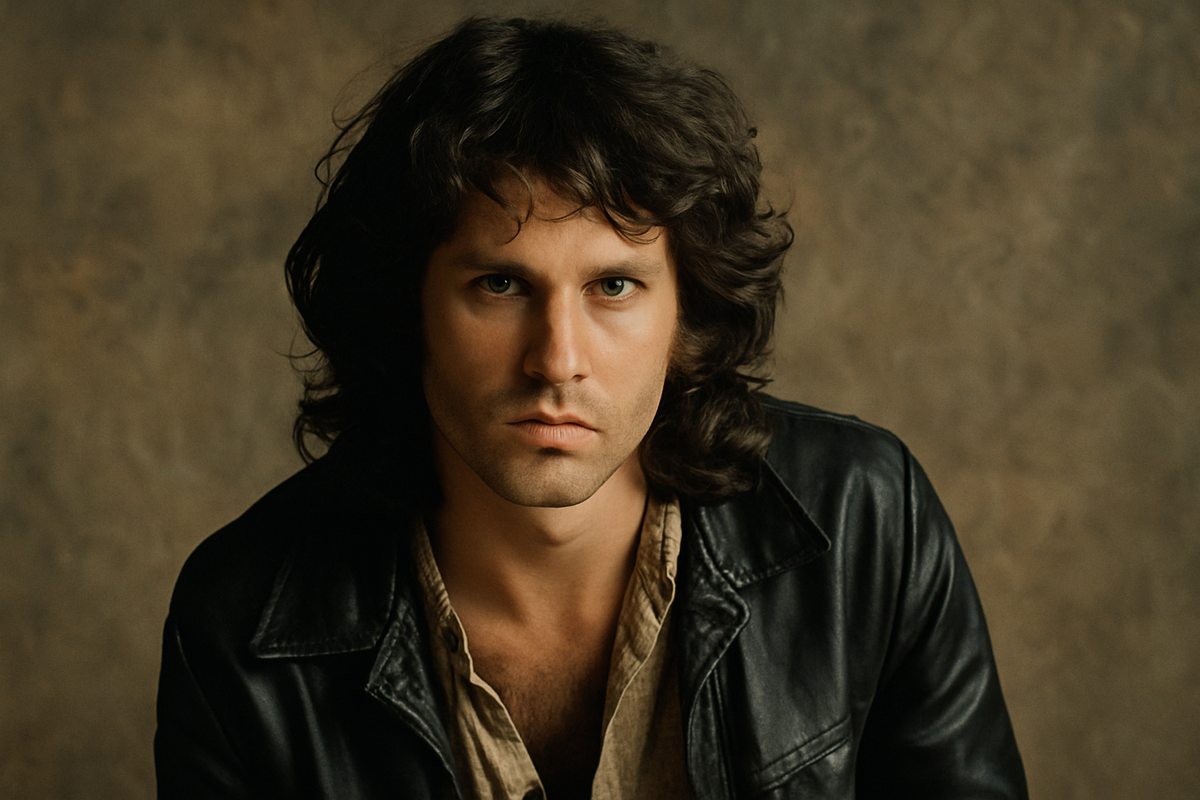
The Shaman Speaks: Jim Morrison's Defining Rolling Stone Interview
Jim Morrison was already a myth before he became a memory.
When readers cracked open the July 26, 1969 issue of Rolling Stone, they didn't find the usual rock star puffery. What Jerry Hopkins delivered was something rarer and more volatile: unfiltered access to Morrison's restless intelligence at the precise moment when his fame had become both intoxicating and suffocating. This wasn't an interview. It was a séance with the living.
For a generation navigating the wreckage of their own idealism, Morrison's words—cryptic, confrontational, achingly honest—offered no comfort. Only recognition.
Archive Details
Historical Figure: Jim Morrison, The Doors
Issue Date: July 26, 1969
Interviewer: Jerry Hopkins
Archive Source: Rolling Stone Magazine
Cultural Context: Weeks before Woodstock, months before Miami indecency charges
The Summer Everything Shifted
Summer 1969. Vietnam protests bleeding across college campuses. The optimism of the Summer of Love curdling into something harder, more desperate. The counterculture discovering that revolution was messier than poetry, and poetry couldn't stop bullets.
Musically, the air was charged with endings. The Beatles were fracturing toward Abbey Road. Hendrix had already bent the guitar into new dimensions. Woodstock loomed weeks away—destined to be remembered as both zenith and epitaph.
The Doors occupied their own territory in this landscape. Where San Francisco bands preached sunshine, Morrison's poetry bled through blues and psychedelia like ink through gauze. "Light My Fire" became an anthem, but "The End" was the real statement of purpose: Oedipal, apocalyptic, uncompromising. Morrison himself was less frontman than oracle—feared as much as worshipped.
This Rolling Stone interview captured him at the fault line. Within months, Miami authorities would charge him with indecency for alleged on-stage exposure. Within two years, Paris would claim him at 27. What Hopkins preserved was Morrison in full command of his contradictions, his voice still echoing across America's widening cultural chasm.
Rolling Stone's Gambit: Treating Rock Stars as Intellectuals
The layout itself announced ambition. No glossy celebrity worship. Instead: Morrison's thoughts sprawling across dense columns, the design prioritizing substance over spectacle. A film strip still from Feast of Friends—the Doors' documentary project—hinted at Morrison's cinematic obsessions, his hunger to transcend the concert stage.
Rolling Stone was staking a claim: rock musicians weren't just entertainers. They were the philosophers of a generation that had stopped trusting anyone over thirty.
Hopkins asked questions that mattered, then got out of Morrison's way. The result was Morrison discussing identity, mortality, and meaning—answering in riddles when cornered, retreating into laughter when the questions cut too close.
What Morrison Revealed (And Concealed)
Each revelation reinforced the paradox: Morrison was a rock star who resented rock stardom, a poet trapped in spectacle, a man fascinated by death who would soon become its most famous student.
The Artifact That Outlived Its Subject
Hopkins' interview endures because it captured Morrison thinking aloud about the questions that haunted him: What makes art genuine? When does fame corrupt? How do you live with the knowledge that you're performing your own mythology?
These weren't rhetorical exercises. Within 24 months, Morrison would be dead in a Paris bathtub, joining Hendrix and Joplin in the 27 Club. The interview acquired the weight of prophecy.
Unlike most celebrity profiles, this piece has aged into something sharper. Its questions about authenticity, mortality, and meaning still cut. Its photographs and typography remain artifacts of how Rolling Stone chronicled not just music, but an era's attempt to understand itself.
Why This Issue Endures
Historical Timing
Published weeks before Woodstock, it captured Morrison and the Doors at their commercial and artistic peak—before Miami, before exile, before Paris.
The Morrison Interview
One of his most substantial on-record conversations, it remains essential for understanding his worldview. Biographers and scholars return to it repeatedly.
Cultural Marker
The issue documents the counterculture's pivot from hope to reckoning, from peace signs to harder questions about power, excess, and survival.
Collector Demand
Magazines featuring Morrison, Hendrix, or the Beatles command serious attention from collectors who recognize their documentary value. This isn't nostalgia—it's historiography.
Owning this issue means possessing a moment when music, myth, and cultural upheaval converged in print. The July 26, 1969 Rolling Stone isn't just memorabilia. It's primary evidence.
Holding the Moment Before the Fall
The July 26, 1969 Rolling Stone interview with Jim Morrison remains one of the magazine's defining achievements. It revealed Morrison as poet, philosopher, and provocateur—a man embodying both the aspirations and anxieties of the counterculture.
This issue captures the 1960s at their peak and breaking point simultaneously. It reminds us how magazines like Rolling Stone shaped a generation's understanding of music, rebellion, and myth.
For collectors, historians, and devotees, this isn't nostalgia. It's authentication—tangible proof of the cultural revolution that defined the late 1960s, preserved in ink and newsprint.
For Collectors and Cultural Historians
If you're building a collection of vintage Rolling Stone issues, the July 26, 1969 edition is non-negotiable. It represents a pivot point for both the magazine and Morrison himself—the moment when rock journalism proved it could match its subjects in seriousness.
Browse Rolling Stone Magazine CollectionFrom Morrison in 1969 through punk's explosion, Reagan-era controversies, and grunge's ascension, Rolling Stone documented the soundtrack and the struggle. Each issue isn't paper—it's evidence.