
The Night Johnny Cash Became America
Rolling Stone, November 1, 1969
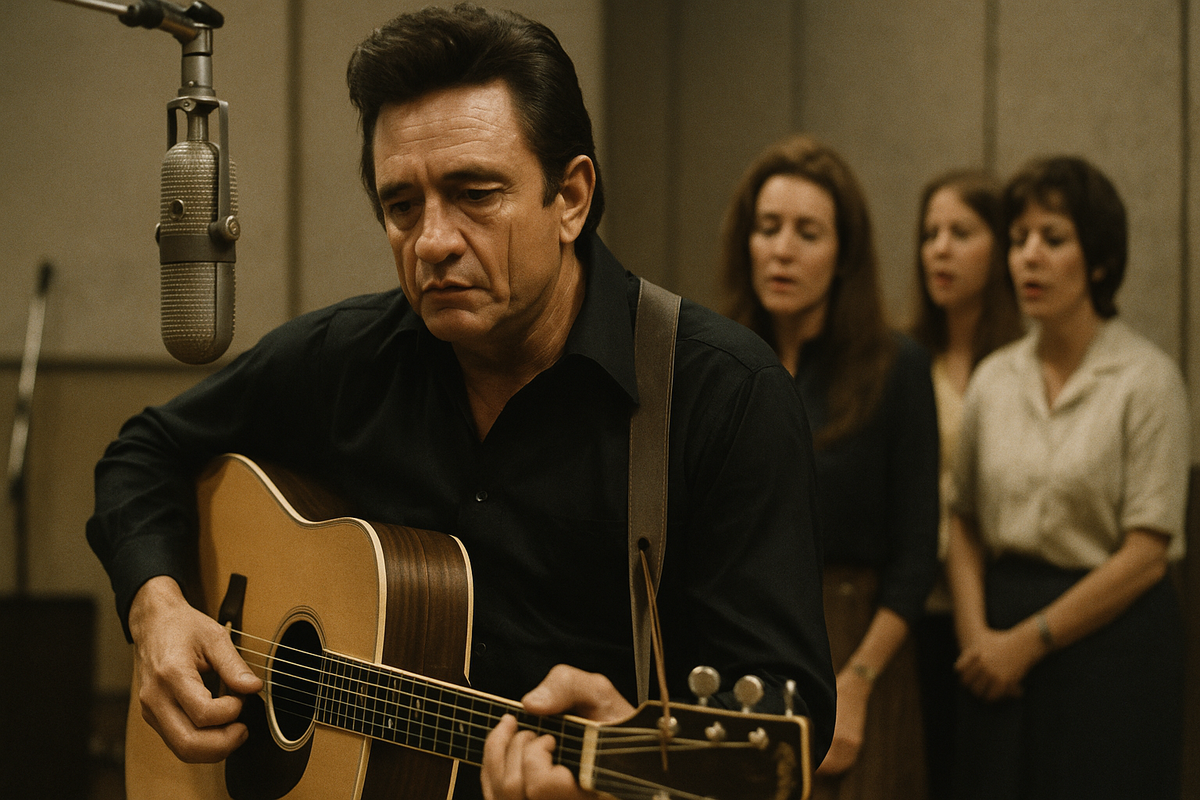
Picture this: November 1969. A college kid in Berkeley slides a fresh copy of Rolling Stone from a newsstand rack. A truck driver in Alabama picks up the same issue at a gas station off I-65. Both see the same face staring back—Johnny Cash, unvarnished and intense, caught mid-performance in a Nashville recording studio.
For one fleeting moment, the magazine in their hands made them countrymen again.
The November 1, 1969 issue of Rolling Stone didn't just profile a musician. It canonized the man who had become the rarest thing in fractured America: a voice both sides could trust.
Archive Details
Historical Figure: Johnny Cash
Issue Date: November 1, 1969
Archive Source: Rolling Stone Magazine
Writer: John Grissim
Cultural Context: Published months after At San Quentin, during Cash's transformation into a national voice
The Man Who Walked the Line Between Two Americas
By late 1969, the United States had split down fault lines so deep they seemed geological. Vietnam. Woodstock. Altamont's violence still fresh. Campus riots. Hard hats versus hippies. The country wasn't having a conversation—it was shouting past itself.
Johnny Cash walked straight into that chasm and planted his boots on both sides.
His prison albums—At Folsom Prison (1968) and At San Quentin (1969)—had done something unprecedented: they turned a fading country star into a prophet for the forgotten. Prisoners, yes. But also factory workers, veterans, activists, and anyone who felt the establishment had stopped listening. Cash wasn't singing to the downtrodden. He was singing as them.
Rolling Stone—still a scrappy, rebellious publication in 1969, not yet the glossy institution it would become—recognized what was happening. Cash wasn't just making records. He was stitching together the unraveling fabric of American identity through sheer force of authenticity.
Inside the Studio: John Grissim Captures Lightning
Writer John Grissim's profile wasn't a puff piece. It was reportage. He placed readers directly on the studio floor in Nashville, where Cash worked with the intensity of a man who knew his moment had arrived.
The photographs—raw, documentary-style frames—showed Cash under the hot studio lights, guitar slung low, the Carter Family harmonizing behind him. These weren't airbrushed celebrity portraits. They were evidence of work. June Carter's voice winding around his baritone. Stop. Restart. Do it again until the sound is right. The relentless pursuit of perfection that separates craftsmen from stars.
Grissim caught the contradiction that made Cash magnetic: outlaw and family man. Gospel roots and prison yard grit. A recovered addict who spoke openly about his demons while radiating hard-won faith. He was neither the polished Nashville establishment nor the drug-hazed counterculture—he was something older and more durable. Biblical, almost.
Rolling Stone didn't mythologize him. That's why the piece still resonates. They showed the sweat.
Why This Issue Changed Everything
What made this profile seismic wasn't just Cash—it was the cultural signal Rolling Stone sent by putting him in their pages.
The magazine had built its reputation on rock royalty: the Stones, Dylan, Hendrix. Country music was still suspect to the Haight-Ashbury set, dismissed as reactionary and square. But Cash's prison records had scrambled the codes. Suddenly, Berkeley radicals and Alabama conservatives were listening to the same album. The man in black belonged to everyone.
By featuring Cash in November 1969, Rolling Stone acknowledged what was already happening on the ground: genre boundaries were dissolving. Authenticity mattered more than category. Cash was the bridge—not because he compromised, but because he refused to.
The article framed him not as a country singer who'd crossed over, but as a national voice who'd never left. He spoke for prisoners and preachers, outlaws and the faithful, the forgotten and the defiant. In an era when pop music was growing slicker and more commercialized, Cash offered something increasingly rare: truth without varnish.
The Elements That Made History
Studio Authenticity
Cash recorded with precision, stopping and restarting until the sound was exactly right, proving his relentless pursuit of perfection in the Nashville sessions.
The Carter Family
June and the Carter sisters' harmonies underscored the blending of tradition and modernity in Cash's work, grounding his outlaw image in family.
National Voice
Rolling Stone framed him not only as a musician but as a cultural figure who spoke for prisoners, the poor, and everyday Americans.
Between Worlds
Cash bridged divides: country and rock, conservative and countercultural, sacred and secular—all without compromise.
Why Collectors Covet This Issue
Historic Timing
Published mere months after At San Quentin topped the charts, capturing Cash at the absolute zenith of his cultural influence—before the moment cooled, before nostalgia set in.
Iconic Photography
The Nashville studio images rank among the most powerful Rolling Stone ever published. They're not just celebrity shots—they're primary historical documents of American music being made.
Cultural Crossroads
This issue exists at the exact intersection where country music, rock journalism, and national identity collided. It's the Rosetta Stone for understanding how Cash transcended genre.
Golden Era Journalism
This comes from Rolling Stone's early years, when the magazine was still dangerous, still necessary. The writing has weight that digital content can't replicate.
The Enduring Power of Analog Truth
What makes this profile timeless isn't nostalgia—it's craft. Grissim and Rolling Stone gave Cash's story the space it deserved. They slowed down. They observed. They let the humanity breathe alongside the history.
You see Cash working. Struggling. Perfecting. Surrounded by family, grounded by June, carrying the weight of a country that desperately needed someone to speak for all of it, not just half.
In our current era of algorithmic content and 280-character hot takes, this issue stands as a reminder of what journalism could do when it took its time and got it right.
Add This to Your Collection
If you're drawn to the intersection of music, history, and cultural transformation, the November 1, 1969 issue of Rolling Stone isn't optional—it's foundational.
This isn't just about Johnny Cash. It's about the moment when American music became the only language a divided nation could still speak together.
Browse Rolling Stone Magazine CollectionFrom the 1960s through the 1970s, Rolling Stone chronicled more than albums and concerts—it documented the soundtrack of social upheaval, political awakening, and cultural revolution. Each issue is a portal to the moment when music mattered most.
The Verdict
The November 1, 1969 issue of Rolling Stone remains one of the most significant cultural documents of its era. Its Johnny Cash feature didn't just profile a musician at his peak—it captured a man standing at the center of America's identity crisis, holding the center when everything else was flying apart.
To hold this issue is to hold 1969 itself: the year when one voice, weathered and true, reminded a fracturing nation what it sounded like to be whole.