
When Hollywood's Greatest Love Story Became a Cautionary Tale
How the October 1973 Ladies' Home Journal turned Elizabeth Taylor and Richard Burton's unraveling marriage into a cultural mirror for American women
The woman on the cover needed no introduction. Elizabeth Taylor's face—violet eyes fixed somewhere between defiance and exhaustion—stared out from the October 1973 issue of Ladies' Home Journal like a warning shot across the bow of American marriage itself.
Inside, Dorothy Cameron Disney, the magazine's legendary marriage columnist, had done something unprecedented: she'd turned her famous advice column toward one of the 20th century's most spectacular romantic disasters. The headline was blunt, almost cruel: "Why This Marriage Can't Be Saved." If even Elizabeth Taylor and Richard Burton—with their yachts, their diamonds, their seemingly infinite capacity for grand passion—couldn't make it work, what hope did anyone have?
That was precisely the point.
Archive Details
Historical Figures: Elizabeth Taylor, Richard Burton
Publication: Ladies' Home Journal, October 1973
Featured Columnist: Dorothy Cameron Disney
Archive Source: Original Magazines Collection
The Magazine That Held a Mirror to American Women
By October 1973, Ladies' Home Journal had spent decades as the arbiter of American domesticity, reaching millions of households each month. But this wasn't your grandmother's advice column about burnt pot roasts and stubborn husbands. The early 1970s had fractured the old certainties. Second-wave feminism was forcing uncomfortable conversations about autonomy, fulfillment, and the cost of traditional marriage. Watergate was unraveling trust in institutions. Vietnam had shattered national consensus. Even the idea of "happily ever after" seemed suddenly negotiable.
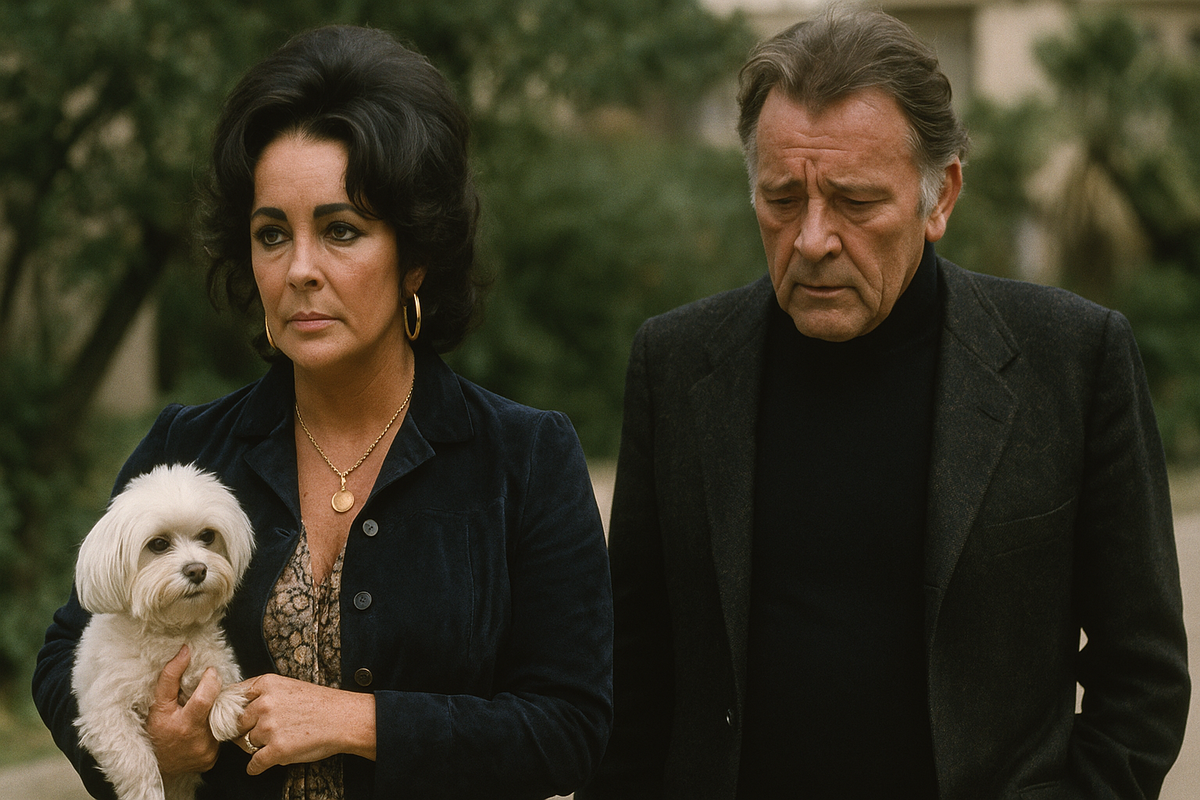
The Taylor-Burton feature landed at exactly this inflection point—part celebrity spectacle, part cultural diagnosis. Disney's analysis wasn't gentle. She catalogued the wreckage with clinical precision: Burton's drinking, Elizabeth's chronic illnesses, their inability to escape each other or the public eye, the suffocating weight of being the world's most watched couple. The photographs reinforced the message—not glamorous studio portraits but candid shots that suggested surveillance more than stardom. Elizabeth walking with her small dog. Burton in his dark jacket and turtleneck, looking every bit the brooding intellectual undone by excess.
This was advice-column journalism masquerading as gossip, or perhaps gossip elevated into social commentary. Either way, it worked.
What Made This Marriage Unsaveable
Disney identified the fault lines with surgical accuracy:
What elevated this beyond mere celebrity voyeurism was Disney's implicit question to her readers: strip away the Rolls-Royces and the Roman villas, and weren't these the same pressures threatening marriages everywhere? Financial strain, competing ambitions, addiction, illness, the suffocation of losing yourself in another person—these weren't problems money could solve. The Burtons proved it spectacularly.
For women readers in 1973, many of whom were questioning their own domestic arrangements for the first time, this wasn't just entertainment. It was permission to admit that the old scripts might be broken beyond repair.
The Universal in the Spectacular
Some stories age into irrelevance once the headlines fade. This one didn't. Elizabeth Taylor's name still carries weight. The themes Disney explored—love versus marriage, the impossibility of privacy, the cost of addiction, the question of how much togetherness is too much—remain achingly relevant. The issue serves as a historical document for scholars studying how 1970s America understood relationships, celebrity, and the changing role of women.
For collectors, it represents something increasingly rare: a tangible artifact from a pre-digital world, when magazines weren't just content delivery systems but cultural events unto themselves.
Why This Issue Endures
Elizabeth Taylor wasn't simply famous—she was the definition of Hollywood glamour, and her romance with Burton captivated the world with an intensity that wouldn't be matched until Princess Diana. Issues featuring her command attention.
Disney's "Can This Marriage Be Saved?" was among the Journal's most famous recurring features, typically focused on anonymous couples. Turning that lens on actual celebrities created a rare hybrid of gossip and advice that the magazine would never quite replicate.
This issue captures the exact moment when divorce stopped being shameful and started being speakable, when women's magazines began acknowledging that marriage itself might need reimagining.
Taylor's cover image, combined with the intimate photographs inside, makes this a striking display piece—the kind of artifact that announces its own importance.
The article's tone suggested something larger than one couple's breakup. It marked the collapse of Hollywood's mythology around perfect unions, the death of the idea that enough passion and beauty could triumph over human limitation.
Your Portal to Women's Cultural History
The October 1973 Ladies' Home Journal wasn't just reporting on a famous marriage's collapse. It was witnessing—and helping to shape—a broader transformation in how American women thought about love, independence, and identity.
If even the world's most glamorous woman couldn't save her marriage, what did that say about the expectations placed on everyone else? That question, posed fifty years ago, still hasn't been fully answered.
For those fascinated by this intersection of celebrity, history, and cultural change, decades of similar stories await in original magazine archives—each issue a time capsule of women's lives, fashion, social movements, and the evolving American conversation with itself.
Browse Ladies' Home Journal Magazine CollectionWhether you're a serious collector, a cultural historian, or simply someone who understands that Elizabeth Taylor's story was never just about Elizabeth Taylor, these archives offer something increasingly precious: evidence of where we've been, and perhaps clues about where we're going.