
Kerry Von Erich, Ric Flair, and the Three Weeks That Shook the Wrestling World
How Pro Wrestling Illustrated captured the most emotional championship reign in NWA history
Twenty-one days. That's how long Kerry Von Erich held the most coveted prize in professional wrestling before it slipped through his fingers and back around Ric Flair's waist. But those three weeks in the summer of 1984 burned brighter than most champions' year-long reigns—and the October 1984 issue of Pro Wrestling Illustrated captured why.
This wasn't just another title change. It was a tribute to a dead brother, a Texas catharsis witnessed by 43,517 screaming fans, and a referendum on whether regional wrestling could still produce moments that mattered on a national scale. The magazine's coverage—"Kerry Von Erich's Three Weeks on Top of the World"—documented something rare in sports entertainment: a victory that felt like both a coronation and a eulogy.
Archive Details
Historical Figure: Kerry Von Erich (1960-1993)
Issue Date: Pro Wrestling Illustrated, October 1984
Archive Source: Original PWI magazine collection, featuring Bill Apter editorial team photography
Event Coverage: Kerry Von Erich vs. Ric Flair, Texas Stadium, May 6, 1984
Texas Stadium and the Ghost of David Von Erich
May 6, 1984. Texas Stadium. Kerry Von Erich pins Ric Flair to win the NWA World Heavyweight Championship in what promoters billed as "The David Von Erich Memorial Parade of Champions." The match name tells you everything. Just months earlier, Kerry's brother David had died in Japan at 25, his own championship destiny cut short. Kerry's victory wasn't personal ambition—it was family reckoning.
In his PWI interview, Kerry made the subtext text: "This title means a lot to me because it doesn't belong just to me. It belongs to my family, my friends, the 43,000 people who were in Texas Stadium yesterday afternoon, and most of all, it belongs to my brother David."
That kind of raw honesty was rare in wrestling magazines, where kayfabe typically strangled authenticity. But PWI understood: the Von Erich story transcended worked finishes. This was grief channeled into glory, if only for three weeks.
The Nature Boy's Warning
Ric Flair wasn't just the former champion—he was the oracle. In the same issue, Flair delivered a diagnosis that doubled as prophecy: "There's no rest for the World Champion. Either you set your controls at 100 percent and forge ahead full force at all times, or you're going to lose the title."
Kerry couldn't sustain that pace. His first defense came against Terry Gordy in Fort Worth, where the Freebird surprised observers with technical wrestling skill. Flair circled in non-title matches, applying pressure, studying weaknesses. By the end of May, the belt was back where the NWA felt it belonged: on the traveling champion who could work 300 nights a year across every territory in the alliance.
Kerry's reign ended. The story didn't.
What PWI Preserved
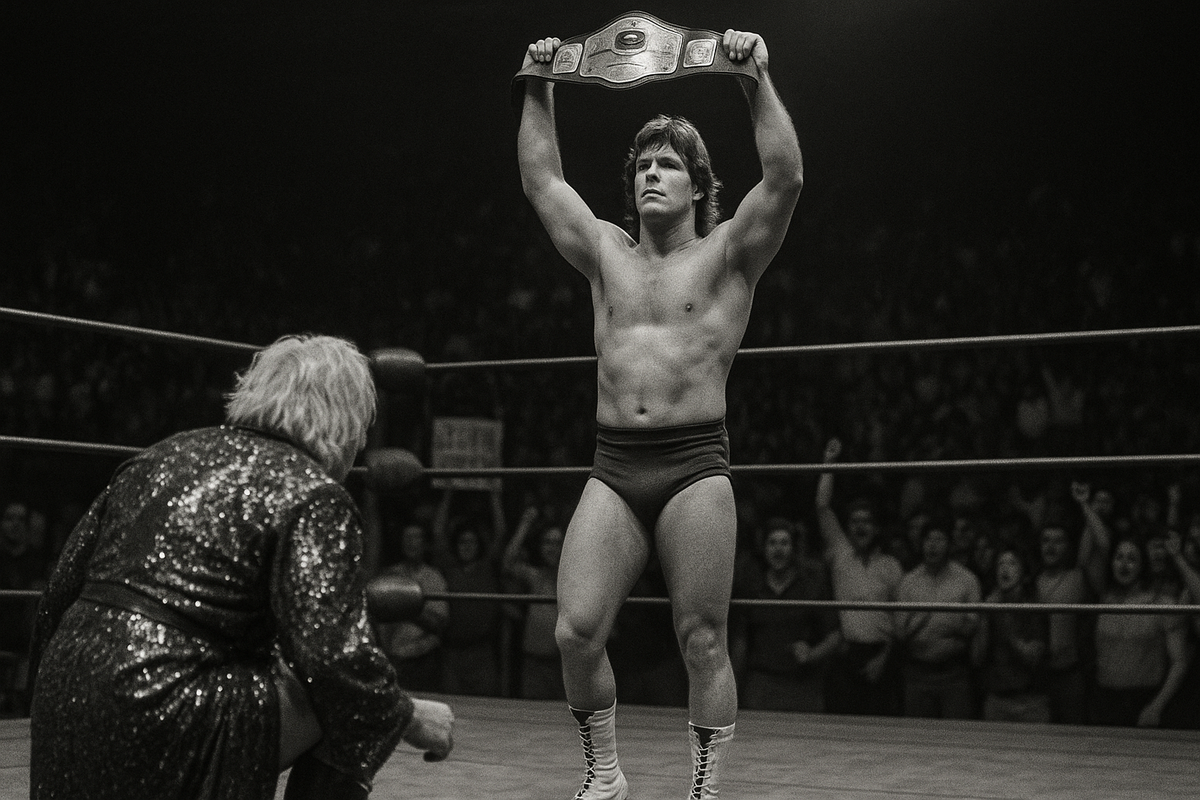
The October 1984 issue is a masterclass in wrestling photojournalism. Bill Apter's editorial team captured Kerry with the NWA belt raised overhead, the crowd's energy practically vibrating off the page. Another shot shows Kerry trapped in Flair's figure-four leglock—a visual metaphor for the inevitable. Every image carries the weight of knowing what came next: not just the title loss, but the decades of Von Erich tragedy that would follow.
PWI balanced the carny with the real. It celebrated Kerry as a worthy champion while acknowledging the title's crushing burden. It honored David's memory without exploiting it. And it documented a moment when regional wrestling—specifically World Class Championship Wrestling out of Dallas—could still command national attention before Vince McMahon's WWF monopolized the conversation.
The magazine didn't just report results. It argued that Kerry Von Erich's three weeks mattered as much as Flair's multi-year reigns, that brevity could amplify rather than diminish legacy.
The Deep Dive: Key Moments from the October 1984 Issue
Before 43,517 fans, Kerry pinned Ric Flair to win the NWA World Heavyweight title in what was billed as "The David Von Erich Memorial Parade of Champions."
Kerry told PWI the victory was not just for him, but for his late brother David, his family, and the Texas fans who had supported them.
Flair's words about the non-stop pace of being world champion framed Kerry's reign as a grueling test that few could endure.
Kerry's first match as champion came against Freebird Terry Gordy, where Gordy displayed surprising scientific wrestling skill.
In non-title matches during those weeks, Flair continued to test Kerry, reminding fans that the "Nature Boy" was always circling.
PWI emphasized that Kerry's win symbolized the fulfillment of the Von Erich family's dream, even if only for a fleeting moment.
The coverage tied Kerry's reign directly to the Von Erich tragedy, giving the story an authenticity few wrestling narratives could match.
By blending real interviews, dramatic photos, and kayfabe analysis, PWI gave fans a complete portrait of Kerry's reign.
The brevity of Kerry's title run only made it more memorable, standing out as one of wrestling's most poignant "what if" moments.
Flair's presence in nearly every photo and every analysis underscored why he was considered the measuring stick of the NWA.
Why This Issue Endures
The Only Time
Kerry Von Erich's sole reign as NWA World Champion, captured in real-time by PWI's editorial team.
Family Mythology
The Von Erich legacy at its apex, before the full weight of the family curse became clear.
Flair's Dominance
The Nature Boy at his peak, defining what championship stamina meant in the NWA era.
Regional Wrestling's Last Stand
WCCW's Texas popularity intersecting with the NWA's fading national prestige before WWF's national expansion.
Apter's Archive
Ringside photography that exists nowhere else, documenting crowds and moments lost to time.
Historical Significance
Proof that wrestling once produced genuine tragedy and triumph, not just storylines—mythology unfolding in real time.
The Collector's Vault
Pro Wrestling Illustrated understood its assignment: treat wrestlers like athletes, their matches like cultural events, their stories like literature. That editorial philosophy is why vintage PWI issues remain essential collectibles decades later.
Kerry Von Erich's three weeks on top of the world ended quickly. But the story PWI told? That became permanent.
Browse PWI Magazine CollectionWhether you're a wrestling historian, a Von Erich devotee, or a collector of 20th-century sports journalism, this issue remains a defining artifact of professional wrestling's most dramatic era.