
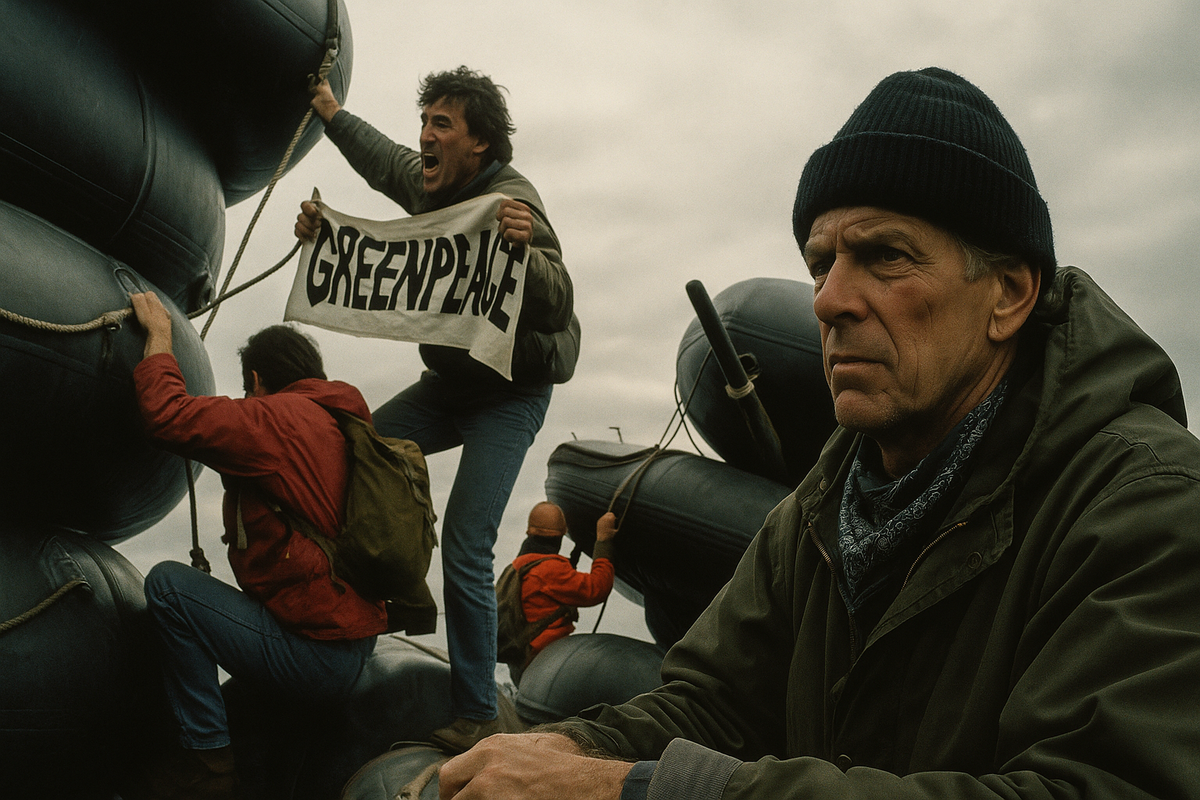
When Forbes Took Aim at Greenpeace
The 1991 Exposé That Stripped the Myth from the Movement
On November 11, 1991, Forbes Magazine did something unusual for an era when environmental activism still carried the glow of moral certainty: it audited Greenpeace.
Not with admiration. Not with the wide-eyed awe reserved for crusaders who threw themselves between harpoons and whales. Forbes approached Greenpeace the way it approached IBM or General Motors—as a multinational enterprise with revenue streams, power hierarchies, and a brand to protect. The cover story, "The Not So Peaceful World of Greenpeace," didn't celebrate the organization. It dissected it.
For readers accustomed to seeing Greenpeace activists as environmental saints—dangling from smokestacks, confronting Soviet whalers, blocking nuclear test sites—the article landed like a betrayal. Or a revelation. Depending on where you stood.
Archive Details
Publication: Forbes Magazine
Issue Date: November 11, 1991
Cover Story: "The Not So Peaceful World of Greenpeace"
Historical Context: Post-Cold War institutional scrutiny
Key Figure: David McTaggart, Chairman of Greenpeace International
The Moment the Nonprofit Became the Corporation
By 1991, Greenpeace had grown into something unprecedented: the world's largest environmental organization, with over 5 million members scattered across 24 countries. Its tactical brilliance was undeniable. Every protest was a photo opportunity. Every confrontation was designed for maximum media impact. Greenpeace didn't just fight polluters—it performed the fight, knowing the cameras were always rolling.
But Forbes wasn't interested in the theater. It wanted to see the accounting ledgers.
The magazine reported that Greenpeace had pulled in $157 million in 1990 alone. It operated like a franchise, with national branches in the U.S., Germany, and elsewhere funneling money upstream to Greenpeace International in Amsterdam, where long-time chairman David McTaggart held the reins. The activists in the rubber rafts? They were the product. The brand was the business.
"The mythic image is money in the bank," Forbes declared—a line that crystallized the entire critique.
David McTaggart: The Myth and the Man
The article reserved its sharpest blade for McTaggart himself. Forbes peeled back the legend to reveal a more complicated figure: a man who had struggled as a real estate developer before reinventing himself as the architect of Greenpeace's global empire. The contrast was deliberate. Here was someone who understood branding, leverage, and control—skills honed not in the wilderness, but in the marketplace.
The piece, titled "The McTaggart Myth" within the larger story, didn't accuse him of dishonesty so much as strategic mythmaking. McTaggart had built Greenpeace into a force that could lobby universities, pressure scientists, and challenge research that conflicted with its agenda. That required more than passion. It required power. And power, Forbes suggested, was exactly what McTaggart had centralized in Amsterdam.
The Power of Image
Greenpeace's strength came not only from its actions but from how those actions were staged and broadcast. "The mythic image is money in the bank," Forbes declared.
Global Revenue Machine
Branches like Greenpeace USA and Greenpeace Germany raised millions but sent large portions upstream to Greenpeace International in Amsterdam, consolidating power.
Lobbying Muscle
Beyond protests, Greenpeace exercised influence through lobbying universities, scientists, and policymakers, even challenging research that conflicted with its agenda.
Internal Criticism
Cofounder Paul Watson accused Greenpeace of becoming too much like a business, more concerned with perpetuating itself than with real ecological change.
The Cofounder Who Called It a Sellout
Not everyone inside Greenpeace agreed with the direction. Paul Watson, one of the organization's original cofounders, accused the group of betraying its own ideals. Greenpeace, he argued, had become too much like the corporations it opposed—more focused on perpetuating itself than on achieving real ecological change. His criticism appeared in the Forbes piece as a rare internal dissent, a crack in the otherwise polished facade.
Watson's complaint wasn't about tactics. It was about survival instinct. Greenpeace had learned to raise millions, manage a global brand, and protect its market share in the crowded world of nonprofit fundraising. In doing so, it had adopted the logic of the very system it claimed to resist.
Why This Issue Still Matters
The November 11, 1991 Forbes wasn't just a magazine article. It was a cultural inflection point—the moment when even activism became subject to the same financial scrutiny as Wall Street. The Cold War had just ended. The Berlin Wall had fallen. Institutions of all kinds were being questioned, dismantled, re-examined. Greenpeace, for all its moral authority, was not exempt.
Forbes didn't argue that Greenpeace was corrupt. It argued something more unsettling: that Greenpeace was successful—and that success, in the modern world, required becoming the thing you once opposed.
The article challenged readers to think critically about where their donations went, how nonprofits wielded influence, and whether image and reality still aligned. These questions remain urgent today, in an era when activism is professionalized, branded, and monetized at every level.
The Business of Belief
What makes the Forbes exposé endure is its refusal to sentimentalize. Just as Life Magazine forced Americans to confront the brutality of war through its photographs, Forbes forced them to confront the business realities of activism. Both are uncomfortable. Both are necessary.
The article reminds us that nonprofits, like corporations, are institutions of power. They compete for funding. They build brands. They protect their interests. Recognizing this doesn't diminish their work—it clarifies how change actually happens in a world where money, media, and myth are inseparable.
For Collectors: A Snapshot of Power in Transition
Historical Timing
Published at the end of the Cold War, during a recession that forced institutions to justify their existence, it captures the skepticism of the early 1990s—a skepticism that would define the decade.
Cultural Significance
Greenpeace was one of the most recognizable brands on the planet. A Forbes cover story signaled that it had crossed over from fringe activism to mainstream power—and that power deserved investigation.
Editorial Rarity
Forbes is not known for long-form investigative journalism on nonprofits. This issue represents an outlier in the magazine's archive, making it a standout for collectors of business and cultural history.
Holding this issue today means holding a document of transition—the moment when environmental activism entered the boardroom, and when even the most passionate causes were measured by revenue, reach, and return on investment.
Own a Piece of the Story
If you're drawn to the intersection of activism, business, and media—if you remember Greenpeace at its height or want to understand how movements professionalize—this issue belongs in your collection.
Browse Forbes Magazine CollectionWhether you're a collector of vintage media, a historian of environmentalism, or someone who lived through the era when activism became an industry, this November 11, 1991 issue offers something rare: a clear-eyed look at the machinery behind the myth.