
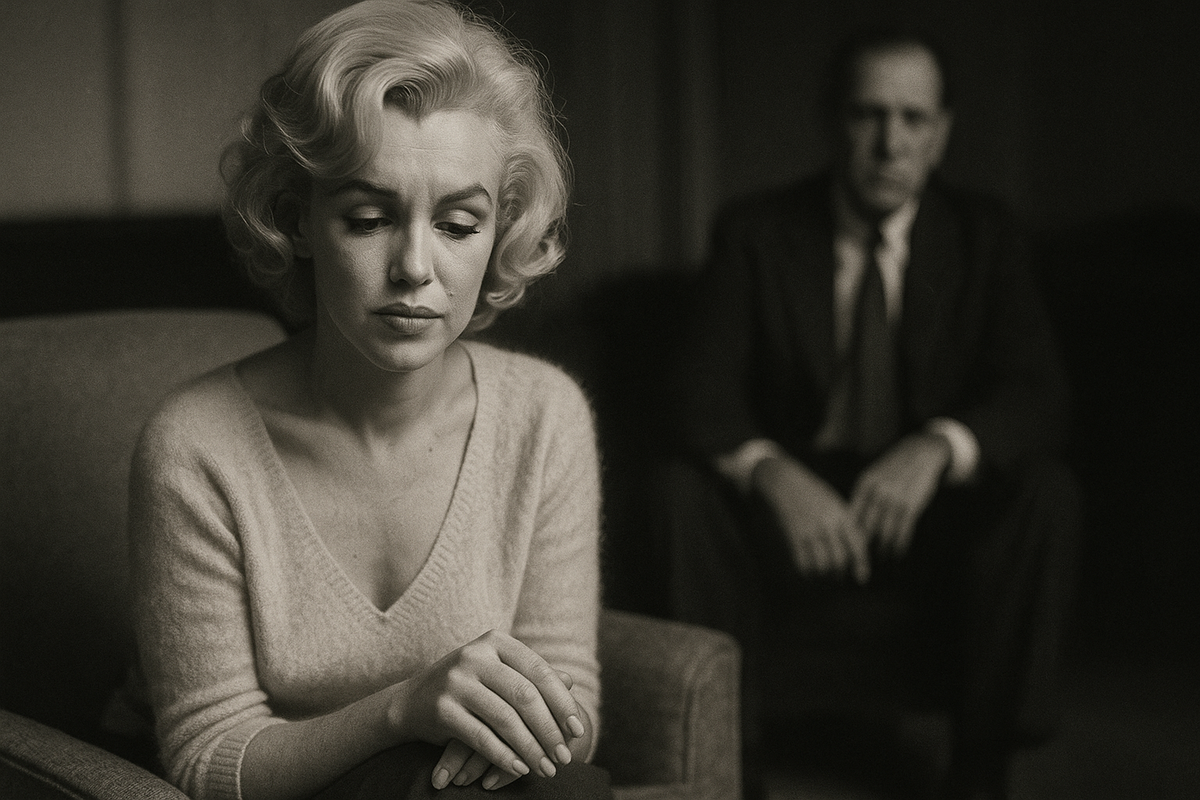
When Time Magazine Cracked Open Marilyn Monroe's Fragile World
How the May 14, 1956 issue transformed celebrity journalism and captured America's most famous woman at her most vulnerable
On May 14, 1956, Time Magazine did something unexpected: it stopped treating Marilyn Monroe like a joke.
The cover alone announced the shift. There she was—Hollywood's most famous blonde, the woman dismissed by critics as "modern Betty Boop"—commanding the space usually reserved for presidents and generals. Inside, the feature titled "To Aristophanes & Back" delivered something rare in 1950s celebrity journalism: a portrait of Monroe that acknowledged both her magnetism and her terror.
This wasn't puff journalism. Time's editors captured Monroe at a crossroads—breaking from studio control, founding her own production company, hungering for artistic legitimacy while battling what the magazine unflinchingly described as "panics, anxieties, and hallucinations." For readers accustomed to seeing Monroe as pure spectacle, the article's psychological depth landed like revelation.
Six decades later, this issue remains one of the most sought-after magazines of the mid-20th century. Not because it immortalized a myth, but because it documented the woman inside it.
Archive Profile
Historical Figure: Marilyn Monroe (Norma Jeane Baker, 1926-1962)
Issue Date: May 14, 1956
Archive Source: Time Magazine
Feature Article: "To Aristophanes & Back"
Cultural Context: Mid-1950s Hollywood, studio system rebellion, postwar celebrity culture
The Cultural Machinery of 1956
Monroe arrived on Time's cover at the apex of postwar Hollywood's contradictions. She was the ultimate sex symbol in an era of buttoned-up respectability, a glamour icon who couldn't shake her childhood in foster homes, a box-office titan fighting to be taken seriously as an actress.
The timing mattered. Fresh off the subway-grate iconography of The Seven Year Itch (1955), Monroe had done the unthinkable: walked away from studio control to form Marilyn Monroe Productions in 1955. This wasn't a vanity project—it was mutiny. In the contract-bound studio system, stars didn't dictate terms. Monroe did anyway.
Time understood the stakes. The magazine framed her rebellion against the bigger machinery of Hollywood commerce, where actresses were manufactured, marketed, and discarded according to box-office returns. By profiling Monroe's intellectual aspirations and business maneuvers alongside her platinum curls and breathless delivery, Time treated her as both product and entrepreneur—a duality that made her quintessentially American.
The Architecture of Myth-Making
Time's editorial approach mixed reverence with razor-edged observation. The article excavated Monroe's origin story—Norma Jeane Baker, born 1926, raised in instability with a mentally ill mother, cycling through foster care before landing in a defense plant and eventually in front of cameras. This wasn't biography as hagiography; it was the American Dream with all its scars showing.
The magazine's prose alternated between admiration and clinical assessment. Monroe was described as both luminous talent and chronic late-arriver, brilliant performer and deeply insecure woman. Time didn't shy from reporting her professional disruptions—the missed appointments, the on-set anxieties—while contextualizing them within her psychological struggles.
What elevated the piece beyond gossip was its willingness to examine Monroe's intellectual ambitions seriously. Her desire to study acting, to tackle roles of substance, to escape the "dumb blonde" trap—Time presented these not as publicity stunts but as genuine artistic hunger. The article even referenced her appearances with intellectuals like Dame Edith Sitwell, signaling Monroe's attempts to cross the boundary between entertainer and artist.
Psychological Depth
Time unflinchingly described Monroe's battles with "panics, anxieties, and hallucinations," giving readers unprecedented access to her inner turmoil.
Artistic Ambition
The magazine took seriously Monroe's desire to escape typecasting and pursue roles of substance, documenting her intellectual aspirations.
Business Rebellion
Marilyn Monroe Productions represented a direct challenge to Hollywood's studio system, positioning Monroe as entrepreneur and artist.
Cultural Mirror
Time framed Monroe as reflecting postwar America's contradictions around fame, femininity, and the power of mass media.
Visual Authority
Time's visual editing reinforced the article's complexity. The cover image arrested attention immediately—Monroe captured in a striking pose that commanded without titillation. Inside, the photo selection moved deliberately between registers: film stills showing Monroe in full Hollywood regalia, candid shots with Joe DiMaggio revealing private vulnerability, images alongside literary figures suggesting cultural ambition.
This visual narrative mirrored the article's thesis: Monroe existed in multiple dimensions simultaneously. She was glamour goddess and nervous wreck, pinup and intellectual aspirant, public property and private person. The photography gave readers permission to see all of it.
The editorial tone matched the visual sophistication. Time's writers wielded their prose with precision, mixing cultural commentary with biographical detail, never allowing the piece to collapse into simple celebrity worship or cynical takedown. The result felt authoritative because it refused easy conclusions.
The Personal Wreckage
Time didn't sanitize Monroe's personal chaos. The article acknowledged her 1954 divorce from Joe DiMaggio—a marriage that fascinated the public precisely because it paired Hollywood's sex symbol with baseball's stoic hero. Readers learned about Monroe's anxieties, her feelings of inadequacy, the childhood trauma that shadowed her adult life.
This psychological transparency was unusual for mainstream celebrity coverage in 1956. Magazines typically trafficked in either starry-eyed promotion or scandalous exposé. Time attempted something harder: honest portraiture. Monroe emerged as neither victim nor diva but as a woman struggling to reconcile who she'd been (Norma Jeane) with what she'd become (Marilyn).
The article hinted at what would come later in 1956—her marriage to playwright Arthur Miller, another attempt to bridge Monroe's worlds of glamour and intellect. Time's readers were watching Monroe construct herself in real time, making choices that defied Hollywood convention.
The Enduring Document
What makes the May 14, 1956 issue essential isn't nostalgia—it's honesty. Time published this piece during Monroe's lifetime, when she could still surprise people, disappoint them, reinvent herself. The article captured her in motion, not amber.
Reading it now, the prescience cuts deep. Time's acknowledgment of Monroe's psychological fragility, her desperate desire for artistic respect, her entrapment in an image she'd helped create—all of it foreshadows the tragedy that would come six years later. But in 1956, Monroe was still fighting, still building Marilyn Monroe Productions, still believing she could control her own story.
That's what collectors hold when they acquire this issue: a moment of possibility, before mythology hardened into epitaph.
Why Collectors Hunt This Issue
Cultural Milestone
This issue represents a pivot point in celebrity journalism—the moment a mainstream newsweekly decided a film actress merited the same analytical depth as a political figure.
Iconic Cover
One of the most recognizable magazine images of the 1950s, the cover alone became visual shorthand for mid-century American culture and its contradictions.
Historical Evidence
Scholars studying postwar Hollywood, gender politics, or celebrity culture return to this article as a primary source that captured Monroe's self-perception and public reception simultaneously.
Market Value
Issues with intact covers, minimal aging, and no subscription labels fetch premium prices. Even well-read copies carry weight because of the article's historical significance.
For anyone serious about Hollywood history, vintage celebrity culture, or understanding how postwar America processed fame and femininity, this magazine is foundational. It bridges the gap between gossip and cultural analysis, between star worship and honest reckoning.
Add This Archive to Your Collection
Whether you're building a serious collection or acquiring your first piece of 20th-century media history, these issues offer something screens can't replicate: the texture and weight of history as it was first reported, ink on paper, delivered to American doorsteps when the future was still unwritten.
Browse Time Magazine Collection