
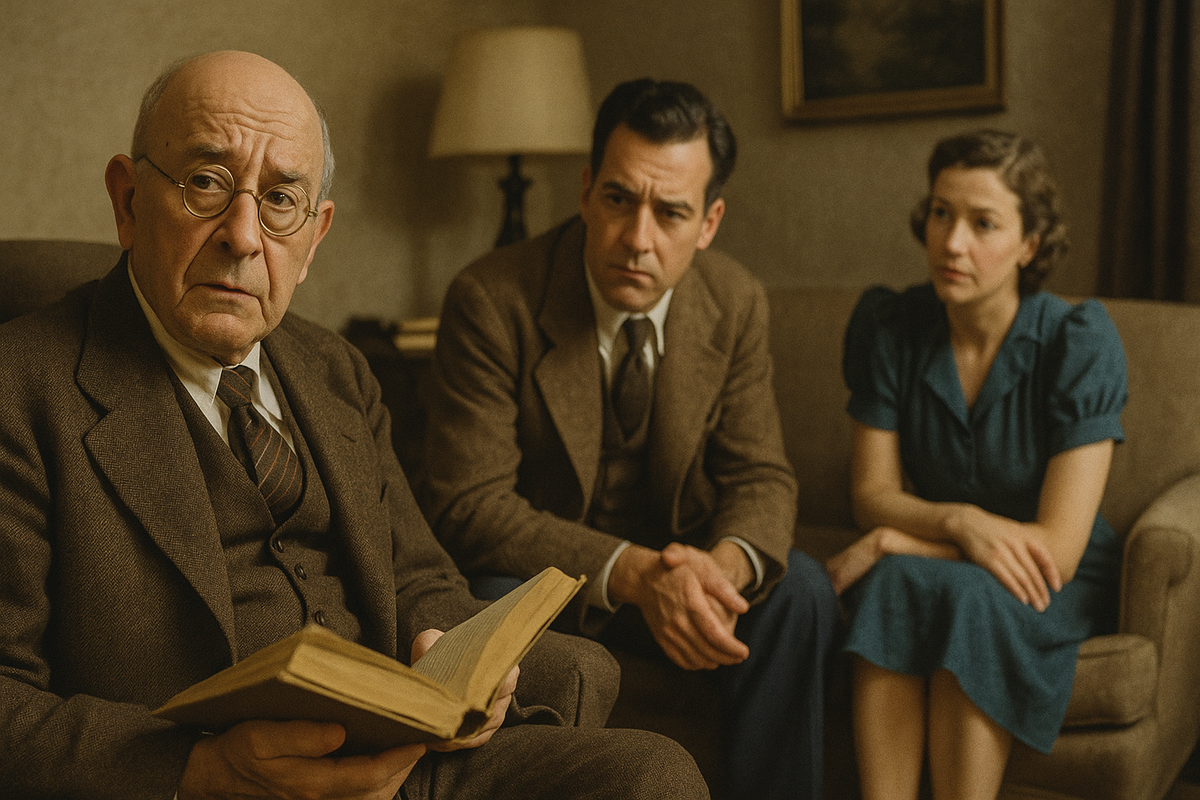
When The New Yorker Taught America How to Write the World's Longest, Most Unbearable Memoir
Inside the May 15, 1937 issue that turned literary self-importance into art—and revealed why we can't stop writing about ourselves
Open the May 15, 1937 issue of The New Yorker, and you won't find war dispatches or economic analysis. Instead, tucked between cartoons and cultural criticism, you'll find something far more subversive: "How to Write a Long Autobiography"—a surgical dissection of literary vanity disguised as a how-to guide.
The timing was perfect. Americans in 1937 were trapped between recovery and relapse, hope and dread. The Roosevelt Recession had just shattered any illusion that the Great Depression was over. Overseas, Hitler annexed Austria in rehearsal, while the Spanish Civil War turned into a proving ground for modern warfare. In Asia, Japan's invasion of China accelerated toward atrocity.
Yet here was The New Yorker, offering its readers not comfort, but clarity through wit. "How to Write a Long Autobiography" mocked the self-important impulse to chronicle every mundane detail of one's existence—the breakfast menus, the childhood pets, the tedious anecdotes stretched across hundreds of pages. But beneath the satire lay a deeper truth: in uncertain times, people cling to their stories. They write to be remembered, to matter, to outlast the chaos.
The essay didn't just lampoon bad writing. It diagnosed a cultural condition.
Archive Details
Publication: The New Yorker
Issue Date: May 15, 1937
Featured Essay: "How to Write a Long Autobiography"
Historical Context: Published during the Roosevelt Recession, months before global tensions escalated toward World War II
The Magazine That Mastered the Smirk
By 1937, The New Yorker had perfected its voice: urbane without being elitist, intelligent without being academic, funny without trying too hard. Founded just twelve years earlier by Harold Ross, the magazine had become the arbiter of American sophistication—proof that you could be serious about ideas without taking yourself seriously.
"How to Write a Long Autobiography" embodied this philosophy. It treated memoir-writing as both high art and incurable disease, showing how even the most trivial life could balloon into an epic of self-absorption. The piece mimicked the bloated prose of actual autobiographies, turning excess into its own punch line. Readers laughed at the pomposity—then probably wondered if their own journals suffered from the same affliction.
This was The New Yorker's genius: it made you complicit in the joke.
A Cover That Said Everything Without Words
The May 15, 1937 cover captured the magazine's spirit in a single image: a rigidly formal British guard standing at attention while an eager tourist posed for a snapshot. No caption needed. The contrast between ceremonial gravitas and casual modernity spoke volumes about tradition, spectacle, and the absurdity of taking either too seriously.
Inside, the issue delivered the magazine's signature blend—James Thurber's drawings, poetry that didn't pander, fiction that trusted its readers, and essays like "How to Write a Long Autobiography" that turned literary criticism into entertainment. Where newspapers delivered facts, The New Yorker delivered perspective. Where other magazines editorialized, it smirked.
What Made the Essay a Time Capsule
The Obsession with Trivia
The piece skewered memoirists who treated every childhood memory as profound, every conversation as historic. It was parody, but it was also prophecy—anticipating our modern era of oversharing by 80 years.
The Mock Instruction Manual
By framing excess as technique, the essay made its point without preaching. It didn't tell readers that long autobiographies were tedious; it showed them how tedium was manufactured, one unnecessary detail at a time.
The Universal Diagnosis
Beneath the humor lay an uncomfortable recognition: we all want to be remembered. The impulse to record our lives—no matter how ordinary—isn't vanity. It's human. The New Yorker knew this, which is why the satire felt affectionate rather than cruel.
The 1937 Context
In a decade when collective memory was being weaponized by totalitarian regimes, when propaganda rewrote history in real time, an essay about the absurdity of individual memory felt quietly radical. It reminded Americans that personal stories mattered, even—especially—when they were small, silly, and self-indulgent.
What Endures
Newspapers turn yellow and brittle. Headlines fade. But wit—real wit—survives. The humor in "How to Write a Long Autobiography" hasn't aged because human nature hasn't changed. We still write too much about ourselves. We still confuse length with importance. We still need someone to tell us, gently but firmly, that our breakfast choices probably don't merit three chapters.
The New Yorker understood something essential: culture isn't just what we produce in stable times. It's how we respond when stability cracks. And sometimes, the most radical response is to laugh at the absurdity of it all—including our own need to narrate it.
Why Collectors Covet This Issue
Historical Pivot Point
Published in the final peaceful spring before the world tipped into global war, this issue captures American culture at an inflection point—still confident enough to laugh, but anxious enough to need the laughter.
Early Cover Art
New Yorker covers from the 1930s are collectible in their own right, valued for their wit, artistry, and the way they froze cultural moments in ink and irony.
Literary Significance
"How to Write a Long Autobiography" makes this issue especially desirable for scholars studying humor, memoir culture, or the evolution of American literary criticism. It's a primary source that also happens to be funny.
Scarcity and Condition
Complete issues from the 1930s—with covers, advertisements, and pages intact—survive in far smaller numbers than later decades. Each one that remains is a small miracle of preservation.
Explore the Archive
Thousands of original New Yorker issues from the 1920s through the 1990s are available for collectors, historians, and anyone who believes that the past speaks most clearly through the pages people actually read.
Browse The New Yorker Magazine CollectionWhether you're building a research library, hunting for a specific issue, or simply want to hold a piece of American cultural history, these magazines aren't just collectibles—they're portals to the moments when wit mattered most.
The Last Word
The May 15, 1937 New Yorker, with its essay on autobiography's excesses, remains a masterclass in how humor can carry weight without losing its lightness. It mocked literary self-importance while affirming the very human need to be heard. It laughed at pretension while creating something genuinely lasting.
Nearly a century later, the joke still lands. And in a world drowning in memoirs, manifestos, and 280-character declarations of importance, maybe we need that 1937 reminder more than ever: sometimes, the best story is the one you know when to end.