
The Moment Before Thriller: When Jet Magazine Crowned Michael Jackson King
Inside the November 5, 1981 issue that captured a 23-year-old superstar on the edge of mythology
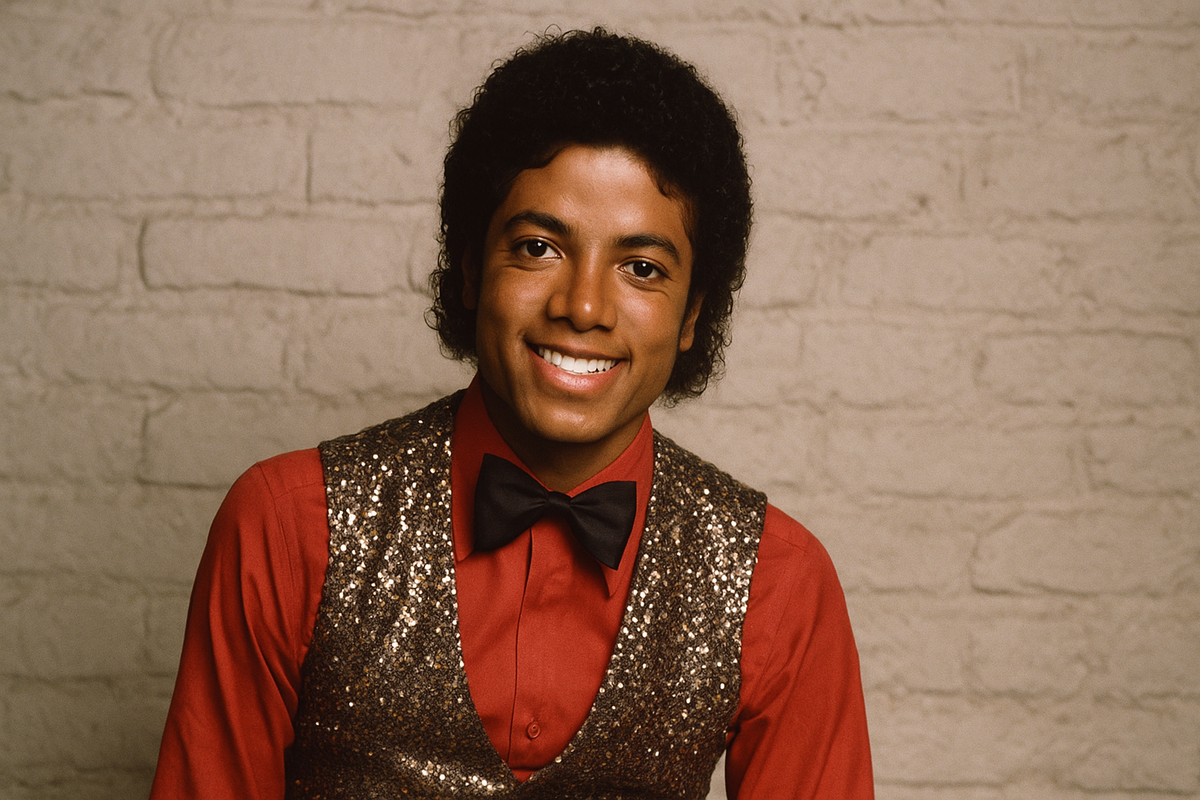
November 5, 1981. A 23-year-old Michael Jackson stares out from the cover of Jet Magazine, eyes bright, draped in a sparkling vest over a red shirt. The headline: "Most Popular Male Entertainer."
Inside those pages, no one could have predicted what would happen twelve months later. Within a year, Thriller would detonate across global culture like nothing before or since. But this issue—this precise moment—captures something rarer than superstardom. It captures the becoming.
And for the African American readers who held Jet in their hands that week, Jackson's coronation meant something far beyond music charts.
Archive Details
Historical Figure: Michael Jackson
Issue Date: November 5, 1981
Archive Source: Jet Magazine
Feature Title: "Michael Jackson: Most Popular Male Entertainer"
Cultural Context: Published 14 months before Thriller, documenting Jackson's triple-platinum success with Off the Wall
Why This Issue Mattered in 1981
Jet Magazine wasn't built for casual browsing. Founded in 1951 by John H. Johnson, it served as both mirror and megaphone for Black America—a pocket-sized weekly that fit in a purse but carried the weight of a generation's aspirations. In the 1960s, Jet published the open-casket photographs of Emmett Till, images that galvanized the Civil Rights Movement. By the early 1980s, it had evolved into the definitive chronicle of African American achievement across every arena: politics, sports, business, and entertainment.
When Jet placed Michael Jackson on its cover in November 1981, it wasn't simply celebrating a pop star. It was documenting a seismic shift in cultural power.
The early '80s represented a hinge point in American race relations. Just two decades removed from the Civil Rights Act, African American performers were beginning to shatter the industry's unwritten rules. But commercial success wasn't enough—Jet's readers understood that. What mattered was whether Black artists could define the mainstream itself, not just succeed within it.
Jackson's solo album Off the Wall, released two years earlier in 1979, had done exactly that. Produced by Quincy Jones, the record wasn't confined to R&B categories or "urban" formats. It was universal pop music at its most sophisticated—funk, soul, and disco woven into something entirely new. Four singles cracked the Top 10: "Don't Stop 'Til You Get Enough," "Rock With You," "Off the Wall," and "She's Out of My Life." It was the first solo album in history to achieve that feat.
By the time Jet ran its feature, Off the Wall had gone triple platinum and Jackson had broken free from The Jackson 5's shadow. He wasn't just famous. He was unstoppable.
The Article That Captured Lightning
Jet's editorial approach blended straight reportage with cultural analysis, and the Jackson feature delivered both. The piece emphasized his collaboration with Quincy Jones as one of the era's most significant creative partnerships—a pairing that would redefine not only pop and R&B, but the production standards for an entire decade.
The article also positioned Jackson within a golden age of Black music. Earth, Wind & Fire, Gladys Knight, Aretha Franklin, James Brown, Diana Ross, Stevie Wonder, Smokey Robinson—all were reaching new commercial peaks simultaneously. Jet framed Jackson not as an outlier, but as the sharp edge of a broader wave of African American musical dominance.
That context mattered. For Jet's readers, Jackson's success wasn't happening in isolation. It was proof of concept. It said: This is what we can do when the doors crack open.
The magazine's photography reinforced the message. Jackson's cover portrait radiated confidence—not the manufactured charisma of a manufactured teen idol, but the self-possession of someone who knew exactly where he was headed. Inside spreads showed him mid-performance, kinetic and precise. Even in still images, he looked like motion itself.
Solo Breakthrough
The article emphasized how Off the Wall had reshaped Jackson's career, proving he could stand as a solo act outside of The Jackson 5 with four Top 10 singles.
The Quincy Jones Partnership
Jet highlighted the collaboration between Jackson and Jones as one of music's most important partnerships, producing an album that redefined pop and R&B.
Record-Breaking Achievement
The piece stressed that Off the Wall was the first album by a solo artist to generate four Top 10 singles—positioning Jackson as a record-breaking innovator.
Cultural Recognition
The title "Most Popular Male Entertainer" placed Jackson among legends while marking him as the face of a new generation dominating the 1980s.
The Magazine That Built a Memory
Jet's influence extended far beyond its subscriber base. Its compact format—designed to fit in a pocket or purse—made it ubiquitous in African American homes, barbershops, beauty salons, and waiting rooms. The bold cover photography ensured it stood out on any newsstand.
The magazine's editorial mission was deceptively simple: document Black excellence in real time, across every field, without apology or qualification. That mission transformed Jet into something more than a publication. It became a weekly affirmation, a running record of progress, and a rebuttal to every mainstream outlet that ignored or diminished African American achievement.
When Jet declared Michael Jackson the "Most Popular Male Entertainer" in 1981, it wasn't making a prediction. It was reporting a fact. And for readers who had watched the magazine chronicle the Civil Rights Movement, the rise of Black political leaders, and the integration of American institutions, Jackson's ascent felt like vindication.
Holding History
The November 5, 1981 issue of Jet Magazine is more than a collectible. It's a time capsule from the moment when a 23-year-old from Gary, Indiana stood on the edge of becoming the most famous entertainer on Earth—and no one, not even Jet's editors, fully understood what was about to happen.
Twelve months later, Thriller would arrive and rewrite every rule. But this issue captures something Thriller made impossible to see again: Michael Jackson as a rising star, not yet a myth. A young artist who had already changed music, documented by the magazine that had spent three decades documenting how African Americans changed America.
For anyone who values primary sources, cultural history, or the intersection of music and social progress, vintage Jet magazines aren't just reading material. They're artifacts—physical evidence of the moments that shaped the world we inherited.
What Makes This Issue a Collector's Holy Grail
The Timing is Everything
Published just fourteen months before Thriller's release, this issue captures Jackson at the precise inflection point between stardom and mythology. Anyone holding this magazine in November 1981 had no idea they were watching the prelude to the best-selling album of all time.
The Photography is Irreplaceable
These aren't digitally archived stock photos. They're the actual images Jet's readers saw in 1981—tangible evidence of how Jackson presented himself before the world had decided who he would become.
The Cultural Weight is Singular
This isn't a retrospective piece. It's a real-time coronation by the publication that had covered Emmett Till, Martin Luther King Jr., and every major figure in modern Black history. Jet's endorsement carried institutional authority that no contemporary outlet could replicate.
The Scarcity is Real
Jet was a weekly newsstand magazine, not a monthly keepsake. Most issues were read, discarded, or recycled. Surviving copies—especially in good condition—become rarer every year.
Explore the Archive
Whether you're hunting for civil rights coverage, profiles of iconic leaders, or features on cultural legends like Michael Jackson, Jet offers something irreplaceable: an unfiltered view of African American history as it happened, told by the people who lived it.
Browse Jet Magazine Collecction