
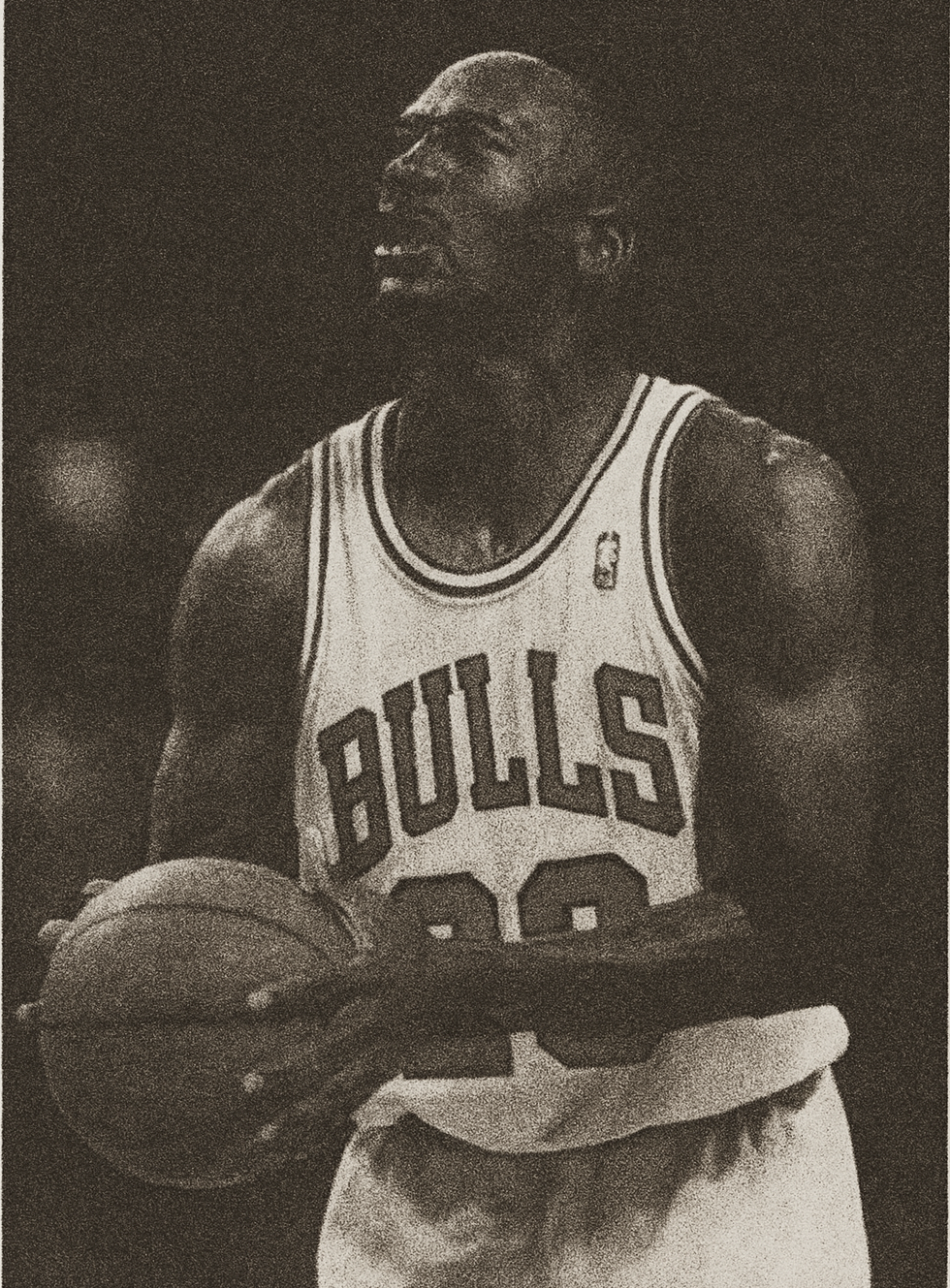
The Moment Michael Jordan Chose His Family Over Immortality—And Ebony Was There
How the December 1993 issue captured the greatest athlete alive questioning whether greatness was worth the sacrifice
December 1993. Michael Jordan had just walked away from basketball at thirty years old, three consecutive championships behind him, millions of dollars ahead, and a murdered father whose memory shadowed every decision. The world wanted answers. Ebony Magazine gave them something better: the truth.
While ESPN replayed his fadeaway jumper and Nike sold his mythology, Ebony published what no mainstream outlet could—or would. They showed Jordan in a bathtub. They showed him helping his sons with bubbles and bedtime. They showed a man who had become the most famous athlete on earth asking a question that haunts every icon: What if I just want to be normal?
This wasn't sports journalism. This was documentation of what it costs to carry a generation's hopes on your shoulders.
The Archive
Historical Figure: Michael Jordan
Issue Date: December 1993
Archive Source: Ebony Magazine
Photographer: Walter Iooss Jr.
Cultural Context: Published during Jordan's first retirement, months after his father's murder
Why 1993 Changed Everything
By the summer of 1993, Jordan had already rewritten basketball history. Three straight NBA titles. Global endorsements. A first name that needed no last name. He was no longer just an athlete—he was American mythology in motion, the Black excellence every barbershop celebrated and every boardroom wanted to monetize.
Then his father was murdered in North Carolina.
James Jordan's death in July 1993 didn't just devastate Michael—it unraveled him. The man who seemed invincible on hardwood suddenly faced a loss no championship could answer. By October, Jordan announced his retirement. He was thirty. He was in his prime. He was gone.
Mainstream sports media scrambled to explain the decision through statistics and speculation. Ebony did something far more radical: they let Jordan speak as a Black man, not just a brand. They let him be vulnerable. They let him be human.
What Ebony Understood That No One Else Did
Founded in 1945, Ebony had spent nearly five decades documenting African American achievement when others ignored it, distorted it, or reduced it to stereotype. By 1993, the magazine knew exactly what Jordan represented—not just individual brilliance, but the continuation of a legacy stretching from Jackie Robinson's courage to Bill Russell's dominance to Muhammad Ali's defiance.
Jordan's success wasn't just personal. It was communal. It was proof.
The December 1993 issue delivered that understanding through every page. Editor Lerone Bennett Jr. and photographer Walter Iooss Jr. collaborated on something unprecedented: a feature that showed Jordan dunking and diapering, dominating and doubting. The cover declared him "The Greatest Ever" in bold type, but inside, the magazine asked a harder question: At what price?
This wasn't hagiography. This was honest portraiture of a man caught between what the world demanded and what his soul required.
The Images That Revealed the Man Behind the Myth
Walter Iooss Jr.'s photography for this issue remains unmatched in Jordan coverage. He captured:
These weren't press conference photos. They were anthropological evidence of what fame extracts from those who achieve it. ESPN showed you Jordan's highlights. Ebony showed you his humanity.
What Jordan Actually Said (And Why It Still Matters)
Jordan's quotes in the issue cut through the usual athlete platitudes with startling honesty:
These weren't soundbites manufactured by handlers. This was a man reckoning with whether immortality was worth the sacrifice of ever being ordinary again.
Why This Issue Became a Cultural Artifact
Thirty years later, the December 1993 Ebony remains one of the most significant magazine issues of the 1990s. Not because of rarity—though finding clean copies grows harder each year—but because of what it captured.
Historical Precision: Published during Jordan's first retirement, it documents the exact moment when the greatest player alive questioned whether greatness was enough.
Photographic Intimacy: No other publication from this era—not Sports Illustrated, not GQ, not Rolling Stone—showed Jordan with this level of domestic access.
Cultural Context: While mainstream media covered Jordan as an athlete who happened to be Black, Ebony covered him as a Black man who happened to be the greatest athlete alive. That distinction mattered then. It matters now.
Representation as Preservation: This issue didn't just report on Jordan—it documented African American achievement, aspiration, and the complexity of Black excellence in a moment when mainstream narratives still preferred simplification.
For collectors, this isn't memorabilia. It's primary source material. It's evidence of how Black media told Black stories when no one else would tell them with dignity intact.
Why Collectors Seek This Issue
The Broader Archive: Why Vintage Ebony Matters Beyond Jordan
The December 1993 issue sits within a larger historical record that Ebony built across decades. From the civil rights movement to the rise of Black Hollywood to the evolution of African American political power, the magazine documented what others overlooked.
Each issue functioned as both journalism and testimony—proof that Black achievement, Black family life, Black joy, and Black struggle deserved documentation as thorough and respectful as any other American story.
If the Jordan issue speaks to you, consider the full scope: original Ebony magazines trace an unbroken line of African American history through the lens of those who lived it.
The Legacy: What Jordan's Vulnerability Taught Us
Jordan returned to basketball eighteen months later. He won three more championships. He became a billionaire. He secured his place as arguably the greatest to ever play the game.
But the December 1993 Ebony captured something his six rings never could: the moment he chose his family over his legend. The moment he admitted that being Michael Jordan—that Michael Jordan—was a burden no highlight reel could convey.
Ebony gave him space to say it. They gave their readers permission to see it. And in doing so, they created one of the most important pieces of sports journalism ever published.
Holding this issue today is holding the question every icon eventually faces: When does the person reclaim themselves from the legend?
For Jordan in 1993, the answer was clear. For us now, the magazine remains—a reminder that even the greatest ever was, first and always, human.
Explore the Complete Archive
Whether you're researching cultural history, building a collection, or honoring family heritage, original Ebony magazines offer something archives and databases cannot: the texture of lived experience, preserved in ink and paper.
Browse Ebony Magazine Collection