
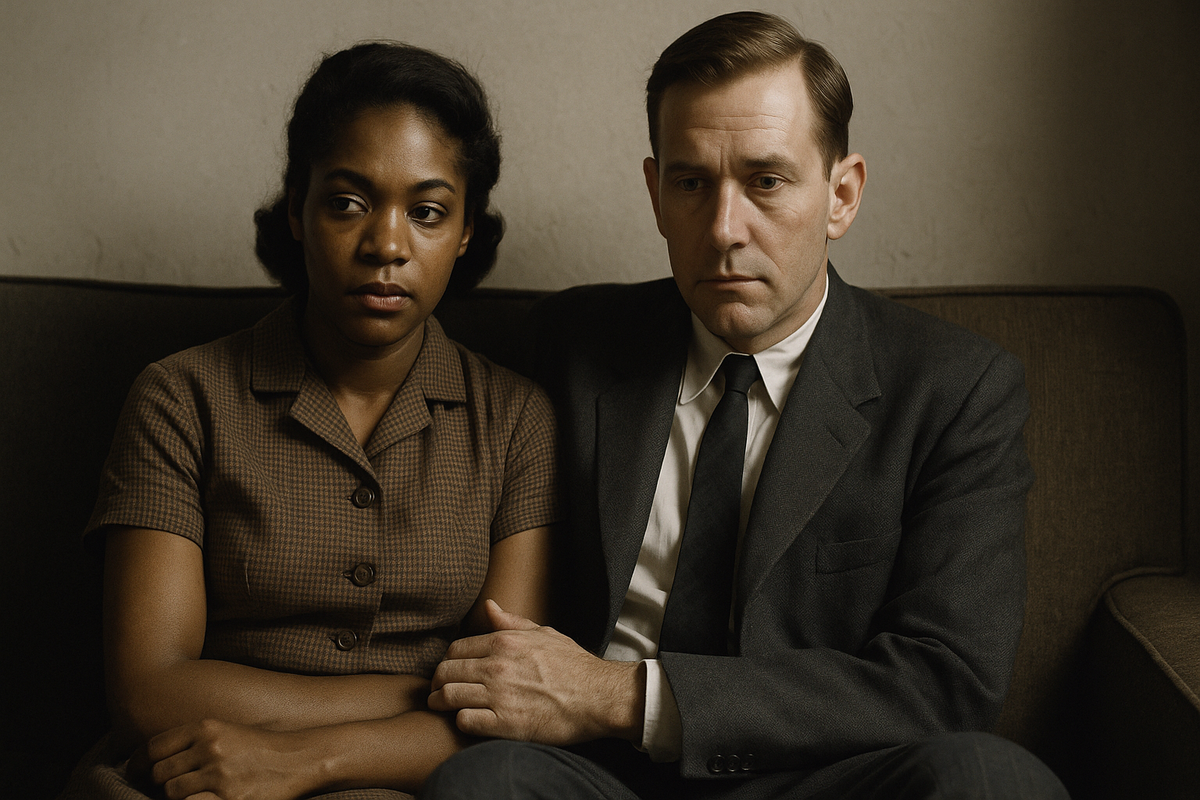
Miscegenation, Power, and the Unspoken History of Race in America
How Ebony Magazine's October 1962 Issue Exposed Three Centuries of America's Most Forbidden Subject
October 1962. While America argued over lunch counters and ballot boxes, Ebony magazine printed what no one else would: the truth about interracial sex in America.
Not as scandal. Not as whisper. As history.
On newsstands that month, readers found glamorous models on the cover—the Annual Ebony Fashion Fair in full color. But inside, tucked between advertisements for hair care and luxury cars, was Lerone Bennett Jr.'s essay "Miscegenation in America," a historical reckoning so thorough, so unflinching, that it functioned as both scholarship and weapon.
This was five years before Loving v. Virginia would strike down anti-miscegenation laws. Interracial marriage was still a crime in over a dozen states. And here was Ebony, laying out three centuries of evidence that America had always been interracial—no matter what the law said, no matter what the myth claimed.
The essay didn't ask permission. It presented facts: court records, sermons, trial transcripts, names. It was history as confrontation, and Ebony knew exactly what it was doing.
The Context: America's Most Dangerous Subject
By 1962, the civil rights movement had forced the nation to reckon with segregation in schools, buses, and public spaces. But beneath those battles was another fissure, older and more personal: the obsession with policing racial boundaries through sex and marriage.
Since 1664, when Maryland passed the first law criminalizing marriage between Black men and white women, interracial unions had been subject to some of the most vicious legal machinery in American history. These laws weren't just about "racial purity"—they were economic instruments. They ensured that children born to white men and enslaved women remained property, not heirs. The system outlawed interracial marriage while depending on interracial exploitation.
Bennett's article arrived at the exact moment when that system was beginning to crack. The sit-ins of 1960. The Freedom Rides of 1961. The violent resistance to integration. Against this backdrop, Ebony's decision to publish a meticulously documented history of interracial relationships was more than editorial boldness—it was a strategic provocation.
If America had always been mixed, Bennett argued, then what were these laws really protecting?
Historical Record
Featured Essay: "Miscegenation in America" by Lerone Bennett Jr.
Publication: Ebony Magazine, October 1962
Series: The Negro History Series
Historical Context: Published five years before Loving v. Virginia (1967) struck down anti-miscegenation laws nationwide
Ebony's Authority: Why This Magazine, Why This Moment
Founded by John H. Johnson in 1945, Ebony had become the most influential Black magazine in America by combining aspirational lifestyle content with serious reportage. It celebrated Black beauty, success, and style while refusing to sanitize Black history.
The Negro History Series, written by Bennett—who would later publish Before the Mayflower, one of the definitive histories of Black America—was among Ebony's most ambitious projects. Each installment functioned as both education and corrective, filling the gaps left by textbooks and mainstream journalism.
"Miscegenation in America" was the series at its sharpest. Bennett opened with colonial sermons warning against racial mixing, moved through the slave era with harrowing court cases, and closed with 20th-century sociological studies showing that millions of white Americans carried African ancestry. Where history books offered silence, Bennett provided evidence. Where newspapers whispered about "passing," Ebony printed names, dates, laws.
The visual strategy was equally deliberate. The editors paired archival portraits, trial photographs, and courtroom sketches with Bennett's prose, forcing readers to see miscegenation not as abstraction but as lived experience: enslaved women with white masters, mixed-race children trapped between legal categories, families divided by racial definitions.
The juxtaposition was Ebony's genius. Fashion Fair models on the cover. Historical reckoning inside. Glamour and truth, side by side.
What Bennett Revealed: The Architecture of Silence
Bennett's essay was dense, exhaustive, and impossible to ignore. Among its most striking revelations:
Ebony's Legacy: Truth Without Apology
Ebony's greatness lay in its refusal to choose between celebration and critique. It showed readers Black success, beauty, and style while documenting slavery, segregation, and resistance. Articles like "Miscegenation in America" remind us that history is not background—it's the foundation of the present.
In 1962, Ebony gave its readers what no mainstream publication would: an honest history of interracial America, told without shame or evasion. That honesty is why this issue remains invaluable today—as a collector's artifact and as a cultural record.
Why This Issue Matters to Collectors
Historical Timing
Published five years before Loving v. Virginia, this issue captured the debate at its legal and cultural peak, when the outcome was still uncertain.
Milestone Scholarship
"Miscegenation in America" ranks among Bennett's most significant essays, foreshadowing the rigorous historical approach he would bring to Before the Mayflower and his later work.
Editorial Vision
The issue exemplifies Ebony's unique ability to blend aspiration with confrontation, glamour with scholarship, celebration with truth-telling.
Cultural Demand
Issues featuring civil rights history, groundbreaking journalism, or Bennett's byline are highly sought after by historians, collectors, and families preserving Black heritage.
Owning this issue means holding a piece of the argument that changed American law. It's not nostalgia. It's evidence.
Explore the Collection
Thousands of original Ebony magazines spanning the 1940s through the 1970s are available in our collection, documenting decades of African American culture, politics, fashion, and resistance.
Browse Ebony Magazine CollectionWhether you're a historian, a collector, or someone honoring the past, these magazines are more than reading material. They are physical witnesses to the Black experience in America—artifacts that refuse to let history be forgotten.
Conclusion
The October 1962 issue of Ebony, with Lerone Bennett Jr.'s "Miscegenation in America," remains one of the most important cultural documents of the civil rights era. At a moment when interracial marriage was still outlawed across much of the nation, Ebony printed the truth: America had always been interracial, no matter what the laws pretended.
Holding this issue today is holding a turning point—a moment when Ebony challenged America to confront its deepest contradictions. More than sixty years later, that challenge still echoes.