
Moscow Under Siege: The Night LIFE Magazine Showed Americans War Was Coming
September 1, 1941 — Margaret Bourke-White's photographs of Nazi bombardment, Soviet defiance, and the moment American neutrality began to collapse
On the cover of the September 1, 1941 issue of Life Magazine, baseball legend Ted Williams stared out at American readers. Inside, they found something far more unsettling: photographs of Moscow burning under Nazi bombardment.
The juxtaposition was jarring—and deliberate. While the cover celebrated American peacetime heroism, Margaret Bourke-White's photo-essay "Moscow Fights Off the Nazi Bombers and Prepares for a Long War" delivered a message the United States wasn't ready to hear: this war would reach everyone, eventually.
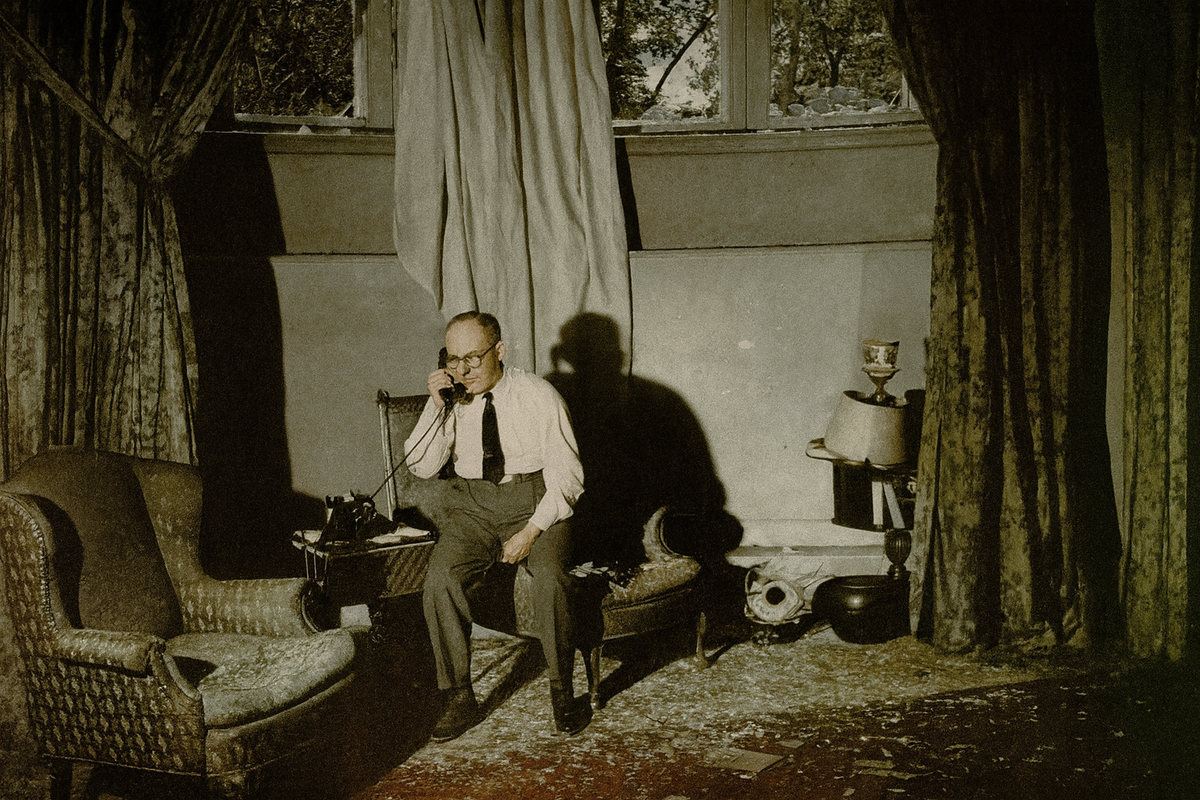
Operation Barbarossa was only ten weeks old. German armies had already crossed 400 miles into Soviet territory. And here, in stark black-and-white, were the consequences: tracer fire streaking across Red Square, the U.S. Ambassador sitting in a glass-strewn embassy, Soviet women harvesting grain under the threat of Luftwaffe strafing runs.
For readers still clinging to neutrality, these weren't distant headlines. They were evidence.
The Invasion Hitler Called Unstoppable
June 22, 1941. Three million German troops, 3,600 tanks, and 2,700 aircraft surged across the Soviet border in the largest military invasion in human history. Hitler expected the USSR to collapse within weeks.
By July, the Wehrmacht had encircled entire Soviet armies. Minsk fell. Smolensk fell. And on the nights of July 23 and 26, German bombers reached Moscow itself—dropping high explosives and incendiaries over the Kremlin, Red Square, and the city's administrative heart.
Bourke-White was there. From rooftops and embassy windows, she captured what newspapers could only describe: the streaking arcs of anti-aircraft fire, parachute flares hanging like artificial moons, searchlights sweeping the sky for German Heinkels and Junkers bombers.
Six Nazi planes were shot down on July 26 alone. Their wreckage became proof—photographed, documented, displayed to foreign correspondents as evidence that Moscow's defenses held.
For Americans reading Life in early September, the war was still someone else's problem. Pearl Harbor was three months away. But these photographs hinted at what was coming: a global conflict where distance meant nothing, and neutrality was a fiction.
Archive Details
Photographer: Margaret Bourke-White
Issue Date: September 1, 1941
Cover Subject: Ted Williams (Baseball)
Feature Essay: "Moscow Fights Off the Nazi Bombers and Prepares for a Long War"
Historical Context: Published 10 weeks after Operation Barbarossa began, 3 months before Pearl Harbor
Bourke-White's War: Photojournalism as Primary Source
Margaret Bourke-White didn't just report the Moscow raids. She documented them with the precision of a battlefield historian and the eye of an artist.
Her long-exposure shots turned night raids into visual spectacle: tracer bullets formed luminous threads across the sky, anti-aircraft shells burst in white blooms, and German flares drifted downward like burning chandeliers. These weren't propaganda images. They were data—visual records of specific raids on specific nights, cataloging the Luftwaffe's tactics and the Soviet response.
But Bourke-White also captured the human dimension of war:
Ambassador Steinhardt's shattered embassy. On July 23, German bombs blew out the windows of the U.S. diplomatic mission. The ambassador's hands were cut by flying glass. He worked the next day from a makeshift office, debris still on the floor. Bourke-White photographed him calmly speaking on the phone, surrounded by wreckage—an image that became the issue's emotional anchor (though not its cover).
Camouflage and deception. Soviet engineers painted false shadows and fake rooftops on Kremlin buildings, turning the architectural landmark into a visual puzzle for German bombardiers. At night, the entire city went dark. Bourke-White's photos showed Moscow transformed into a ghost capital—invisible from above, defiant below.
Women in the fields. With Soviet men conscripted to the front, women and children harvested wheat and rye outside the city. Their slogan: "One for the men, one for ourselves, one for the country." Bourke-White photographed them against the horizon, scythes in hand, working under the constant threat of German advance.
The downed Junkers Ju-88. North of Moscow, a Nazi bomber lay crumpled in the woods. Bourke-White photographed Soviet soldiers examining its radio panel, foreign correspondents inspecting its wreckage. The plane was evidence: proof that Moscow's air defenses worked, that German losses were mounting, that the "unstoppable" invasion could be resisted.
Bourke-White wasn't writing history. She was recording it in real time, with a camera instead of a pen.
The Layout That Made War Immediate
Life had perfected something other magazines couldn't replicate: the marriage of image and narrative at scale.
Two-page spreads gave Bourke-White's photographs room to breathe. Night skies filled the frame, tracer fire arcing wall-to-wall. Captions didn't just identify subjects—they provided tactical context: how many German planes attacked, what Soviet defenses engaged, which raids succeeded and which failed.
The effect was immersive. Readers didn't just read about Moscow under siege. They saw it: the glowing trails of anti-aircraft fire, the silhouettes of Kremlin towers against firebombed skies, the calm determination of civilians adapting to nightly bombardment.
Other magazines offered illustrations or stylized covers. Life offered evidence. That distinction made it the most influential photojournalism platform of the 20th century—and made issues like this one historical documents in their own right.
Inside the Siege: Ten Moments Frozen in Time
Bourke-White's photo-essay revealed Moscow as a city preparing for long war, not quick defeat:
The Embassy Attack
German bombs shattered U.S. diplomatic windows on July 23. Ambassador Steinhardt's hands were cut. He worked through the damage, a symbol of Allied resolve even before America formally entered the war.
The Night Raids
Long-exposure photographs documented July 26's assault: Nazi parachute flares, Soviet searchlights, anti-aircraft batteries firing in coordinated volleys. Six German planes fell that night.
Camouflage as Strategy
Soviet engineers disguised the Kremlin with painted shadows and false rooftops by day, then blacked out the entire city by night. German bombardiers struggled to identify targets.
Women at War
Photographs showed women harvesting grain under threat of German strafing. Their work wasn't symbolic—it was tactical. Denying food to the Wehrmacht could slow the invasion as effectively as any military engagement.
The Downed Bomber
A Junkers Ju-88 lay wrecked in the woods north of Moscow. Bourke-White photographed Soviet soldiers and correspondents examining its radio panel, studying German technology in defeat.
Civilian Endurance
Despite nightly raids, Muscovites swam in the river by day, shopped in stores, gathered in public spaces. The photos captured a population refusing to panic.
Propaganda and Morale
Enormous Stalin monuments appeared at agricultural fairs. The cult of personality wasn't just propaganda—it was a psychological defense, a way to project strength when survival was uncertain.
Children and War
Soviet children played "war games" in uniform, holding toy rifles. The photographs showed how deeply the conflict had penetrated daily life, shaping even childhood play.
Stalin's Kremlin Under Fire
Captions noted that German raids targeted Stalin's office directly. The Kremlin's defenses—camouflage, anti-aircraft batteries, blackout protocols—suggested the Nazis aimed to decapitate Soviet leadership.
A City Transforming for Siege
From rationing to air-raid drills, Bourke-White documented Moscow's metamorphosis into a wartime capital, preparing not for quick victory but for survival.
Together, these images gave Americans a composite portrait: a society under existential threat, adapting in real time.
Why This Issue Matters to Collectors
Temporal Proximity
Published ten weeks after Operation Barbarossa began, it documented the Eastern Front at its inception, before outcomes were known or narratives settled.
Photographic Achievement
Bourke-White's night-raid images rank among the most technically ambitious WWII photographs ever published in American media. They required long exposures under combat conditions, balancing artistry and reportage.
Cultural Snapshot
The issue captured how ordinary Soviets—farmers, students, city workers—responded to invasion. These weren't official propaganda images. They were field reports from a society in crisis.
Collector Demand
WWII-era Life magazines command premium prices, particularly issues covering Barbarossa, Pearl Harbor, D-Day, and the war's conclusion. Early Eastern Front coverage remains scarce in high-grade condition.
Pre-Pearl Harbor Context
This issue reached American readers while the U.S. was still neutral. It represents a moment when war was still distant—yet these photographs suggested that distance was collapsing.
Physical Permanence
Holding this issue means holding the moment Americans first saw Moscow burn—the same images that shaped perceptions before the U.S. had fired a shot.
Why Original Magazines Outlast Digital Archives
Life's wartime issues aren't just journalism. They're physical witnesses.
Unlike today's digital images—compressed, cropped, stripped of context—these magazines retain their original form: the weight of the paper, the grain of the photographs, the layout decisions that shaped how stories were consumed.
Each page carries urgency: the shattered glass of Steinhardt's embassy, the eerie geometry of tracer fire over the Kremlin, the determined faces of women in the fields. They remind us that history was once consumed slowly—studied at kitchen tables, saved in family collections, passed down as artifacts of lived experience.
For collectors and historians, that permanence is why Life remains indispensable.
Explore the Archive
Thousands of original Life magazines spanning the 1930s through the 1970s are available in our collection. You can trace entire decades of culture, politics, and war as they were documented in real time.
Browse Original Life MagazinesThe Issue That Saw War Coming
The September 1, 1941 issue of Life Magazine—Ted Williams on the cover, Moscow burning inside—remains one of the most prophetic wartime publications ever produced.
Margaret Bourke-White's photographs of Nazi air raids over the Soviet capital delivered more than news. They delivered atmosphere, evidence, and warning. For American readers still months away from Pearl Harbor, these images hinted at what neutrality could no longer protect them from: a global war that would reach everyone, eventually.
Holding this issue today means holding a story of survival—a city fighting in the skies, civilians adapting under fire, and a photographer who understood that history doesn't wait for official declarations.
Thanks to Life's unmatched photojournalism, those moments remain alive on the page more than 80 years later. Not as abstractions, but as evidence—carrying the voices, images, and urgency of the past directly into our hands.