
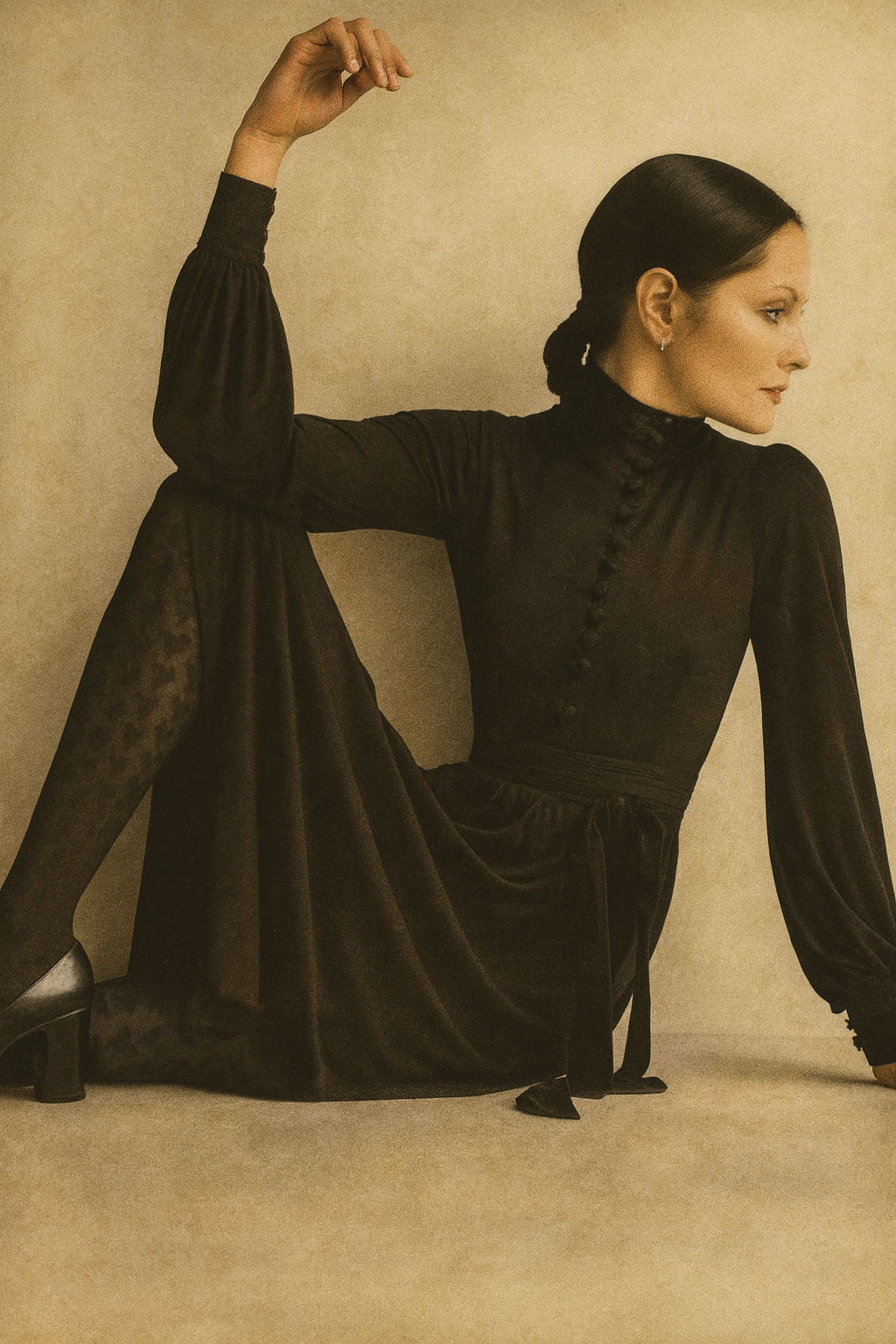
When American Women Stopped Apologizing: Inside Vogue's September 15, 1971 Revolution
How one issue documented the moment fashion finally caught up to feminism
The woman on the cover doesn't smile. She stares.
David Bailey's lens captured something in September 1971 that earlier Vogue covers had avoided: a model who looked like she had somewhere to be. Luminous eyes, striking hair, clean typography—no apology, no invitation to approve. Just presence. What readers didn't know as they picked up that issue was that the fashion inside had stopped apologizing, too.
This wasn't another spread of unattainable couture fantasy. The September 15, 1971 issue of Vogue documented a shift that had already happened on American streets—women were dressing for lives that didn't wait for permission. The magazine's feature on "nifty little dresses," black suits, and soft patterned knits wasn't predicting a trend. It was catching up to one.
The World That Made These Clothes Necessary
By fall 1971, the cultural revolutions of the late 1960s had moved from protests into payrolls. Second-wave feminism had grown from rallies into workplace realities. Women weren't asking for equal access anymore—they were already in the office, the courtroom, the newsroom, and they needed wardrobes that could survive a 12-hour day without a costume change.
The economic landscape had shifted, too. American ready-to-wear was exploding. Designers like Anne Klein, Bill Blass, Halston, and Oscar de la Renta were building global reputations by rejecting European couture's impracticality. Their clothes worked. You could move in them. You could work in them. You could wear them on the subway without destroying them.
Vogue's September 1971 issue captured that pragmatic elegance. Instead of presenting fashion as aspiration divorced from reality, the magazine offered a blueprint: dresses designed to fit under coats, suits styled for day-to-dinner transitions, knitwear everywhere. This was clothing engineered for women who didn't have time to go home and change.
Archive Details
Publication: Vogue Magazine
Issue Date: September 15, 1971
Cover Photographer: David Bailey
Featured Designers: Anne Klein, Bill Blass, Halston, Oscar de la Renta
Cultural Context: Second-wave feminism, rise of American ready-to-wear
Inside the Issue: Fashion as Infrastructure
The Nifty Little Dresses
"Finding yourself a dress to slide easily under coats is a breeze."
That sentence—unthinkable in 1950s Vogue—reveals everything. These weren't gowns. They were tools. Knit-necklined, swingy dresses in burgundy and gray, practical enough for commuting but stylish enough to stand alone at dinner. The editorial copy emphasized function without sacrificing desire, a balance women had been improvising for years and Vogue was finally documenting.
The Little Black Suit: America's Answer
Vogue positioned the little black suit as a distinctly American creation—tweed tailoring with crisp white collars, sharp enough for boardrooms, relaxed enough for cocktails. The magazine praised the suits' "fresh, attractive, appealing" versatility, calling them "the way we'd like to see everyone everywhere dress for dinner."
That democratic impulse—everyone everywhere—marked a departure from fashion's traditional gatekeeping. These weren't clothes for the women who lunched. They were for the women who worked.
Soft Patterned Dresses: Structure Meets Bohemia
Ribby shirtdresses, burgundy foulard prints, belted knits—the patterned dress spreads captured the early '70s tension between structure and freedom. These pieces allowed for individual expression (the growing bohemian influence) while maintaining the tailored discipline the decade demanded. Women could look professional without looking uniform.
What the Layouts Revealed
Vogue's visual language in this issue matched its editorial philosophy. Models posed dynamically, not statically. Cropped images highlighted textures—the weight of tweed, the stretch of knit. Bold typography punctuated layouts like editorial commentary.
But here's what separated this issue from competitors: Vogue treated fashion photography as cultural documentation, not just product showcase. The heart-print tights, the crisp gloves, the bold jewelry—these weren't styling flourishes. They were arguments about identity, about how accessories could individualize the increasingly standardized professional wardrobe women were building.
And those price tags—dresses at $95 to $110—grounded the editorial in economic reality. This was aspirational fashion, yes, but attainable aspiration for the magazine's target audience. Vogue was selling a lifestyle that existed, not one that required a trust fund.
Ten Design Principles That Defined the Moment
Why Collectors Hunt This Issue
Vintage fashion magazines aren't just style guides. They're primary sources.
The September 15, 1971 Vogue captures a specific historical moment: when American ready-to-wear began rivaling Paris couture, when fashion magazines started treating women as professionals with complex lives, when clothing design acknowledged that women's roles had fundamentally changed.
For Collectors and Historians
These aren't collectibles because they're old. They're collectibles because they're records—of a cultural shift that happened in real time, documented by photographers and editors who understood they were witnessing something change.
The Artifact as Archive
What separates 1970s Vogue from contemporary fashion media is permanence. These magazines were designed to be kept, studied, revisited. Unlike algorithm-driven digital content that disappears into feeds, these issues had weight—literal and cultural. They offered commentary on gender, work, art, and aspiration that readers returned to.
The September 15, 1971 issue didn't just show clothes. It showed a way of being in the world. That's what makes it valuable fifty years later.
Explore Our Collection
If you study fashion history, cultural shifts, or 20th-century visual media, the September 15, 1971 Vogue is a primary source worth owning. It offers both aesthetic mastery and authentic documentation of a pivotal moment when American fashion stopped following European rules and women's clothing stopped pretending their lives were simple.
Browse Vogue Magazine CollectionThese aren't reproductions or digital scans. They're the original artifacts—ink on paper, advertisements intact, pages that carry the texture of 1971. For serious collectors, fashion historians, or anyone who understands that style is cultural evidence, these magazines are irreplaceable.
The Legacy
The September 15, 1971 Vogue remains a landmark because it captured what was already true: women were working, socializing, and redefining their roles, and fashion had to evolve or become irrelevant. The "nifty dresses," the black suits, the patterned knits—these weren't trends. They were solutions.
Holding this issue today means holding evidence of 1971—when American designers claimed global authority, when Vogue treated fashion as cultural infrastructure, when women's clothing finally acknowledged the complexity of women's lives.
For anyone who values history, these magazines aren't nostalgia. They're documentation. They prove that fashion is never just fashion—it's evidence of who we were and who we were becoming.
Page by page.