
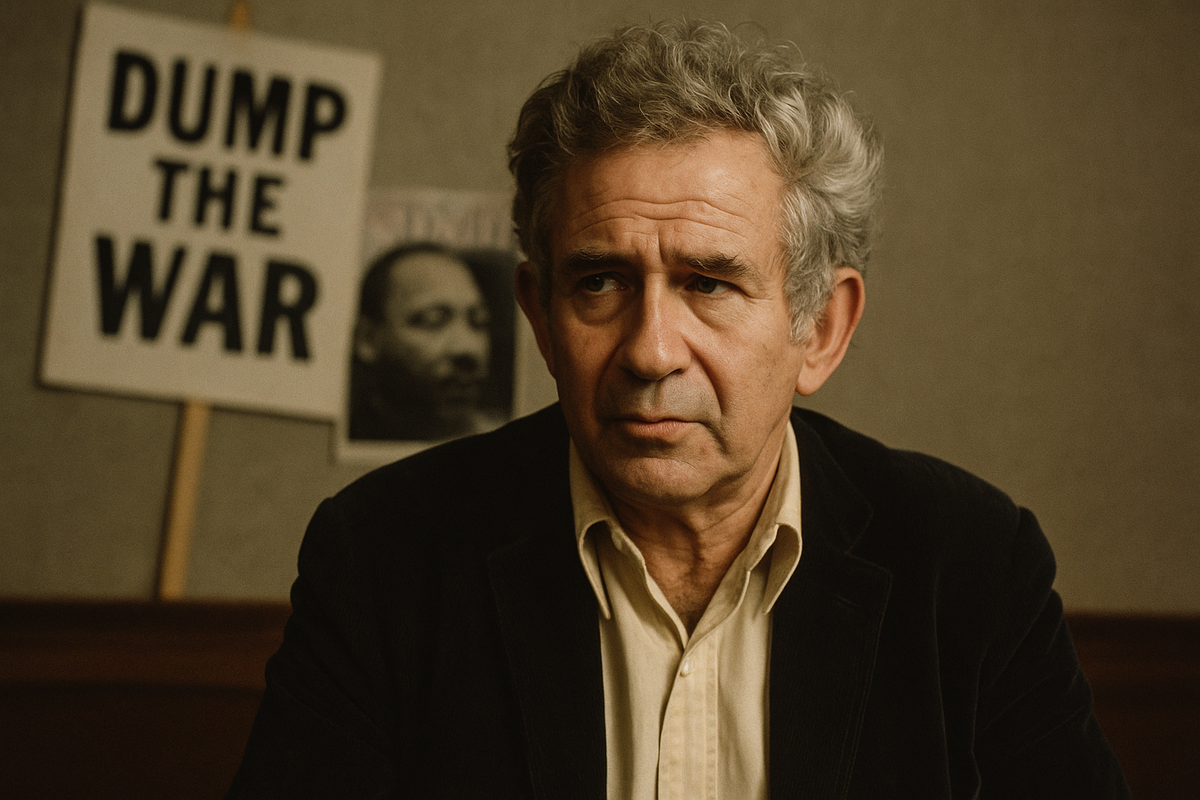
The Interview That Defined a Generation
Norman Mailer's Playboy Confession, January 1968
January 1968. America teetered on the edge of catastrophe. Half a million troops fought in Vietnam. Cities smoldered from race riots. The sexual revolution collided with traditional morality. And in the midst of this chaos, readers opening their monthly issue of Playboy Magazine found something unexpected: Norman Mailer—novelist, brawler, mayoral candidate, and self-proclaimed "existential theologian"—confessing his darkest thoughts on violence, God, drugs, and the American soul.
This wasn't entertainment. It was a diagnosis.
Archive Details
Historical Figure: Norman Mailer
Issue Date: January 1968
Archive Source: Playboy Magazine
Cultural Context: Vietnam War Era, Sexual Revolution, Counterculture Movement
A Nation Fracturing
By winter 1967–68, the fault lines in American society had become chasms. The Vietnam War had metastasized into a national trauma. The counterculture wasn't a fringe movement anymore—it was reshaping attitudes toward sex, authority, spirituality, and power. Traditional institutions faced open rebellion.
Norman Mailer stood at the intersection of all this turmoil. His war novel The Naked and the Dead (1948) had made him famous at twenty-five. By the mid-1960s, he'd stabbed a fellow partygoer in a drunken rage, lost a bid for New York mayor, and blurred the boundaries between journalism, fiction, and philosophy in works that divided critics and captivated readers.
He was dangerous. Unpredictable. Brilliant. Exactly the voice Playboy needed.
Playboy's Radical Gambit
By 1968, Playboy had transformed itself into something unprecedented: a men's magazine that refused to choose between the body and the mind. Its editors believed sophisticated readers wanted both sensuality and serious ideas. The formula worked. Playboy's interview series had become one of the era's most influential intellectual platforms, featuring Martin Luther King Jr., Fidel Castro, Malcolm X, and other figures reshaping the world.
The Mailer conversation exemplified this audacious vision. It wasn't polite. It was combative, often contradictory, alive with urgency. Mailer held forth on God and the Devil, LSD and alcohol, violence and masculinity, Vietnam's moral catastrophe, and America's uncertain future.
While mainstream publications avoided controversy, Playboy embraced it—packaging radical cultural critique alongside erotic imagery, reaching audiences far beyond traditional literary or political journals. The effect was electric. The magazine made the national crisis feel immediate, visceral, inescapable.
A Cover That Knew the Game
The January 1968 cover delivered Playboy's signature wit: a tuxedoed rabbit surrounded by framed nude images, surreal and tongue-in-cheek. Playful, yet sophisticated. The visual message was clear—this publication understood it was both entertainment and cultural commentary, and it refused to apologize for the combination.
Inside, the Mailer feature dominated. Stark portraits of the writer himself reinforced his dual role as subject and provocateur. No battlefield photographs. No Hollywood glamour. Just the man and his ideas.
This juxtaposition—nude pictorials beside searching conversations about war, politics, and God—made Playboy one of the most iconic and controversial publications of the twentieth century. Critics called it pornography. Defenders called it liberation. Both were right.
What Mailer Said
On Violence and Masculinity
Mailer confessed to bar fights and violent impulses, suggesting that brutality could reveal deeper truths about authenticity. His reflections on the darker side of masculinity unsettled readers who expected cleaner answers.
On Drugs and Consciousness
He spoke candidly about LSD and marijuana, acknowledging their power to shatter perception while warning against their misuse. His ambivalence mirrored the era's fascination with psychedelics—neither celebration nor condemnation, but recognition of their danger and allure.
On God and Religion
Mailer's theology was startling. He described God as flawed, embattled, needing humanity's help in an ongoing cosmic struggle. This radical vision resonated with a generation abandoning traditional churches for Eastern spirituality, communes, and personal mysticism.
On Vietnam
Fiercely critical, Mailer called the war a symbol of American arrogance and moral collapse. His words amplified the antiwar sentiment building across college campuses and city streets.
On the New Left
He positioned himself within the intellectual vanguard, wrestling with freedom, identity, and the possibility of cultural rebirth. His answers refused easy categorization—he was Left, but skeptical. Radical, but elitist. Revolutionary, but grounded in older literary traditions.
The interview assembled these fragments into a larger portrait: America was not united. Its leaders were not infallible. Its future was not secure.
Why These Magazines Endure
Playboy's 1960s issues survive because they are more than entertainment. They are time capsules. Each page carries the urgency, rebellion, and experimentation of its moment—the arguments, the anxieties, the audacity.
Today, when media evaporates in seconds, these printed magazines remind us that history was once engaged slowly. Read at leisure. Debated over coffee tables. Preserved in private collections.
That permanence gives vintage Playboy magazines their power for collectors. They are physical witnesses to America's cultural revolutions—the sexual revolution, the Vietnam protests, the collapse and reconstruction of traditional authority.
Why Collectors Prize This Issue
Historical Timing
Published weeks before the Tet Offensive, the assassinations of Martin Luther King Jr. and Robert F. Kennedy, and the riots at the Democratic National Convention, this issue captures the cultural mood at the precise moment before 1968 exploded into chaos.
Landmark Interview
The Mailer conversation remains one of Playboy's most controversial and significant interviews, still cited by literary scholars, biographers, and cultural historians studying the period.
Extraordinary Lineup
Beyond Mailer, this issue featured work from Ray Bradbury, Kurt Vonnegut, Saul Bellow, John Cheever, and Shel Silverstein—a roster that rivaled or surpassed most literary magazines of the era.
Cultural Artifact
With its surreal cover and fearless editorial vision, it embodies Playboy's golden age, when the magazine shaped conversations about art, politics, sexuality, and power.
Owning this issue means possessing a primary source document of America's cultural transformation. Not a reproduction. Not a summary. The original artifact.
Explore the Archive
Hundreds of original Playboy magazines from the 1950s through the 1970s are available in our collection. Trace entire decades of changing attitudes toward politics, sex, art, and identity through the pages that first reported them.
Browse Playboy Magazine CollectionFinal Word
The January 1968 Playboy interview with Norman Mailer remains one of the most significant cultural documents of its era. Brilliant, outrageous, deeply revealing—it captured a writer wrestling with his demons and a nation on the brink of upheaval.
Holding this issue is holding a moment when America stood at a crossroads between conformity and rebellion, war and peace, faith and disillusionment. Thanks to Playboy's bold editorial vision, that moment is preserved for us to revisit more than half a century later.
For anyone who values history, literature, or cultural memory, vintage Playboy magazines are not simply reading material. They are living artifacts. Through them, the past speaks directly to us.