
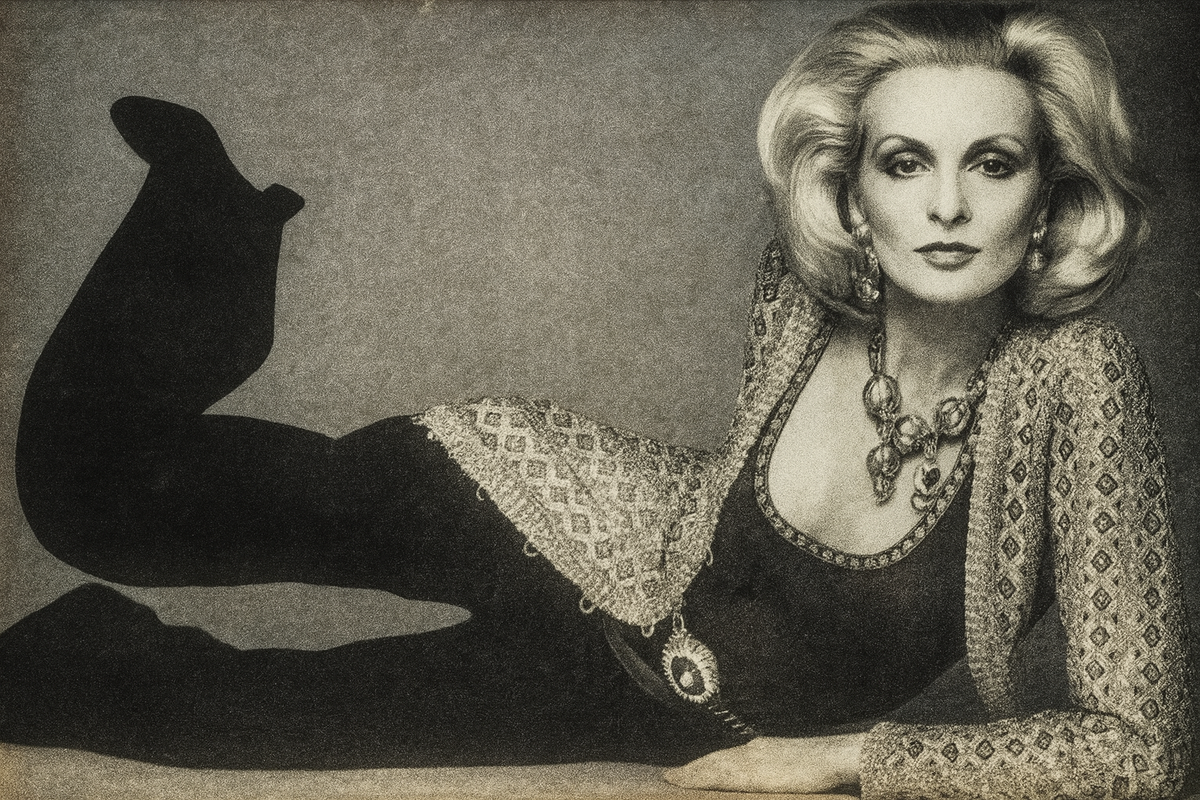
The September a Pantsuit Became Couture
Inside Vogue's 1972 Revolution
When a woman opened the September 15, 1972 issue of Vogue, she wasn't just flipping through fashion plates. She was holding evidence of a seismic shift—the moment Paris couture stopped pretending women lived in ballrooms and started dressing them for boardrooms, dinner parties, and their own ambitions. Trousers appeared beside gowns. Suits claimed evening hours. And Yves Saint Laurent declared, with embroidered halters and black crepe pants, that a woman could wear whatever the hell she wanted and still be the most elegant person in the room.
This wasn't trend coverage. It was documentation of a cultural turning point.
Archive Details
Publication: Vogue Magazine
Issue Date: September 15, 1972
Featured Designers: Yves Saint Laurent, Christian Dior (Marc Bohan), Emanuel Ungaro, Givenchy, Valentino
Cultural Context: Second-wave feminism, workplace equality movement, redefinition of feminine power dressing
When Couture Stopped Ignoring Reality
By fall 1972, American women had spent half a decade demanding equal pay, workplace protections, and the right to wear something other than a sheath dress to the office. The feminist movement wasn't asking permission anymore—it was rewriting the rules. And Paris, that cathedral of tradition, did something unexpected: it listened.
The designers featured in this issue—Yves Saint Laurent, Christian Dior under Marc Bohan, Emanuel Ungaro, Givenchy, Valentino—weren't abandoning femininity. They were expanding its vocabulary. Vogue captured the exact moment when "sophisticated" no longer meant "constrained."
The Designers Who Broke the Mold
Marc Bohan's Dior: Softness Without Apology
Bohan understood that femininity didn't need to be fragile. His ivory satin-crêpe pyjamas—flowing, tied at the waist with a sash, worn with long pearls—proved luxury could be languid. Vogue described the "flirt of sleeves" on his evening dresses, language that captured both sensuality and ease. This was couture that refused to choose between comfort and glamour.
Yves Saint Laurent: The Pantsuit Goes Black-Tie
Saint Laurent's work in this issue reads like a manifesto. No "little uniforms," Vogue noted—instead, sporty, modern suits built for individuality. His masterstroke: black crepe pants paired with a crimson halter embroidered in gold and ruby beads. It was a direct challenge to every formal dress code that had ever existed. Pants weren't just daywear anymore. They were eveningwear. His velvet jackets, crochet sweaters with sable collars, and sharply tailored suits made one thing clear: a woman in trousers could command any room she entered.
Emanuel Ungaro: The Pragmatist
Ungaro built couture from the layers women actually lived in—checks over plaids, angora over jersey, scarves completing what jackets began. Wide-legged trousers met plaid jackets. Vogue praised his "total look," but what Ungaro really delivered was wardrobe architecture: luxury designed not for photographs, but for movement, for packed schedules, for real life.
Givenchy and Valentino: The Traditionalists Who Mattered
While Saint Laurent and Ungaro pushed boundaries, Givenchy and Valentino held the center. Their gowns reminded readers that evening elegance hadn't disappeared—it had simply stopped being the only option. This balance made the issue powerful. It wasn't advocating revolution so much as documenting expansion.
The Editorial Vision
Vogue's presentation matched the moment. Bold black-and-white silhouettes. Dramatic studio poses. Street-inspired compositions that made couture feel accessible without cheapening it. The magazine's language carried weight: "sophistication at its best," "a way for a woman to look." This wasn't just reporting fashion—it was shaping how readers understood their own possibilities.
The photography departed from the fantasy-heavy editorials of the 1950s and early '60s. Realism mattered now. The women in these images looked like they had places to be.
Ten Cultural Moments Preserved
What Vintage Vogue Actually Preserves
These magazines function as time capsules with unusual precision. Beyond the fashion coverage, they capture advertising strategies, typographic trends, editorial voice, beauty standards, and the specific ways women were encouraged to imagine themselves. A September 1972 Vogue documents more than hemlines—it shows what ambition looked like that year, what elegance meant, which freedoms felt new.
When researchers search for "Vogue magazine September 1972" or "1970s Vogue magazines," they're seeking that multilayered context. They want to understand the moment when pearls became loungewear, when layering became a sign of sophistication, when a woman could wear pants to dinner and be the best-dressed person there.
Why This Issue Endures
For collectors and historians, the September 15, 1972 Vogue represents a rare convergence: cultural upheaval meeting couture at the exact moment when both were ready to change.
This isn't nostalgia. It's primary source material.
The Archive
To experience this history directly, explore the full collection of original Vogue magazines—decades of cultural documentation spanning the 1930s through the 1990s. Each issue preserves not just fashion, but the broader context that shaped it: politics, art, identity, social change.
Browse Vogue Magazine CollectionWhether you're building a research library, studying design history, or simply fascinated by how culture evolves, vintage Vogue issues offer something rare: the chance to hold a specific moment in your hands.
The Lasting Significance
The September 15, 1972 Vogue captured Paris couture at an inflection point. Dior's feminine ease, Saint Laurent's trouser revolution, Ungaro's practical layering, and the preserved elegance of Givenchy and Valentino combined to document a society mid-transformation—women demanding clothing that served their expanding lives without sacrificing beauty.
This issue remains collectible not because it predicted the future, but because it recorded the precise moment when fashion stopped resisting change and started enabling it. For anyone studying how culture shifts—how liberation looks, how power dresses, how identity gets constructed one outfit at a time—this magazine offers something no secondary source can match: the original document, preserved exactly as readers encountered it in 1972, when everything was about to change.