
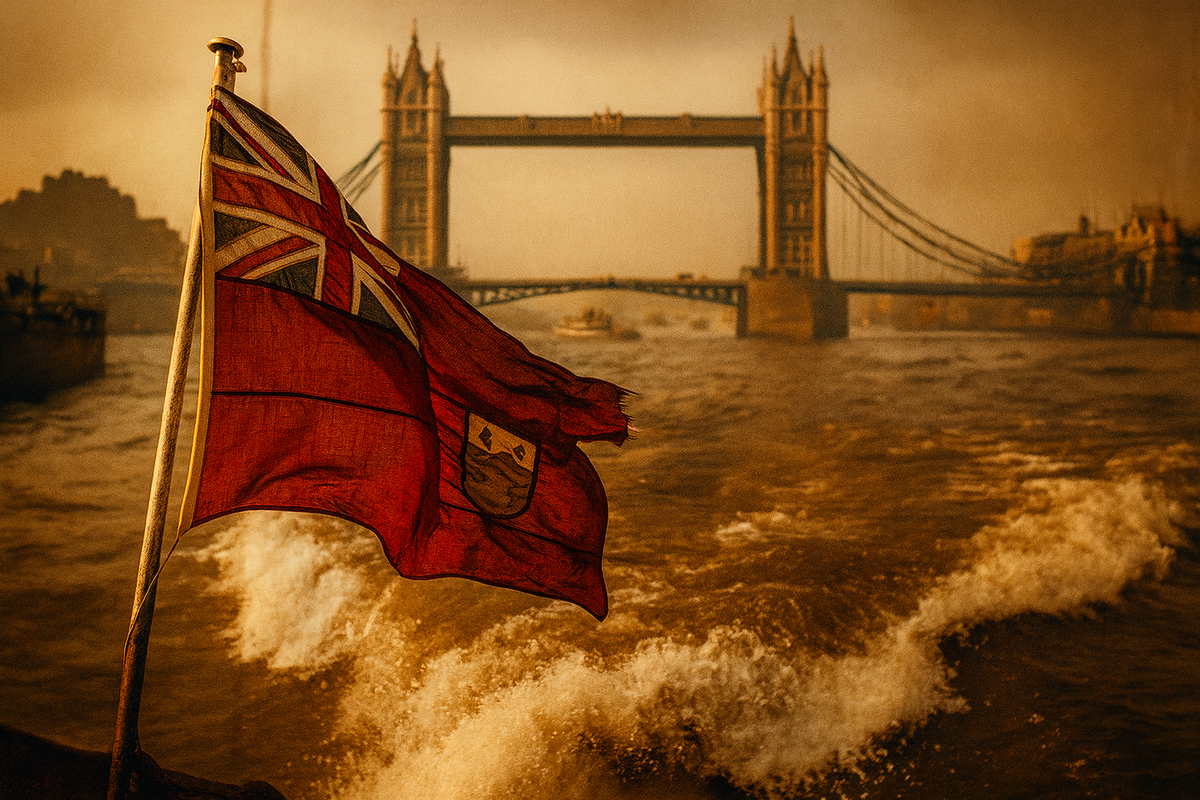
England in Blackout: The Life Magazine Issue That Showed America the Face of War
How the January 1, 1940 issue documented Britain's first winter under siege—and previewed the cost of modern conflict
On New Year's Day 1940, Americans woke to a country still at peace. By evening, many had seen what war looked like.
The January 1, 1940 issue of Life Magazine arrived on doorsteps and newsstands with a disarming cover: Queen Elizabeth, photographed by Cecil Beaton in Buckingham Palace, serene in a gown originally designed for her American tour. Turn the page, and serenity vanished. Inside was "England at War: Life Goes On in the Dark"—a photo essay so immediate, so unsettling, that it functioned less as journalism and more as prophecy.
For a nation debating whether Europe's war was its own, Life offered something arguments couldn't: evidence. Not of battlefields, but of something more insidious—the erasure of normal life. London after sunset, black as a cave. Children with gas masks instead of school bags. Couples courting in villages that might not exist by spring. This wasn't war as spectacle. This was war as condition.
Eighty-five years later, this issue remains one of the most significant artifacts of pre-Blitz Britain—a document of the interval between declaration and devastation.
Archive Details
Publication: Life Magazine
Issue Date: January 1, 1940
Feature: "England at War: Life Goes On in the Dark"
Cover Subject: Queen Elizabeth (later Queen Mother), photographed by Cecil Beaton
Historical Context: Four months into World War II, during the "Phony War" period
The First Winter: Britain in Twilight
By the time this issue reached American readers, Britain had been at war with Nazi Germany for four months. The German invasion of Poland in September 1939 had triggered declarations from Britain and France, but the expected onslaught never came. The Western Front remained quiet. Historians would later call it the "Phony War," though there was nothing phony about what British civilians endured.
The blackout began immediately. From dusk to dawn, the entire nation went dark. Streetlamps extinguished. Car headlights masked to slits. Even striking a match outdoors drew reprimands. The goal: make Britain invisible to German bombers searching for targets. The cost: a nation suddenly medieval after dark.
Londoners navigated by memory. Traffic accidents spiked. Pedestrians collided, fell into the Thames, walked into lampposts they'd passed for years. The city that had pioneered electric lighting now stumbled through a 17th-century night, every evening, indefinitely.
Life captured this strangeness with long-exposure photographs that haunt to this day: Piccadilly Circus reduced to ghostly outlines, Regent Street a corridor of shadows. These weren't dramatic images. They were documentary proof that modern war didn't need bombs to transform a civilization.
What Life Understood: War Is Texture, Not Event
The genius of this photo essay lay in its refusal of the obvious. No troops in trenches. No antiaircraft fire. Instead, Life showed what war felt like when you couldn't see it coming.
The Port of London, unloading wool and frozen lamb and tea—Britain's lifeline, vulnerable to U-boats. St. Paul's Cathedral silhouetted against empty sky, a target waiting. Air raid drills where civilians practiced decontaminating "gas victims," rehearsing for an attack that hadn't happened yet but felt inevitable. Children evacuated to the countryside—100,000 of them sent away from families, a mass displacement unprecedented in British history.
And then, almost cruelly, an image of normalcy: a young couple walking a quiet village lane, holding hands. Romance persisting. Life insisting on itself even as the machinery of annihilation assembled.
One photograph bordered on surreal: monkeys at the London Zoo, watching barrage balloons float overhead. Even animals couldn't escape the rewiring of reality.
This was photojournalism as anthropology. Life wasn't covering a war. It was documenting a mutation—how a society restructures itself when the future becomes unreadable.
Ten Textures of a Nation Under Siege
The essay moved through Britain's wartime transformation with methodical intimacy:
The Blackout
Cities became voids. Navigation became memory.
Danger in Darkness
Accidents surged. Walking after dusk turned hazardous.
Children Evacuated
Families fractured for safety. Rural strangers raised urban children.
Women Mobilized
The Women's Royal Naval Service, the Auxiliary Territorial Service—roles that had been theoretical became essential.
Rationing and Substitutions
Diets reshaped. "Mutton bacon" entered the vocabulary. Scarcity became cuisine.
The Port of London as Lifeline
Tea, butter, wool, frozen meat—imports that kept the nation fed and clothed, each shipment a gamble against submarines.
Romance and Everyday Life
Courtships, marriages, the refusal to postpone joy.
Propaganda and Morale
Posters urging civilians to buy defense bonds, conserve fuel, endure.
Animal Stories
Zoo animals relocated or lost, collateral casualties of geography.
Preparedness and Drills
Gas masks, air raid rehearsals, public education—the pedagogy of survival.
Each vignette built cumulative weight. War wasn't a single emergency. It was a thousand adjustments, each small, each permanent.
Why Americans Needed to See This
The isolationist debate in America turned on abstraction: alliances, treaties, national interest. Life offered something harder to dismiss—sensory reality. What does it mean when your city goes dark? When your children leave? When every import is a miracle?
These photographs didn't argue for intervention. They simply showed the price. For readers who believed the Atlantic was wide enough, Life suggested otherwise: this was what modern war looked like, and geography was no insulation.
The contrast between Beaton's regal cover and the blacked-out streets inside wasn't accidental. It was editorial argument. Even monarchy, even tradition, even Britain itself—nothing was exempt.
The Architecture of Shared Experience
Life magazines weren't read—they were gathered around. Families sat with these issues, passing pages, discussing captions, processing a world in transformation. In an era before television saturation, these glossy pages were shared experience, collective witness.
The permanence matters. Today's news evaporates on refresh. These magazines remain—physical testimony to how people lived, adapted, endured. The paper itself is artifact.
The Collector's Perspective: Why This Issue Endures
For those who study or collect wartime Life magazines, the January 1, 1940 issue occupies singular ground.
Historical Timing
Published just four months into Britain's war, before the Blitz, before American entry. It captures the interval—the waiting, the preparation, the not-yet.
Iconic Imagery
The blackout photographs of London remain definitive pre-Blitz records, referenced in documentaries and histories decades later.
Cultural Document
A rare snapshot of civilian adaptation before the bombing began in earnest. This is Britain at the precipice, not yet in freefall.
Collector Demand
Early World War II issues command premium interest. This one combines rarity (first winter of war) with visual power (those blackout photographs) and historical inflection (Americans still debating involvement).
To hold this issue is to hold a specific moment: when Americans knew war was coming but didn't yet know it would be theirs.
For the Collector, the Historian, the Witness
If you study World War II's home front, if you collect documents of civilian resilience, if you value photojournalism that shaped a generation's understanding of conflict, the January 1, 1940 Life Magazine belongs in your archive.
Browse Life Magazine CollectionFrom the 1930s through the 1970s, Life documented nearly every inflection point of the 20th century. For historians, collectors, and those preserving material memory, these magazines are irreplaceable.
The Darkness That Illuminates
"England at War: Life Goes On in the Dark" wasn't just reportage. It was witness. Through photographs of blacked-out London, bustling docks, gas mask drills, and monkeys watching the sky, Life preserved not events but endurance—the texture of a nation learning to live in shadow.
More than eight decades later, the message holds: even in darkness, life insists. And because Life Magazine existed, that insistence remains visible.
The lights went out over London in 1939. This issue keeps them burning still.