
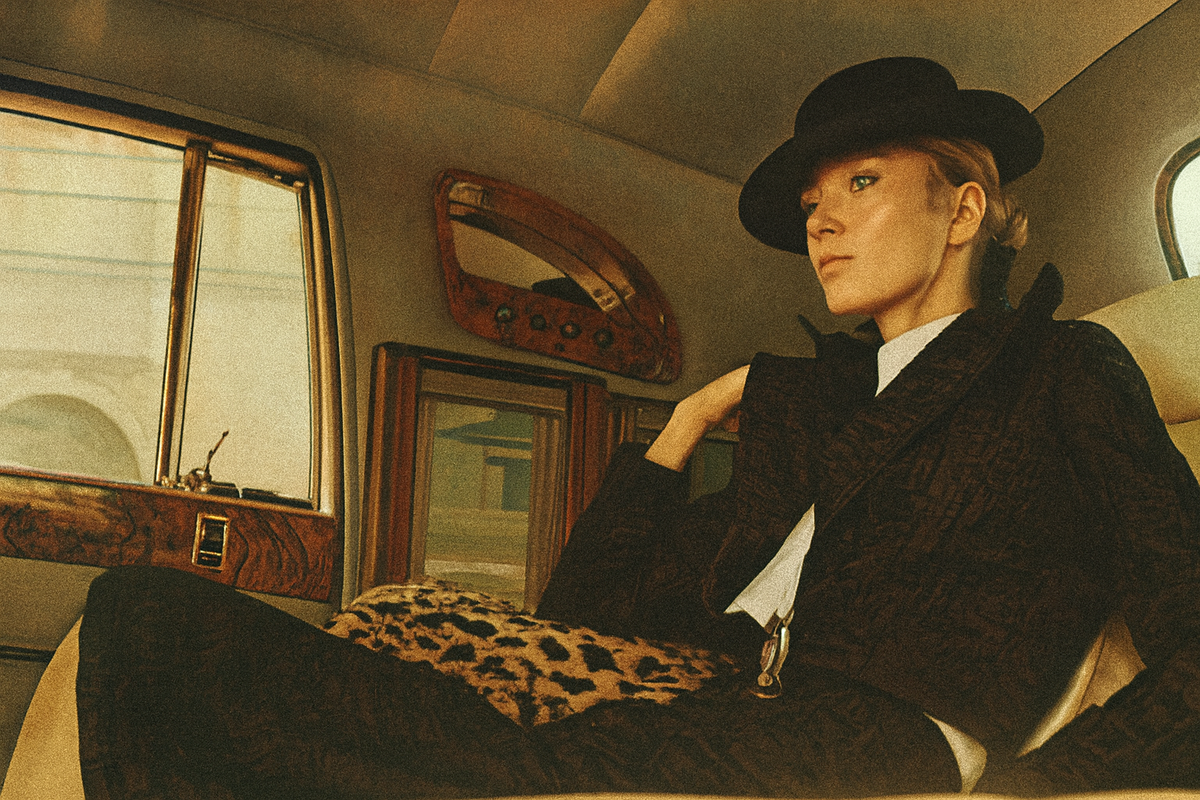
The Day Fashion Chose Freedom
Vogue's September 15, 1970 Manifesto on Elegance, Rebellion, and the End of Rules
When Coco Chanel and Yves Saint Laurent appeared together in the same issue of Vogue, it wasn't cooperation—it was collision. One designer armored women in bouclé and discipline. The other turned a model upside-down under a skirt of feathers and dared anyone to take fashion seriously.
The September 15, 1970 issue didn't ask readers to choose between them. It asked something far more radical: What if you didn't have to?
This wasn't just a fall fashion preview. It was Vogue's visual thesis on what freedom looked like at the start of a new decade—a moment when Paris declared that elegance and absurdity, power and playfulness, could occupy the same page without apology.
For anyone studying the cultural architecture of the 1970s, this issue is a blueprint. For collectors, it's one of the essential artifacts of 20th-century fashion publishing.
Issue Intelligence
Publication: Vogue Magazine
Issue Date: September 15, 1970
Featured Designers: Coco Chanel, Yves Saint Laurent
Model: Diane de Monbrison
Feature Title: "Vogue's Eye View: Paris"
Paris After the Barricades
Two years before this issue hit newsstands, Paris had burned. The May 1968 uprisings—students and workers flooding the streets, demanding a reimagined society—left the city's cultural institutions shaken. Fashion, that most visible barometer of social change, couldn't ignore the question hanging in the air: What does a liberated woman wear?
The miniskirt had already answered once, shortening hemlines and upending propriety throughout the 1960s. But by 1970, the conversation had moved past rebellion for its own sake. Women's liberation movements were gaining momentum on both sides of the Atlantic, complicating the question of femininity itself. Was it a trap? A tool? A choice?
Vogue's response was characteristically sophisticated. The magazine refused to legislate. Its "Vogue's Eye View: Paris" feature opened with a declaration that read like a rejection of anxiety itself:
"Paris is a town with no hangups… let's not get uptight about anything and stay loose about everything."
No rules. No single silhouette. Minis, midis, maxis—all valid. The only mandate was variety. This was fashion as permission structure, and Chanel and Saint Laurent embodied its two poles.
Chanel: The Architecture of Femininity
Chanel's pages in this issue are studies in control. Black-and-white photography. Diane de Monbrison posed in Parisian streets and interiors, her posture elegant, her expression composed. The clothes themselves—bouclé tweeds pleated with ribbons, cropped jackets over fluid skirts—speak the language of construction.
The captions make Chanel's philosophy explicit:
"Chanel's suits could only have been made by a woman as eternally feminine as Chanel."
Then, in Coco's own words:
"I think women are right to want to remain women and not be je ne sais pas quoi."
This was not a retreat into traditional roles. Chanel, who had built an empire by liberating women from corsets and creating practical luxury, understood something her critics often missed: femininity, when authored by women themselves, was a form of power. Her suits weren't costumes of submission—they were armor with grace notes.
In 1970, as second-wave feminism challenged every assumption about gender, Chanel offered a counterargument: You could be unapologetically feminine and unapologetically formidable. The suit was the synthesis.
Saint Laurent: Craft Meets Carnival
If Chanel's editorial whispered authority, Saint Laurent's shouted theater.
The centerpiece—a "Carmen Miranda parody of the 40's"—featured a model photographed upside-down, grinning wildly beneath a towering skirt of feathers. The image was technically virtuosic and completely unserious, which was precisely the point. The accompanying text captured Saint Laurent's governing philosophy:
"Craftsmanship is serious, the spirit is light."
This was the designer who had already scandalized Paris with his 1971 collection inspired by the 1940s (previewed here in 1970), who understood that fashion could reference history, mock it, and honor it simultaneously. His Carmen Miranda moment wasn't camp for camp's sake—it was a refusal to let fashion take itself so seriously that it forgot to be joyful.
Where Chanel built structures, Saint Laurent staged happenings. Where Chanel refined, Saint Laurent exploded. And Vogue, by placing them side-by-side, made the argument that both approaches were necessary. Elegance without wit was stifling. Wit without craft was hollow.
Vogue as Cultural Editor
By 1970, Vogue had spent decades establishing itself as more than a fashion magazine—it was a curator of aspiration, a translator of cultural shifts into visual language. This issue demonstrated that editorial mastery.
The magazine didn't just photograph clothes. It staged arguments. The muted, almost austere treatment of Chanel's pages reinforced her message of timeless refinement. The bold, saturated energy of Saint Laurent's spread mirrored his theatrical irreverence. Even the typography and layout choices—classical serif headlines for Chanel, playful arrangements for Saint Laurent—functioned as editorial commentary.
And the writing itself operated on two levels. On the surface, it offered practical guidance: hemlines don't matter, wear what makes you feel powerful. Beneath that, it was cultural criticism, assuring readers that the anxieties of the previous decade—the tyranny of trends, the pressure to choose one identity—were dissolving.
This was Vogue at the height of its intellectual ambition, turning fashion spreads into essays about freedom.
What This Issue Captured
The Permanence of Print
Digital fashion media moves at algorithm speed. Trends emerge and vanish within news cycles. But original magazines remain fixed points—physical objects that refuse to update, revise, or optimize for engagement.
Holding the September 15, 1970 issue means encountering 1970 on its own terms. The texture of the paper, the heft of the advertising, the assumptions embedded in the prose—these can't be retrofitted or recontextualized. They simply are, which gives them documentary power that digital archives can't replicate.
For fashion historians, these magazines are primary sources. For designers, they're reference libraries. For collectors, they're tangible connections to the moments when style and culture collided with enough force to leave a mark.
Why Collectors Value This Issue
Explore the Collection
This issue is part of a curated archive of original Vogue magazines, sourced and preserved for collectors, researchers, and enthusiasts.
Browse Vogue Magazine CollectionConclusion: The Argument Vogue Made
The September 15, 1970 issue didn't resolve the tensions between Chanel's discipline and Saint Laurent's theater. It didn't need to. The magazine's genius was recognizing that women in 1970—like women in any era—contained multitudes.
You could be serious and playful. Feminine and formidable. Traditional and transgressive. The issue's lasting power comes from its refusal to flatten complexity into a single answer.
More than fifty years later, that argument still resonates. Fashion remains one of the few cultural spaces where contradiction isn't a problem to solve—it's the entire point.
And thanks to Vogue's editorial vision, that moment was captured with enough clarity and craft that we can still study it, debate it, and be moved by it today.
For anyone interested in how culture evolves, this issue isn't optional reading. It's essential.