
When Paul E. Dangerously Dialed 911, ECW Declared War on Wrestling Itself
Inside Wrestling, August 1994 — The Magazine That Documented ECW's Most Dangerous Debut
August 1994. Hulk Hogan had just jumped to WCW. The WWF was scrambling to rebrand itself for a "New Generation." And in a bingo hall in Philadelphia, a man with a cell phone was about to introduce the most terrifying enforcer in wrestling—not to protect anyone, but to unleash something darker.
The August 1994 issue of Inside Wrestling didn't just report on 911's debut. It documented the exact moment Eastern Championship Wrestling stopped asking for permission and started rewriting the rules. The headline asked: "Paul E. Dangerously Dials 911 — And Did He Make the Right Connection?"
The answer, as it turned out, was yes. And wrestling would never be the same.
Archive Details
Publication: Inside Wrestling
Issue Date: August 1994
Featured Subjects: Paul E. Dangerously, 911, Sabu, Eastern Championship Wrestling
Historical Context: Early spotlight on ECW's rise during wrestling's transitional "New Generation" era
The Handler and the Hurricane: ECW's Most Dangerous Partnership
Paul E. Dangerously didn't introduce 911 as a wrestler. He introduced him as a solution.
The problem? Sabu—ECW's suicidal, homicidal, high-flying lunatic who needed to be wheeled to ringside on a gurney, strapped down like Hannibal Lecter. The solution? A 6'7", 300-pound enforcer whose only job was to bind and unbind the madman.
But 911 didn't stay in Sabu's shadow for long.
At the World Wrestling Network's debut TV taping in New York, 911 demolished Paul Warrior and Mikey Whipwreck in a handicap match. A week later in Philadelphia, he manhandled Whipwreck and Paul Orndorff with the kind of brutality that made ECW fans lean forward in their seats. When Sabu defended the TV Title against Mike Awesome, 911 didn't just interfere—he choked Awesome unconscious at ringside while the referee was distracted.
ECW champion Shane Douglas told Inside Wrestling: "He's quite a specimen. People compare him to Sid Vicious, but I think 911 is further along than Sid at this point in his career."
That wasn't hype. That was a warning.
The Magazine That Made Fans Feel Like Insiders
Inside Wrestling didn't cover wrestling the way newspapers covered sports. It covered wrestling the way underground zines covered punk rock—with breathless urgency, dramatic captions, and photos that looked like crime scene evidence.
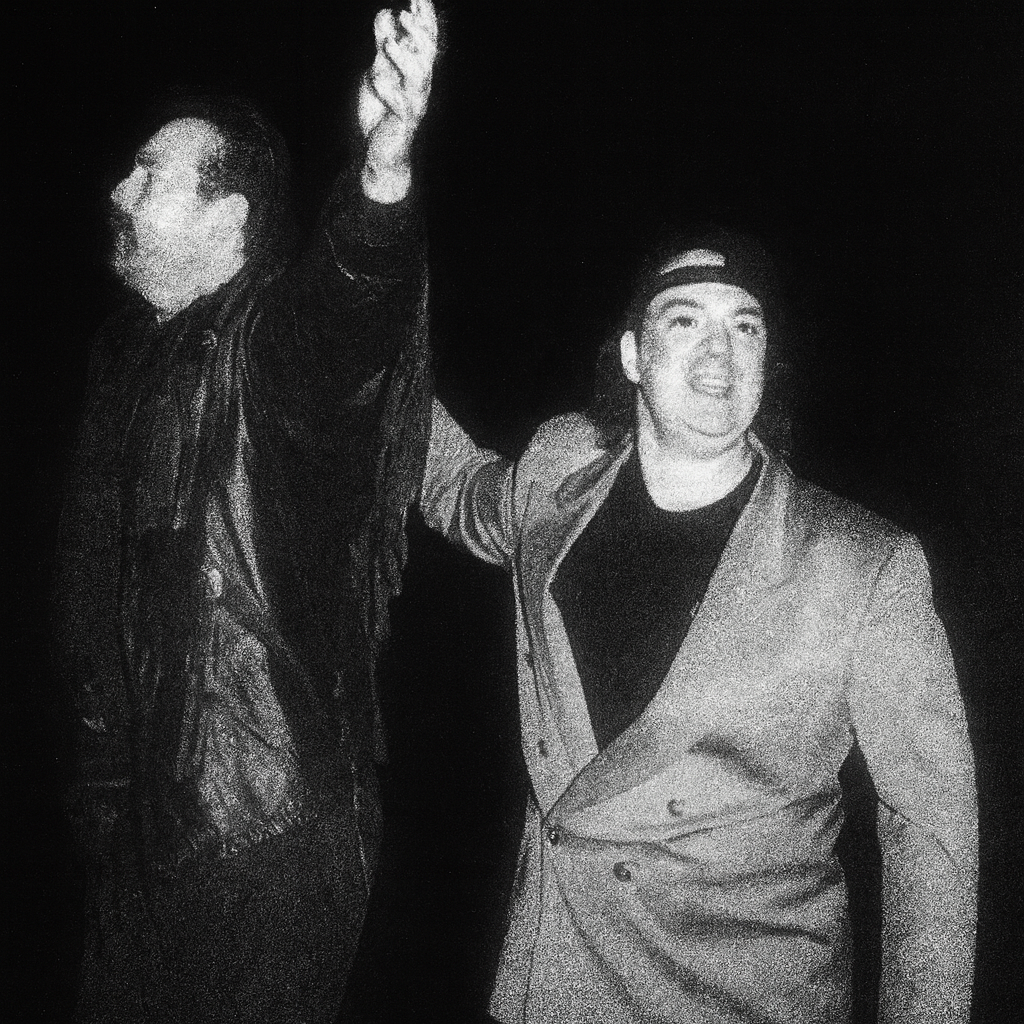
The August 1994 feature opened with Paul E. holding his cell phone like a weapon, the headline daring readers to question whether he'd made the right call. Inside, black-and-white photos captured 911 slamming Mikey Whipwreck into oblivion, lifting Don E. Allen like he weighed nothing, and standing beside fans holding a hand-painted sign: "Dial 9-1-1 for Murder."
The captions amplified the chaos:
- "911 so captivates ECW fans that they like to see him slam anyone to the mat."
- "Creating a state of emergency in professional wrestling."
- "One of wrestling's greatest managers has dialed the right number — again."
Paul E. himself mocked the very fans who made him: "Those idiot fans think the phone is a weapon — and they're right."
For fans in 1994, this wasn't just coverage. It was access. Without cable TV deals or national tours, ECW existed mostly in whispers and rumors. Inside Wrestling gave fans outside Philadelphia proof that something unprecedented was happening—and that they were part of it.
The Anatomy of an Enforcer: What Made 911 Different
The Debut Massacre
911's first matches weren't competitive. They were executions. Paul Warrior and Mikey Whipwreck never stood a chance in New York. Neither did Whipwreck and Paul Orndorff in Philadelphia.
The Sabu Connection
911 didn't just accompany Sabu—he controlled him. The visual of Sabu strapped to a gurney, with 911 as his keeper, turned violence into theater.
The Chant
"Dial 9-1-1!" became ECW's emergency hotline. Fans didn't cheer for 911 because he was a hero. They chanted because they wanted to see someone destroyed.
The Comparison
Shane Douglas didn't compare 911 to generic big men. He compared him to Sid Vicious—one of the most protected monsters in wrestling—and claimed 911 was better.
The Weapon
Paul E.'s cell phone wasn't just a prop. Inside Wrestling called it "a lifeline, symbol of power, and literal storyline weapon." In 1994, when cell phones were still rare and expensive, that phone made Paul E. look like he had money, connections, and dangerous reach.
The Violence
When 911 choked Mike Awesome unconscious to save Sabu's TV Title, it wasn't a run-in. It was a statement: ECW operated by different rules.
Why This Magazine Still Matters
The August 1994 Inside Wrestling is more than a collectible. It's a primary source document of ECW's ascent from regional curiosity to cultural rebellion.
The Paul Heyman Origin Story: Before he became the "advocate" of Brock Lesnar or the mastermind behind Roman Reigns, Paul Heyman was Paul E. Dangerously—a sharp-tongued manager with a cell phone and a vision. This magazine captures him at his hungriest.
ECW Fan Culture Frozen in Time: The hand-painted signs. The chants. The visceral reactions. This issue documents the symbiotic relationship between ECW and its fans—a bond that would later define the entire "extreme" era of wrestling.
Kayfabe as Journalism: Inside Wrestling didn't break the fourth wall. It reinforced it. The magazine treated 911 like a legitimate menace and Paul E. like a legitimate mastermind. That's not dishonesty—it's storytelling with stakes.
The National Introduction: For fans outside ECW's territory, this was often their first encounter with 911, with Sabu's gurney entrance, with Paul E.'s post-Dangerous Alliance reinvention. National magazine coverage legitimized ECW in a way local TV never could.
Thirty years later, this issue remains what it was in 1994: proof that something dangerous was happening in Philadelphia, and the world was starting to notice.
The Artifact in Your Hands
Wrestling magazines from the 1990s weren't just promotional tools. They were the connective tissue of fandom—the only way most fans could see photos, read quotes, or feel connected to a larger community. Without the internet, these magazines didn't supplement wrestling. They were wrestling for millions of fans.
Today, original issues like the August 1994 Inside Wrestling are historical artifacts. They preserve not just what happened, but how it felt—the raw energy, the fan devotion, the sense that something unprecedented was unfolding in real time.
For collectors, this issue represents the ground floor of ECW's rise. For historians, it's evidence of how wrestling media shaped narratives. For families honoring loved ones who lived through the ECW era, it's a tangible link to nights spent debating storylines, trading magazines, and believing that anything could happen when Paul E. Dangerously dialed 911.
Collector Significance
Early Spotlight on 911
One of the first national magazine features on the man who became an ECW cult hero, documenting his debut matches and instant impact.
Paul Heyman History
Shows Paul E. before he became the "advocate" of Brock Lesnar or the mastermind of Roman Reigns, still sharp-tongued and brash.
Authentic ECW Fan Culture
Captures signs, chants, and reactions that defined ECW's unique relationship with its fans during the promotion's formative years.
Kayfabe Journalism
A reminder of when wrestling magazines leaned fully into the drama, blending fact and storyline into one unforgettable package.
Start Your Collection
If you're drawn to ECW's legacy, Paul Heyman's evolution, or the untamed energy of 1990s wrestling, the August 1994 Inside Wrestling is essential.
These aren't reprints or digital scans. They're the original magazines—the same pages fans held in 1994, the same photos they studied, the same captions that made them believers.
Browse Inside Wrestling Magazine Collection