
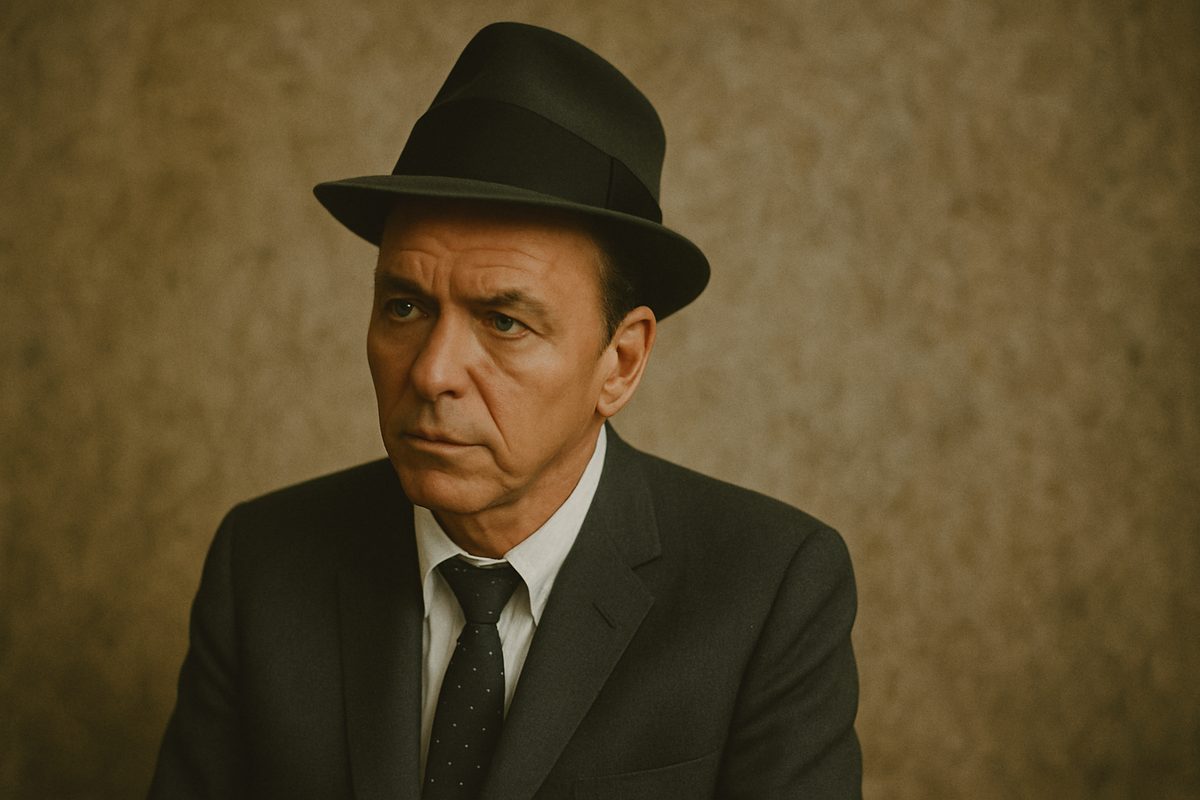
The Night Frank Sinatra Told America What He Really Thought
Inside the February 1963 Playboy interview that captured Cold War anxiety, religious doubt, and the soul of American celebrity at its most vulnerable moment
February 1963. The world had just survived nuclear annihilation by thirteen days. America was still catching its breath from the Cuban Missile Crisis, and Frank Sinatra—arguably the most famous man on the planet—sat down to answer questions he'd never been asked before.
The venue wasn't a television studio or a press junket. It was the pages of Playboy Magazine, and what Sinatra revealed would become one of the most significant celebrity interviews of the decade.
This wasn't gossip. It wasn't publicity. It was Sinatra unplugged—talking about God, atomic war, the burden of fame, and what it meant to be honest when millions were listening.
Archive Details
Historical Figure: Frank Sinatra
Issue Date: February 1963
Archive Source: Playboy Magazine
Historical Context: Published months after Cuban Missile Crisis, during height of Cold War tensions
The Magazine That Made Interviews Matter
By 1963, Hugh Hefner's Playboy had evolved far beyond its reputation. Yes, the magazine featured provocative photography—but it had also become the premier platform for long-form conversation with the century's most compelling figures. The Playboy Interview wasn't a softball Q&A. It was an intellectual arena where celebrities were expected to think, not just perform.
The format worked because it gave subjects room to breathe. No commercial breaks. No handlers hovering. Just extended dialogue that could span thousands of words, allowing personalities like Sinatra to reveal the contradictions, anxieties, and philosophies that made them human.
Frank Sinatra in February 1963 was not just another entertainer. He was the "Chairman of the Board," a man who commanded stages in Las Vegas, starred in Hollywood films, and walked beside presidents. His voice had soundtracked American romance for two decades. His political connections ran deep—he'd campaigned for JFK, navigated the treacherous currents of organized crime allegations, and maintained friendships with some of the era's most powerful figures.
When Playboy secured him for a feature interview, it wasn't booking a celebrity. It was documenting the conscience of postwar American masculinity.
What Sinatra Actually Said
The interview revealed a man grappling with the same existential dread as everyone else in 1963—except he had a microphone the entire world could hear.
On Nuclear Fear
"Fear is the enemy of logic," Sinatra warned. He wasn't playing pundit; he was articulating the terror that kept Americans building fallout shelters in their basements. The Missile Crisis had ended just months earlier, and the specter of atomic war still hung over every headline.
On Religion
Raised Catholic, Sinatra admitted profound doubts about organized faith. He respected belief—even envied those who possessed certainty—but distrusted institutional dogma. For readers in 1963, many of whom were navigating their own crises of faith amid rapid cultural change, Sinatra's honesty was startling.
On Music as Truth
Sinatra described singing not as performance but as confession. "When I sing, I believe. I'm honest," he explained. His craft required complete emotional immersion. Audiences didn't just hear Sinatra—they felt him, because he demanded that vulnerability of himself first.
On Politics and Power
He spoke candidly about his admiration for President John F. Kennedy and the weight of civic responsibility. Sinatra understood that celebrity granted him influence, and he wasn't afraid to wield it—even when it complicated his career.
On the cost of fame: He acknowledged the relentless scrutiny, the invasion of privacy, the way public expectation could suffocate personal identity. Yet he also embraced his role as cultural spokesman, understanding that his platform came with obligations.
These weren't talking points. They were the reflections of a man who had lived through enormous success and equally public failure, who understood that authenticity was the only currency worth spending.
The Cover That Sold the Dream
The February 1963 cover was pure Playboy sophistication: a glamorous woman bathed in warm, red-toned lighting, sipping from a wide-mouthed champagne coupe. The image radiated elegance and indulgence—a visual promise that inside, readers would find not just beauty but substance.
This was the Playboy paradox that made it culturally indispensable: you could flip from that cover to Sinatra discussing existential dread and nuclear disarmament without breaking stride. The magazine understood that modern American masculinity wanted both—the pleasure and the philosophy, the image and the idea.
While The Saturday Evening Post offered wholesome illustrations and Life delivered photojournalism, Playboy offered something riskier: a vision of adulthood that refused to compartmentalize intellect and desire. That made it controversial. It also made it essential.
Why This Issue Still Matters
The February 1963 Playboy is a historical document that captures multiple American transformations in a single artifact.
Cold War anxiety: Published mere months after humanity's closest brush with nuclear war, the issue reflects an era when annihilation felt not theoretical but imminent.
The celebrity-politics merger: Sinatra represented the new American phenomenon—the entertainer as political actor, the artist as public intellectual. That model, now ubiquitous, was still being invented in 1963.
Sexual and cultural revolution: Playboy sat at the intersection of changing attitudes about sexuality, gender roles, and personal freedom. The magazine didn't just report on these shifts—it accelerated them.
The interview as art form: Before podcasts, before Charlie Rose, before Rolling Stone canonized the rock interview, Playboy proved that long-form conversation could be both commercially successful and culturally significant.
This wasn't disposable media. It was American culture arguing with itself in real time, preserved on glossy paper.
Collector Significance
Landmark Interview
The Playboy Interviews with figures like Muhammad Ali, Martin Luther King Jr., and Malcolm X are among the most sought-after features in the magazine's history. Sinatra's appearance occupies the same tier—a landmark conversation with a once-in-a-generation talent at the absolute peak of his cultural power.
Historical Timing
This issue exists in the narrow window after the Cuban Missile Crisis and before the Kennedy assassination that November—a brief moment when American confidence and anxiety were perfectly balanced.
Peak Design Era
The cover design represents early 1960s Playboy at its most visually sophisticated, before the aesthetics shifted later in the decade.
Cultural Artifact
As a fusion of entertainment, politics, and cultural commentary, the issue serves as a genuine artifact of American social history—not nostalgia, but evidence.
Why Vintage Playboy Endures
Vintage Playboy magazines remain relevant because they documented cultural transformation as it happened. These weren't retrospectives or academic analyses written years later. They were primary sources—the actual debates, anxieties, and aspirations of Americans navigating the sexual revolution, the Cold War, and the reconstruction of masculinity.
Each issue is a time capsule. The advertisements alone tell stories about consumer culture, gender expectations, and technological optimism. The fiction introduced readers to writers like Ray Bradbury and Kurt Vonnegut. The interviews captured unguarded moments with figures who would later be sanitized by official biographies.
Collectors, historians, and enthusiasts seek these magazines because they preserve something irreplaceable: the texture of lived experience in a vanished America.
Explore the Archive
If this issue intrigues you, thousands of original Playboy magazines from the 1950s through the 1970s are available in our collection—each one a window into the intersection of sexuality, politics, and culture during America's most turbulent decades.
Whether you're a collector tracking down landmark interviews, a cultural historian studying postwar media, or simply someone fascinated by the voices that shaped modern America, these magazines offer something rare: history as it was first reported, debated, and displayed—before anyone knew which moments would matter most.
Browse Playboy Magazine CollectionThe February 1963 Playboy featuring Frank Sinatra isn't just a vintage magazine. It's a document of the moment when celebrity, politics, and cultural commentary converged into a single American conversation—and when Playboy became the magazine that could host that conversation with authority, sophistication, and risk.
Sinatra's willingness to discuss fear, faith, and fame with such candor captured something essential about 1963: a year when the old certainties were crumbling and new ones hadn't yet formed. His voice—both musical and personal—gave shape to that uncertainty.
Holding this issue today means holding that moment. Not romanticized. Not simplified. Just preserved, in all its contradictory, sophisticated, anxious glory.