
When The New Yorker Declared War on the Met
The 1927 editorial that exposed America's cultural cowardice—and changed museum politics forever
May 14, 1927. A pink-clad figure pirouettes across the magazine's cover, oblivious to the editorial bomb ticking inside.
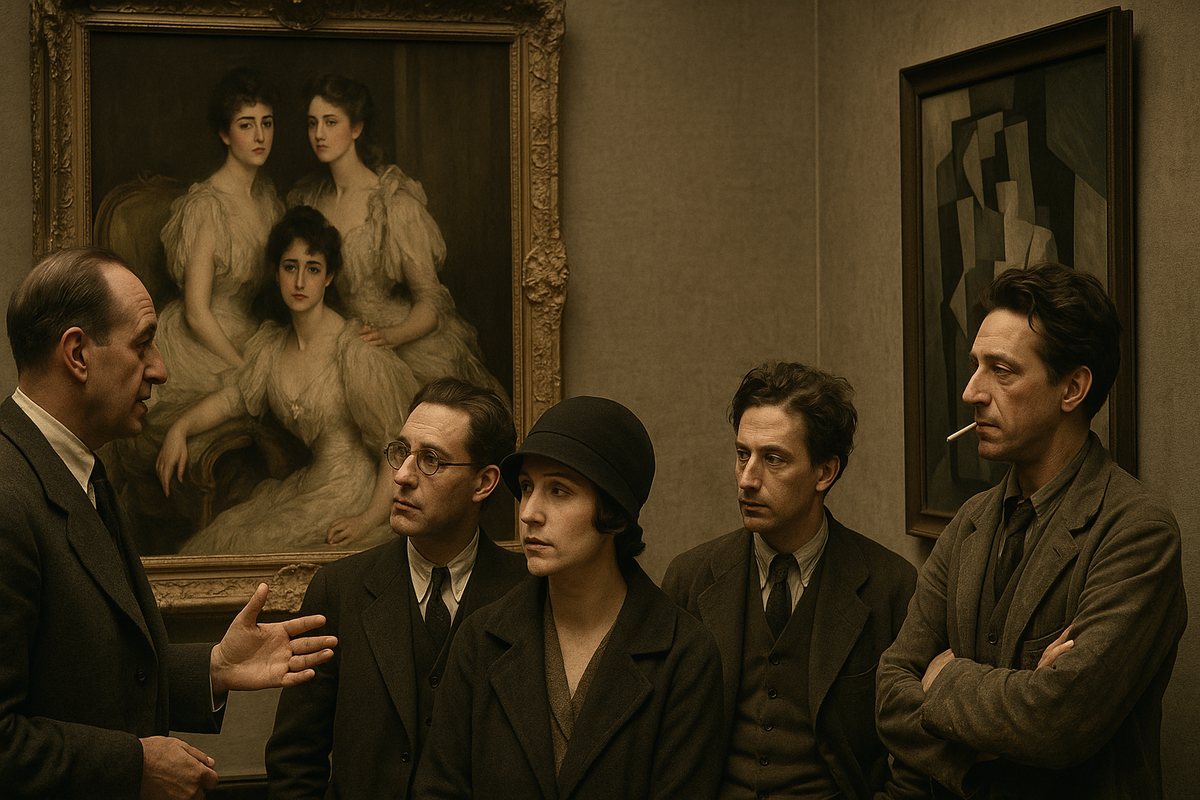
That week, The New Yorker—barely two years old and still finding its voice—published a takedown so sharp it would make today's art critics blush. The target? The Metropolitan Museum of Art. The crime? Spending a fortune on John Singer Sargent's The Wyndham Sisters while living American modernists starved in their studios.
The magazine's "Reporter at Large" column didn't just critique a purchase. It dissected the entire machinery of cultural gatekeeping in Jazz Age America—and in doing so, captured a debate that still rages in museum boardrooms today.
Archive Context
Publication: The New Yorker
Issue Date: May 14, 1927
Historical Moment: The Metropolitan Museum controversy over traditional vs. modern art acquisition
Cultural Significance: Early example of The New Yorker's influential cultural criticism
The Gilded Cage: America's Museum Problem
Picture New York in 1927. Hemingway is rewriting prose in Paris. Fitzgerald is cataloging the wreckage of the American dream. Jazz is pouring out of Harlem speakeasies. Skyscrapers are punching holes in the sky. Everything is modern, electric, now.
Except the Metropolitan Museum of Art.
While Europe was lionizing Cézanne, Renoir, Van Gogh, Toulouse-Lautrec, and Daumier, the Met's trustees were playing it safe—pouring hundreds of thousands of dollars into works by Titian, Sargent, and other established masters whose reputations were as secure as their prices were inflated. The museum had a fund—the Hearn Fund—specifically designated to support living American painters. It sat largely untapped.
The New Yorker noticed. And it pounced.
Satire as Sword: The New Yorker's Signature Strike
What made the May 14, 1927 piece so devastating wasn't its anger—it was its precision. The article wielded irony like a scalpel, slicing through the pretensions of trustees and the rigidity of academicians without ever raising its voice.
The National Academy of Design, that bastion of conservative taste, was mocked for blocking modern works from exhibition. Trustees were skewered for their self-importance, their willingness to be photographed beside Old Masters while ignoring the artists working blocks away. The Met's grand Sargent acquisition was admired for its technical brilliance—then damned for its cowardice.
This was The New Yorker announcing what it would become: a magazine that could make you laugh at the absurdities of high culture while ensuring you understood exactly what was at stake. The tone was light. The argument was lethal.
The Sargent Affair: Prestige vs. Progress
John Singer Sargent's The Wyndham Sisters is a masterpiece of Edwardian portraiture—three aristocratic women rendered in silk and confidence, a technical tour de force that belongs in any museum serious about representational painting.
But was it worth the price tag while Cubists, Expressionists, and American modernists went unrepresented? The New Yorker thought not. The magazine argued that the Met was more interested in collecting reputations than taking risks on art. Sargent was safe. Sargent was established. Sargent wouldn't embarrass the trustees at dinner parties.
Meanwhile, artists who would later define the era—painters influenced by the seismic shifts happening in Paris and Berlin—were invisible to the institution that was supposed to be America's cultural vanguard.
The Reporter at Large piece didn't call for the rejection of tradition. It demanded that American museums show the same courage France had shown in championing its own modernists. It asked a simple, cutting question: Why are we so afraid of our own time?
The Politics of Taste: Who Decides What Matters?
Beneath the Sargent controversy lay a deeper question that The New Yorker understood instinctively: Who gets to define cultural value in America?
In 1927, the answer was clear: wealthy patrons and conservative academicians. Men (and they were almost exclusively men) whose fortunes came from railroads and banking, whose tastes were formed in European grand tours, whose idea of daring was a Whistler nocturne.
These gatekeepers weren't villains. They genuinely believed they were preserving civilization. But their preferences stifled innovation. Their fear of controversy meant that American museums lagged behind European institutions in recognizing the artists who would come to define modern art.
The New Yorker articulated what many artists and critics felt but couldn't say without losing access to those same gatekeepers: the system was rigged. Not maliciously—but rigged nonetheless.
The Sargent Purchase
Prestigious yet shortsighted—a technical masterpiece that represented institutional cowardice over cultural courage.
Neglect of Living Artists
The Hearn Fund sat largely unused while American modernists struggled for recognition and support.
Trustee Gatekeeping
Wealthy patrons and conservative academicians controlled access, preferring European tradition to American innovation.
Cultural Courage
The article demanded American museums show the same boldness France displayed in championing its modernists.
A Cover That Understood the Joke
That whimsical May 14, 1927 cover—a rotund figure in flowing pink, dancing against a spring-green background—is pure New Yorker. It's playful, slightly absurd, and utterly unconcerned with the kind of gravitas that museum trustees took so seriously.
This was the magazine's genius: it could critique the art world while refusing to adopt its pomposity. The covers were stylized, ironic, sophisticated. They said, "We take culture seriously, but we refuse to take ourselves seriously."
Unlike the stark realism of news weeklies or the florid romanticism of literary journals, The New Yorker created its own visual language—one that matched the magazine's editorial voice. The May 1927 cover remains a perfect artifact of that sensibility: elegant, witty, and just a little bit subversive.
Why This Issue Still Matters
For collectors, the May 14, 1927 New Yorker represents several intersecting currents:
Historical Inflection Point – This issue captured the moment when American cultural institutions were forced to confront their own conservatism. The Met debate wasn't resolved in 1927, but articles like this one shifted the conversation.
Early Editorial Voice – Founded in 1925, The New Yorker was still establishing its identity. This issue shows the magazine already wielding the combination of wit, reportage, and cultural criticism that would make it indispensable.
Timeless Questions – Who funds art? Who decides what's valuable? Should museums chase trends or preserve tradition? These debates echo through every subsequent controversy, from Abstract Expressionism to NFTs.
Design Excellence – The cover, the cartoons, the typography—everything reflects Jazz Age sophistication. These magazines weren't just read; they were kept.
The Enduring Relevance of Vintage New Yorkers
What separates The New Yorker from most periodicals is its refusal to age. Open a 1927 issue today and the humor still lands, the prose still sings, the arguments still resonate. Yes, the references require context. But the intelligence behind them is timeless.
These magazines are more than collectibles—they're primary sources. They document how Americans argued about identity, taste, and the future during a decade of extraordinary transformation. They preserve voices that would otherwise be lost: critics who saw clearly, satirists who struck precisely, reporters who understood that culture is always political.
The May 14, 1927 issue is a perfect example. It's about a museum purchase, yes—but it's really about American anxiety over whether to embrace the new or cling to European approval. That tension never fully resolved. We're still having the conversation.
Collector Significance
Cultural Documentation
Primary source material capturing one of the defining art debates of the 1920s—the clash between tradition and modernism at America's premier museum.
Editorial Milestone
Showcases The New Yorker in its formative years, already demonstrating the wit and cultural criticism that would define the magazine for decades.
Visual Artifact
The whimsical cover illustration exemplifies Jazz Age sophistication and the magazine's distinctive visual language.
Historical Resonance
The questions raised about cultural gatekeeping, institutional courage, and artistic value remain strikingly relevant to contemporary museum debates.
For the Serious Collector
If you collect cultural history rather than mere ephemera, this issue belongs in your archive. It documents a specific moment when American institutions were challenged to match the country's modern energy. It showcases The New Yorker at the beginning of its transformation into a cultural powerhouse. And it does so with a cover that captures the playful intelligence that made the magazine essential.
This isn't nostalgia. It's preservation of a living argument—one that continues nearly a century later.
Explore Original Magazine Archives
Discover authentic issues that document America's cultural evolution through the 20th century.
Browse The New Yorker Magazine CollectionThe Verdict
The May 14, 1927 New Yorker is more than a magazine—it's a snapshot of American culture at a crossroads. Its critique of the Metropolitan Museum wasn't just about money or taste. It was about courage. The willingness to champion the untested. The refusal to let wealth and tradition strangle innovation.
That the magazine made this argument with humor rather than hectoring, with irony rather than indignation, shows why it endured. The New Yorker understood something essential: you can challenge power without sounding powerless. You can demand change without losing your wit.
Nearly a century later, the debate continues. Museums still balance acquisition budgets against living artists' needs. Trustees still shape collections according to personal taste. Modernists—now in digital form—still challenge institutions to catch up.
The May 14, 1927 issue reminds us that these tensions are generative, not destructive. They're how culture evolves. And sometimes, all it takes is a sharp editorial, a whimsical cover, and the courage to ask: Why are we so afraid of our own time?