
The Test That Measured Your Worth in Blood
How Esquire's 1966 Draft Satire Exposed the Class Calculus of Vietnam
Sharpen your No. 2 pencil. The difference between a college dormitory and a rice paddy in the Mekong Delta might come down to a single point.
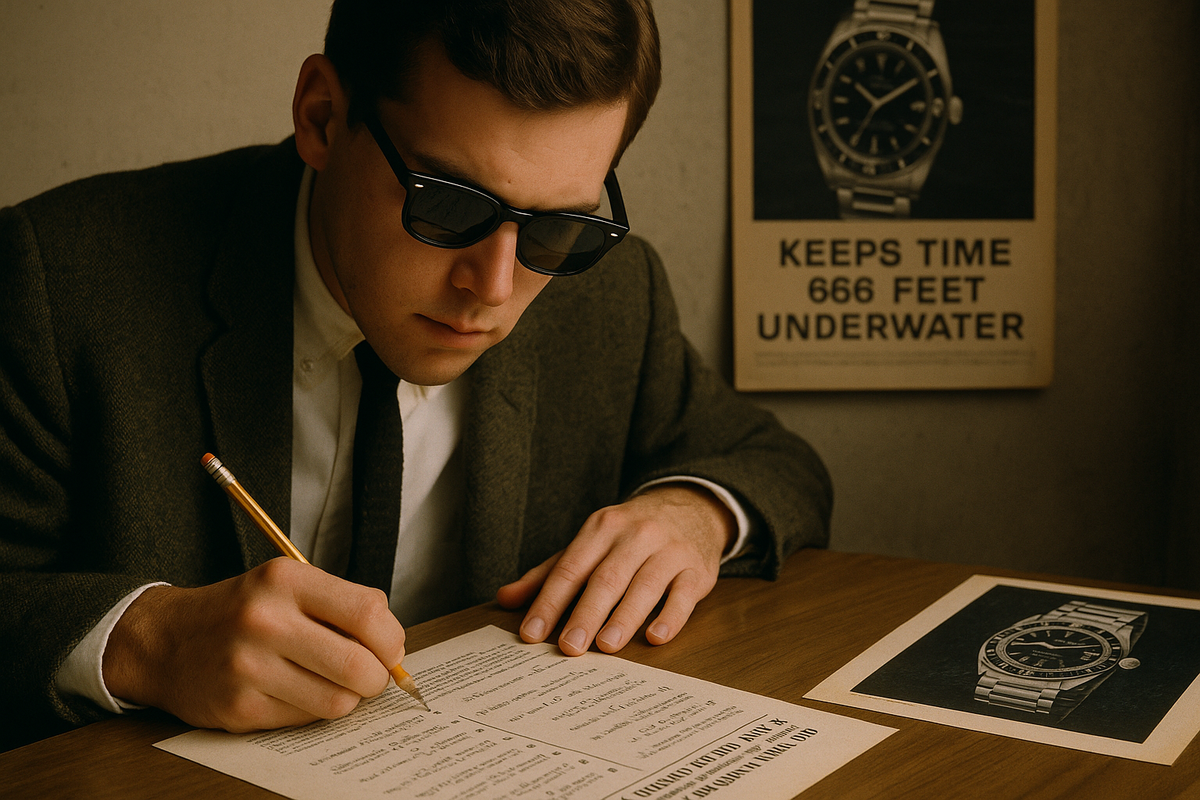
In September 1966, readers opening their copy of Esquire encountered something that looked almost bureaucratically legitimate: a standardized test, complete with analogies, mathematical logic puzzles, and a clinical scoring rubric. The title asked a question that wasn't really a question at all—"Are You Smart Enough to Beat the Draft, Stay in College and Read This Issue of Esquire?" For middle-class American men between 18 and 26, the joke had teeth. The Selective Service was drafting tens of thousands each month, and the only reliable exit was academic: maintain your grades, keep that 2-S classification, stay alive.
What made the piece brilliant wasn't just the satire. It was the precision. Esquire had weaponized the exact visual language of standardized testing to expose a system where survival was a multiple-choice question.
Archive Metadata
Publication: Esquire Magazine
Issue Date: September 1966
Featured Article: "Are You Smart Enough to Beat the Draft, Stay in College and Read This Issue of Esquire?"
Historical Context: Peak Vietnam draft period, 300,000+ American troops deployed
Classification System: 2-S student deferment (Selective Service)
The Arithmetic of Survival
By 1966, American troop levels in Vietnam had surged past 300,000. The draft wasn't an abstraction—it was a grinding bureaucratic machinery that sorted young men by classification codes. A 2-S deferment, granted to full-time university students, functioned as a class privilege wrapped in meritocratic language. If you could afford tuition and maintain passing grades, you stayed home. If you couldn't, you went.
The inequity wasn't subtle. Working-class and minority communities supplied a disproportionate share of combat troops while universities became de facto sanctuaries for those who could pay. Esquire's mock exam didn't need to editorialize—the format itself was the argument. Vocabulary drills and logic problems became a metaphor for a lottery rigged by economics and access.
The scoring system twisted the knife: seven correct answers meant safety. Six or fewer meant exposure. One point. One question. The arbitrary precision mirrored the Selective Service's own cold calculus, where a single grade-point average could redirect a life's trajectory from graduate seminar to jungle patrol.
High Culture, Low Stakes
Esquire in 1966 was operating at the height of its editorial ambition. This was the magazine that published Gay Talese, Tom Wolfe, and Norman Mailer—a publication that understood how to fuse intellectual rigor with visual swagger. The September issue embodied that philosophy with brutal clarity.
The mock draft exam wasn't relegated to the back pages. It received full design treatment: illustrated diagrams, authentic test formatting, instructions that could have been lifted from an SAT booklet. Readers were invited to calculate their own fate, pen in hand.
Turn the page, and there it was: a full-spread advertisement for a Bulova Snorkel watch, guaranteed accurate 666 feet underwater. The juxtaposition wasn't accidental. On one side, the existential dread of conscription. On the other, the aspirational trappings of consumer masculinity. It was Esquire's editorial vision distilled—confront your readers with the contradictions of their moment, then sell them a luxury timepiece.
The magazine's genius was in refusing to choose between style and substance. It insisted you could have both, even when—especially when—they grated against each other.
Satire as Social X-Ray
The mock exam's construction revealed how well Esquire understood its audience. The vocabulary questions and mathematical puzzles weren't random. They echoed the actual standardized tests that middle-class students had been navigating since high school—the SATs, the achievement tests, the endless evaluative machinery that sorted American youth.
By replicating that format, the piece triggered a Pavlovian response: the low-grade anxiety of being tested, of being measured, of possibly failing. For Esquire's readership—educated, affluent, largely insulated from the draft's worst outcomes—the satire functioned as both comedy and mirror. You could laugh at the absurdity while recognizing your own exemption.
The test didn't just mock the Selective Service. It indicted the readers themselves. Every correct answer was a reminder of advantage. Every point scored was proof that education had become a form of armor, and not everyone could afford the protection.
What Made It Work
The piece parodied real standardized tests, down to question wording and layout, giving readers a familiar but unsettling sense of realism.
With only one point separating "safe" from "unsafe," the system mirrored the arbitrary nature of real deferments.
The placement next to a Bulova watch ad underscored the cultural contrast between privilege and peril.
By using the exact terminology of the Selective Service, Esquire grounded the satire in the lived experiences of readers.
The exam format reflected the broader fear that young men's futures were reduced to numbers, tests, and classifications.
The Machinery of Privilege
Mid-century Esquire redefined what a magazine could be. It wasn't merely a style guide or a literary journal—it was a hybrid institution that believed serious ideas could coexist with sharp tailoring and imported watches. The magazine treated its readers as adults capable of holding contradictions: you could oppose the war and still care about your wardrobe. You could satirize the draft and still aspire to success.
The September 1966 issue is a reminder that satire, when executed with precision, doesn't just critique power—it maps it. The mock exam exposed how deferments worked, who they protected, and what that protection cost. It did so without moralizing, without editorializing, without a single word of overt protest. The format was the message.
Why Collectors Pursue This Issue
Released at the peak of draft anxiety, when monthly conscription numbers were climbing and campus protests were beginning to organize, this issue captured a specific cultural inflection point. It's not just about Vietnam—it's about the month when satire began doing work that journalism couldn't.
The 2-S Test remains one of the most sophisticated parodies of the Vietnam-era draft published in a mainstream magazine. Its effectiveness came from mimicry, not exaggeration. Collectors recognize it as a masterclass in editorial subversion.
The test-style layout, combined with the luxury advertising, creates a visual argument that still resonates. Mid-century magazine design was an art form, and this issue exemplifies why: every page was a deliberate composition.
Issues addressing generational divides, systemic inequality, and anti-war sentiment remain perpetually relevant. This one does all three while maintaining plausible deniability as "just a test."
Owning this issue isn't nostalgia. It's access to a moment when a men's magazine could publish something genuinely dangerous under the guise of entertainment.
A Test That Still Scores
"Are You Smart Enough to Beat the Draft, Stay in College and Read This Issue of Esquire?" wasn't just clever. It was diagnostic. It identified the pressure points of American society in 1966—class, education, survival—and compressed them into a standardized test format that readers instinctively understood.
Half a century later, the piece retains its edge. Not because the draft still exists, but because the equation it exposed—privilege as a buffer against consequence—remains operational. The mechanisms change. The mathematics endure.
For collectors, this issue represents more than a milestone in magazine history. It's evidence that satire, when properly calibrated, can outlive the system it mocks.
Access the Archive
For those compelled to examine this issue firsthand—or to explore the broader landscape of mid-century American publishing—the archive is available.
Browse Esquire Magazine CollectionThese aren't reprints or digital scans. They're original issues, preserved from an era when magazines were cultural institutions, not content platforms.