
The Ballot Box and the Pulpit
When Martin Luther King Jr. Declared War on Disenfranchisement
On March 8, 1962, a pocket-sized magazine landed in mailboxes and on newsstands across America with a cover line that read like a manifesto: "Pulpit to Politics." Inside, Jet Magazine chronicled something the mainstream press had yet to fully grasp—Martin Luther King Jr. was no longer simply a preacher leading protests. He had become a political strategist waging war on the South's most brutal weapon: voter suppression.
For the millions of African Americans who relied on Jet as their primary news source, this issue wasn't just reportage. It was a battle plan.
Archive Details
Historical Figure: Rev. Martin Luther King Jr.
Issue Date: March 8, 1962
Archive Source: Jet Magazine
Cover Story: "Pulpit to Politics" — MLK's Southern Voter Registration Campaign
The South's Invisible Wall
By the spring of 1962, the Civil Rights Movement had already notched visible victories. Freedom Riders had challenged segregation on interstate buses the previous year. Sit-ins had desegregated lunch counters from Greensboro to Nashville. But beneath these symbolic triumphs lay a harsher arithmetic: in Mississippi, fewer than 7% of eligible Black citizens were registered to vote. Poll taxes, literacy tests, economic retaliation, and outright violence had constructed an invisible wall around the ballot box—one that no Supreme Court ruling could immediately dismantle.
King understood what many activists were only beginning to articulate: without political power, every legal victory was provisional. Without the vote, African Americans could not protect the gains they had won or elect leaders who would defend their interests. The Southern Christian Leadership Conference (SCLC) needed to shift from protest to power.
So they launched an audacious campaign: register 1.3 million new Black voters across the South in just two years.
Faith as a Political Weapon
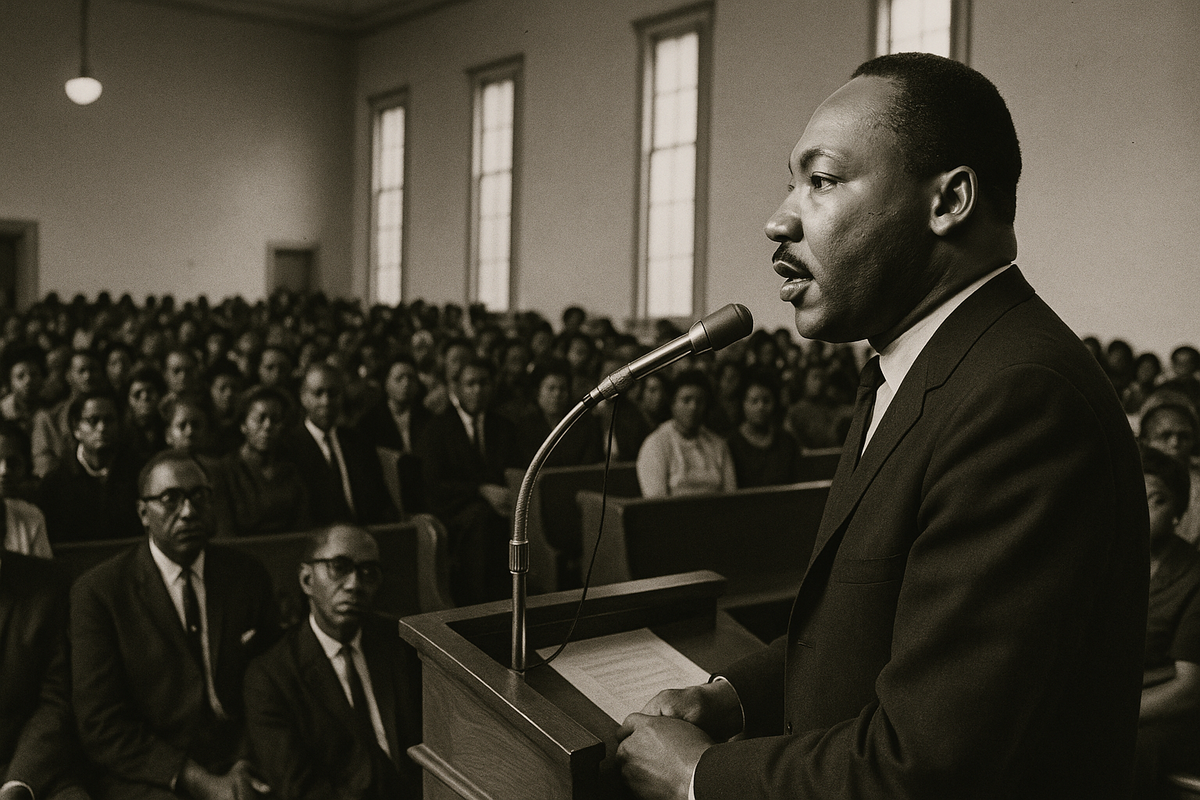
Jet's coverage revealed the mechanics of this transformation. In Jonestown and Sherrard, Mississippi—towns where white resistance was particularly savage—King walked 13 miles through rural countryside to reach mass meetings in Black churches. These weren't revival services. They were citizenship schools, where SCLC organizers taught ordinary people how to navigate the bureaucratic gauntlet of voter registration: how to interpret arbitrary literacy tests, how to answer discriminatory questions, how to withstand intimidation at the courthouse steps.
The photographs Jet published told their own story: King addressing packed church sanctuaries, his voice carrying the same moral authority he had brought to Montgomery's bus boycott. Ralph Abernathy strategizing beside him. Students at Tougaloo College surrounding King for autographs, their faces reflecting both admiration and determination. And in one particularly poignant image, King lifting a check from church supporters—proof that this movement ran on the grassroots financial sacrifices of farmers, domestic workers, and schoolteachers who could barely afford to give, but gave anyway.
This was the movement Jet captured in granular detail: not just King the icon, but the farm workers volunteering as local organizers, the preachers turning their sanctuaries into training grounds, the mothers who risked their jobs to register. Jet framed them all as what they were—central actors in American history, not background extras.
Why Jet Mattered
By 1962, Jet Magazine had become indispensable. Its compact format made it portable enough to slip into a jacket pocket or handbag, easy to pass from hand to hand in neighborhoods where information was currency. But its editorial mission was what made it essential: Jet covered Black life with a comprehensiveness and respect that mainstream outlets simply refused to provide.
The March 8 issue exemplified this dual commitment. On the cover, King's determined profile appeared beneath "Pulpit to Politics," paired with a feature celebrating Black scientists and technicians contributing to America's space program. This wasn't accidental juxtaposition. It was Jet's editorial DNA—documenting the freedom struggle while simultaneously showcasing Black excellence in every field, refusing to reduce African American life to oppression alone.
Inside, Jet's reporting style was immediate and unapologetic. Where Life or Look might have framed King's campaign as a curiosity or a threat, Jet presented it as a strategic necessity. The magazine's writers didn't soften the violence King's organizers faced, didn't minimize the stakes, didn't translate Black aspirations into language palatable to white anxiety. Instead, they quoted King directly on his vision to "change the structure of politics in the South"—a goal that was nothing short of revolutionary.
This clarity of purpose transformed Jet from a magazine into a chronicle of record, the first draft of history written for and by the people living it.
From Protest to Power
The article's most radical claim came midway through: if successful, King's voter registration drive would create "a force greater than any felt in the South since Reconstruction." This was not hyperbole. Reconstruction had briefly shown what Black political participation could achieve before white supremacist violence crushed it. Now, King was attempting to resurrect that promise—not through federal occupation, but through organized, peaceful mass mobilization.
Jet documented the campaign's deliberate strategy. King was deploying the moral authority of the Black church to legitimize political participation as a sacred duty. SCLC's citizenship schools were turning sharecroppers and domestic workers into informed voters who could pass registration tests designed to fail them. And most importantly, the campaign was building infrastructure—networks of local leaders, trained volunteers, and committed congregations—that would outlast any single protest.
This was the shift Jet captured so precisely: the movement evolving from moral witness to political machinery, from demonstrations that exposed injustice to organizing that could seize power.
Key Themes in Jet's Coverage
King's Strategic Evolution
The article showed King moving beyond the pulpit into a role as national strategist, linking faith to political power and transforming sermons into systematic organizing.
Grassroots Mobilization
From farm workers volunteering as local leaders to students stepping into activism, Jet emphasized the community-wide nature of the campaign.
Citizenship Schools
SCLC's voter education programs trained ordinary people to navigate literacy tests and registration procedures, proving that knowledge itself was resistance.
Defiance of Fear
Jet described how King braved long marches and hostile crowds, a symbol of determination in the face of violent white resistance across the South.
A Collector's Landmark
Historical Timing
Published just three years before the Voting Rights Act of 1965, this issue captures the movement in its most precarious phase, when victory was far from guaranteed.
Iconic Cover
King's determined profile has become one of Jet's most recognizable images, radiating both determination and vulnerability at a pivotal moment.
Grassroots Documentation
Unlike mainstream publications, Jet documented the students, preachers, and farmers whose names appear nowhere else in the historical record.
Enduring Demand
Civil rights-era Jet issues consistently rank among the most sought-after by collectors, historians, and families preserving their heritage.
To own this particular issue is to hold an artifact that served a purpose beyond documentation—it was a tool of the struggle itself, distributed in communities where it helped people understand their power and their peril.
Why These Pages Still Speak
What distinguishes Jet's coverage from archival footage or academic histories is its immediacy. These pages don't describe the movement from hindsight. They capture it in real time, with all the uncertainty and urgency of the moment intact. Every article carries the danger, the determination, and the fragile hope of people who didn't yet know they would win.
In an era when most news evaporates into digital feeds, vintage magazines like this one remind us that history was once something physical—something held, saved, and passed down. They are tangible witnesses to the battles that shaped the late 20th century, preserved exactly as they were first reported to the people whose lives hung in the balance.
See History as It Was First Told
For those interested in exploring this issue or others from Jet's archive, original magazines offer an irreplaceable window into decades of culture, politics, music, and activism as they unfolded.
Browse Jet Magazine CollectionWhether you're a serious collector, a historian building primary source materials, or a family preserving its heritage, these magazines provide something increasingly rare: the chance to see history exactly as it was first reported to the African American community—unfiltered, unrevised, and undeniably authentic.
The March 8, 1962 issue of Jet Magazine remains a defining document of the Civil Rights era. Its coverage of Martin Luther King Jr.'s voter registration campaign revealed not just a charismatic leader, but a movement determined to transform sermons into strategy and faith into political power. More than six decades later, these pages still speak—a testament to the moment when African Americans prepared to reshape the South's political landscape, and to the magazine that had the courage to chronicle every step of that transformation.