
When Playboy Gave Radicals a Microphone
The April 1974 Issue That Weaponized the Centerfold
The cover sold sex. The interview sold revolution.
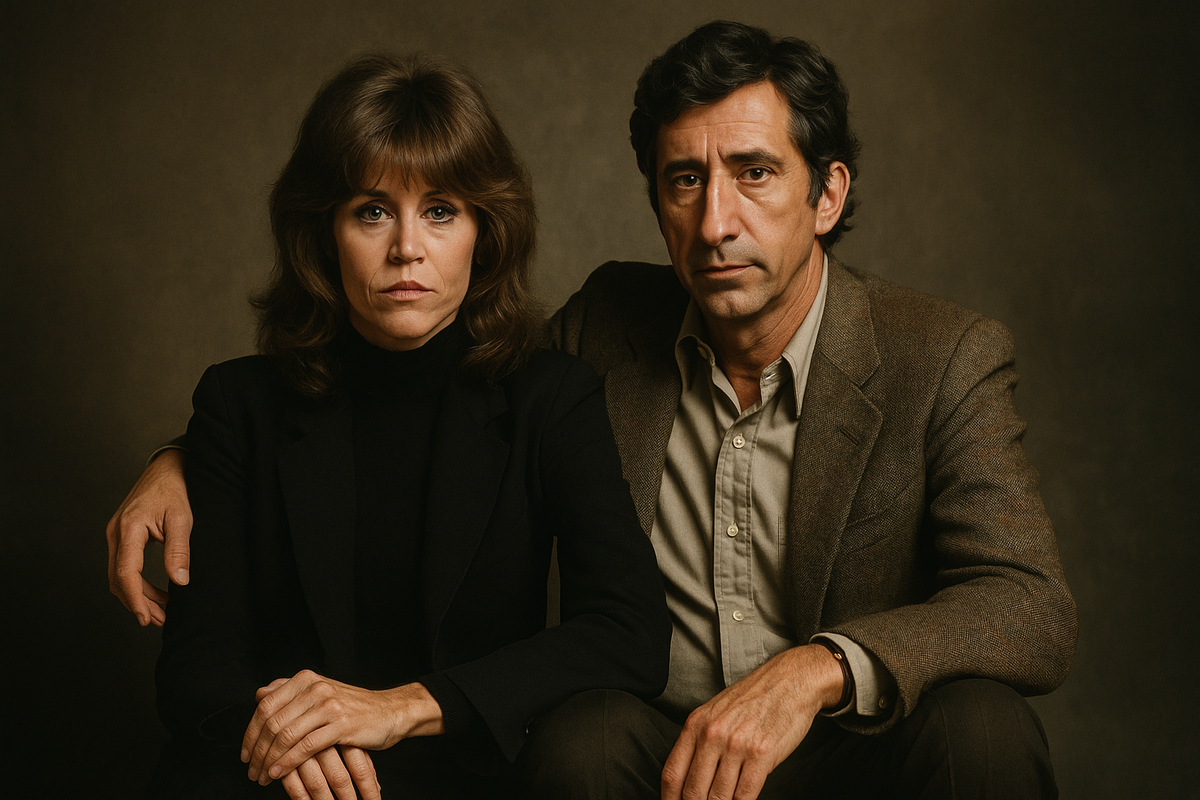
In April 1974, readers expecting the usual fantasy from Playboy Magazine got something far more dangerous: Jane Fonda and Tom Hayden, unfiltered and unapologetic, making their case against American power in the same issue that showcased a model in lingerie and a flower-crowned hat. The juxtaposition wasn't accidental—it was editorial warfare. Hugh Hefner had just handed two of the most vilified radicals in America dozens of pages to dissect Vietnam, indict Nixon, and question the legitimacy of the nation itself.
This wasn't celebrity gossip dressed up as politics. This was the antiwar movement speaking directly to middle America through a men's magazine, bypassing the gatekeepers who'd spent years calling Fonda "Hanoi Jane" and painting Hayden as a campus militant. For one issue, Playboy became the most dangerous publication in America.
Archive Details
Historical Figures: Jane Fonda, Tom Hayden
Issue Date: April 1974
Archive Source: Playboy Magazine Interview
Context: Watergate scandal, final stages of Vietnam War
The Republic Was Burning
April 1974 sits at the intersection of American collapse and American awakening.
Vietnam was dying its final death. The Paris Peace Accords of January 1973 had promised withdrawal, but the war raged on—a brutal coda playing out in Southeast Asia while Americans tried to forget. Television still carried the carnage. The illusion of a "noble cause" had crumbled entirely. What remained was a national wound and the bitter question: What was it for?
Watergate devoured everything else. As Playboy hit newsstands, congressional committees were peeling back layers of presidential corruption. Richard Nixon's inner circle was collapsing. The tapes were out. The lies were documented. By August, Nixon would become the first president in history to resign in disgrace. The message was unmistakable: American democracy wasn't just fragile—it was actively rotting from the top down.
The culture, meanwhile, was fracturing and reassembling itself in real time. The sexual revolution had detonated every taboo it could reach. Feminism was ascending, demanding the Equal Rights Amendment and shattering the mythology of women's "proper place." Playboy itself was the battlefield: a publication that promoted sexual liberation while profiting from objectification, that published groundbreaking journalism while selling fantasies to men.
Jane Fonda embodied every contradiction. An Oscar-winning actress who'd abandoned Hollywood glamour for activism. A woman who'd gone to Hanoi and come back branded a traitor. By 1974, she was married to Tom Hayden—the founder of Students for a Democratic Society, author of the Port Huron Statement, architect of 1960s campus revolt. Together, they represented the radical edge that terrified middle America and inspired a generation of dissidents.
The April 1974 Playboy interview gave them the platform mainstream outlets refused. And they used it like a sledgehammer.
Playboy's Dangerous Gambit
By the mid-1970s, Playboy had become something more complicated than a magazine about sex.
Hugh Hefner's creation had evolved into a cultural institution that simultaneously celebrated hedonism and championed civil discourse. The magazine published Norman Mailer, Alex Haley, Gabriel García Márquez. It featured jazz criticism and architectural commentary alongside pictorials. But its crown jewel was the Playboy Interview—a longform feature that gave public figures the space to speak at length, uncensored and uninterrupted.
The interview roster read like a who's who of American power and dissent: Martin Luther King Jr., Malcolm X, Jimmy Carter, Muhammad Ali, John Lennon, Fidel Castro. Playboy didn't just interview celebrities—it interviewed people who mattered, people whose ideas were reshaping the nation. The format was simple: ask hard questions, let them answer, and publish everything.
Featuring Jane Fonda and Tom Hayden in 1974 was Hefner's most provocative editorial decision yet.
Conservative America had spent years vilifying both of them. Fonda's trip to North Vietnam in 1972—where she was photographed sitting on an anti-aircraft gun—had made her a symbol of betrayal for millions. Hayden's role in the Chicago Seven trial and his connections to militant student movements had branded him as an enemy of order. Mainstream outlets either ignored them or gave them the hatchet-job treatment.
Playboy gave them dozens of pages and no editorial filter.
The magazine's April 1974 issue became a Trojan horse. Men bought it for the centerfold. They stayed for the manifesto.
The Cover: Sensuality as Camouflage
The April 1974 cover is pure Playboy: romantic, provocative, aspirational.
A model reclines against white fabric, her lingerie tasteful, her pose inviting. She wears a wide-brimmed white hat adorned with flowers—a nod to spring, to innocence, to the kind of fantasy Playboy specialized in selling. The image is soft-lit and artful, designed to seduce without shocking. It promises escape, pleasure, sophistication.
It also promises nothing about what's inside.
Turn the page and the tone detonates. The Fonda-Hayden interview spans more than 20,000 words. It reads less like celebrity journalism and more like a political indictment, a manifesto disguised as conversation. The questions are sharp. The answers are sharper. There's no fluff, no softening, no attempt to make these two radicals palatable to Middle America.
This was Playboy's genius: use the cover to draw readers in, then hit them with ideas they'd never encounter anywhere else. A man buying the magazine for its pictorials would find himself reading Jane Fonda's firsthand account of bombed Vietnamese villages. A reader looking for entertainment would stumble into Tom Hayden's critique of American imperialism.
The juxtaposition was shocking. It was also intentional. Playboy understood that sexuality and politics weren't separate realms—they were both expressions of freedom, both challenges to puritanical authority. The magazine's editorial philosophy held that a free society embraced all forms of liberation: sexual, intellectual, political.
The April 1974 issue was that philosophy at its most audacious.
Inside the Interview: Radicals Unbound
The Fonda-Hayden interview remains one of Playboy's longest and most politically daring features. Its scope was encyclopedic. Its tone was uncompromising.
Vietnam and American War Crimes
Fonda didn't hold back. She described what she'd witnessed in North Vietnam: entire villages reduced to rubble, civilians killed in carpet-bombing campaigns, children maimed by cluster munitions. Hayden argued the war was the inevitable product of America's military-industrial complex.
Watergate as Symptom, Not Scandal
Both dismissed the idea that removing Nixon would fix anything. Hayden insisted that Watergate revealed structural corruption and concentrated power. The solution wasn't impeachment—it was systemic overhaul.
Radical Politics and Participatory Democracy
Hayden defended the Port Huron Statement's vision of participatory democracy. Fonda connected activism to personal morality. They rejected the caricature of radicals as bomb-throwers. Radical meant fundamental change, not violence.
Feminism, Power, and Personal Liberation
Fonda spoke openly about her journey from Hollywood starlet to activist. She linked feminism to the antiwar movement, arguing that the fight against patriarchy and imperialism were inseparable. Liberation had to be total.
Marriage as Political Partnership
Fonda and Hayden discussed being both spouses and comrades, merging personal life with public struggle. Their marriage was strategic—a partnership built on shared values and collective action.
The Platform for Dissent
The interview gave them space to build arguments, anticipate objections, and speak with nuance. Playboy's format allowed for complexity, resulting in one of the most intellectually substantive pieces the magazine ever published.
The interview didn't just present their views. It gave them the space to build arguments, to anticipate objections, to speak with nuance. Playboy's format allowed for complexity. The result was one of the most intellectually substantive pieces the magazine ever published.
Why This Issue Endures
For collectors, the April 1974 Playboy is more than a vintage magazine. It's a historical artifact that captured a specific American moment—one where the nation's self-image was collapsing and its future was up for grabs.
The Timing
Released in the final months of Nixon's presidency and the final stages of Vietnam, the issue arrived at the precise moment when Americans were questioning everything. Democracy felt broken. The war felt unwinnable. The counterculture's promises of liberation clashed with the reality of economic stagnation and political cynicism. The April 1974 issue documented all of it in real time.
The Cultural Collision
Fonda and Hayden in Playboy represented something unprecedented: radical politics invading a mainstream commercial space. The magazine's decision to platform them signaled that dissent had moved from the margins to the center, that antiwar activism and feminist critique were now part of the national conversation—whether America liked it or not.
The Cover as Icon
The April 1974 cover remains one of Playboy's most recognizable: elegant, romantic, perfectly calibrated to the magazine's brand. For collectors, it's a museum piece—an example of mid-1970s editorial design at its peak.
The Market Value
Vintage Playboy issues featuring major political interviews command premium prices. The April 1974 issue, with its Fonda-Hayden interview and its position at the crossroads of Watergate and Vietnam, is among the most sought-after. It appeals to multiple collector markets: magazine enthusiasts, political historians, pop culture archivists, and anyone fascinated by the 1970s.
Owning this issue is like holding a time capsule from the American crisis of 1974—a moment when the nation was asking itself hard questions and getting unsettling answers.
Playboy's Legacy: Sex, Politics, and the Limits of Liberation
The durability of Playboy's 1970s issues lies in their refusal to choose between pleasure and politics, between entertainment and engagement. The magazine believed that a free society required both—that sexual liberation and intellectual freedom were two sides of the same coin.
The April 1974 issue is the perfect embodiment of that philosophy. Its cover promised escape. Its content delivered confrontation. A reader could appreciate the photography, absorb the interview, and walk away with both fantasy and critique.
For modern audiences, these magazines endure because they're tangible. Unlike digital content, they carry the texture of their moment—the paper stock, the typography, the layout, the physical weight. To hold the April 1974 issue is to hold 1974 itself, preserved in ink and print.
They also endure because they captured contradictions that never got resolved. The debates Fonda and Hayden engaged in—about war, power, democracy, gender—remain live questions. The magazine that gave them space is now a relic of a different era, but the issues they raised haven't disappeared.
Collector Significance
Historical Timing
Captured the final months of Nixon's presidency and Vietnam's collapse—documenting American crisis in real time.
Cultural Milestone
Radical politics crossed into mainstream culture when Playboy platformed Jane Fonda and Tom Hayden without editorial filter.
Iconic Cover Design
The April 1974 cover represents peak mid-1970s editorial aesthetics—romantic, sophisticated, and perfectly calibrated to Playboy's brand.
Premium Market Value
Vintage Playboy issues featuring major political interviews command top prices among collectors, historians, and cultural archivists.
Explore the Original Magazines Archive
From the 1950s through the 1990s, Playboy chronicled five decades of American transformation. The April 1974 issue is one of the most significant, but it's part of a much larger story preserved in print.
Browse Playboy Magazine CollectionThe Revolution in the Centerfold
The April 1974 issue of Playboy Magazine is remembered today not for its tasteful cover or its elegant pictorials, but for the revolution it carried between the pages.
Jane Fonda and Tom Hayden didn't just get an interview—they got a platform to make their case to America. They condemned the war, indicted the government, questioned the system, and refused to apologize. Playboy gave them that space because it believed in something radical for its time: that a free society required not just sexual liberation but intellectual liberation, not just fantasy but critique.
The magazine's genius was in the collision: erotica and activism, pleasure and politics, the centerfold and the manifesto. That collision defined the 1970s. It defined Playboy. And it made the April 1974 issue an artifact worth preserving.
To hold this issue today is to hold a piece of American dissent, documented at the moment when it mattered most. For collectors, it's not just a magazine—it's evidence that once upon a time, mainstream culture gave radicals a microphone and let them speak. That alone makes it priceless.