
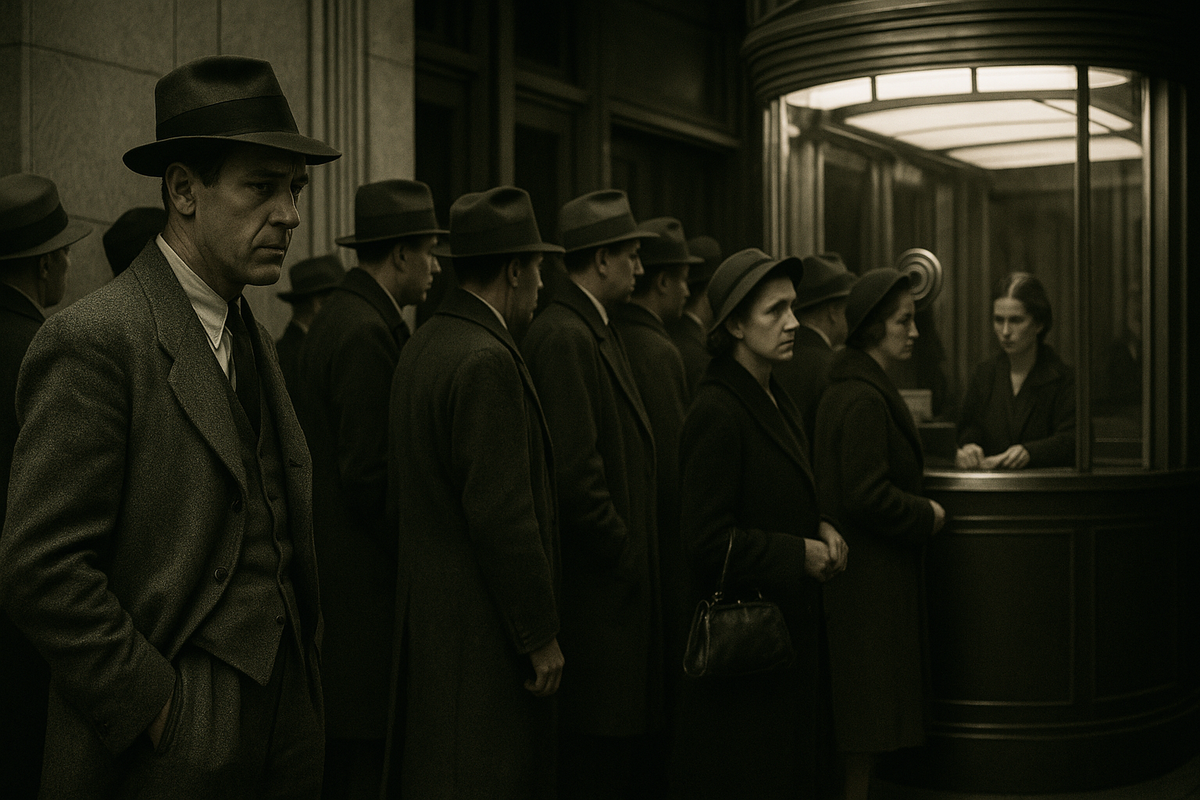
When a $2.50 Raise Meant Everything
The New Yorker's Forgotten Portrait of Depression America
October 27, 1934. Unemployment hovers at 22 percent. A theater ticket costs more than some men earn in a day. And buried in the pages of The New Yorker, between cartoons and society notes, sits a piece of fiction so quietly devastating it could have been ripped from a payroll ledger.
St. Clair McKelway's "A Raise in Salary" wasn't trying to be important. It simply told the truth: that in Depression America, a bump from $15 to $17.50 a week wasn't just money—it was proof you mattered.
This issue of The New Yorker captured something most magazines missed. While newspapers chronicled breadlines and political speeches, McKelway wrote about Philip, a clerk who calculated his dignity in theater tickets and rent checks. It was reportage disguised as fiction, and eighty years later, it still stings with recognition.
Archive Details
Featured Writer: St. Clair McKelway
Issue Date: October 27, 1934
Cover Artist: Constantin Alajalov
Historical Context: Great Depression, 22% unemployment, early New Deal era
Archive Source: The New Yorker Magazine
The America That Counted Pennies
By late 1934, Roosevelt's New Deal was underway, but recovery remained theoretical. One in five Americans couldn't find work. Those who had jobs clung to them with desperate gratitude, measuring progress not in career arcs but in fractional wage increases.
This was the landscape McKelway understood. His protagonist wasn't starving or heroic—he was doing the arithmetic of survival. Could he afford dinner and the theater? Would this raise cover the installment payments? Was $17.50 enough to stop feeling like "just another clerk"?
The genius of the story lay in what it didn't say. There were no speeches about economic injustice, no melodrama. Just the quiet hum of a man waiting in the Friday pay line, opening an envelope, and recalculating his worth.
Money wasn't currency in Depression America. It was status. Security. The difference between invisibility and being seen.
The New Yorker's Depression-Era Mission
While other publications leaned into crisis journalism, The New Yorker operated with scalpel precision. Its pages didn't shout—they observed. McKelway's story exemplified this editorial philosophy:
This was The New Yorker at its best—sophisticated without being precious, empathetic without sentimentality. The magazine understood that the Depression wasn't just happening to workers in factories; it was happening to clerks at desks, to men in worn suits counting change for coffee.
The Cover: Faces in the Crowd
Constantin Alajalov's cover illustration distilled the issue's themes into visual irony. A theater crowd—faceless figures in evening wear, lined up at the box office like factory workers at a punch clock.
The image worked on multiple levels. Yes, it captured New York glamour—the escape of theater, the ritual of nightlife. But look closer: the figures are anonymous, interchangeable. In Depression America, even leisure became a mass experience, individuality swallowed by economic necessity.
Alajalov, a master of social observation, knew what he was doing. The crowd isn't celebrating. They're participating, following the script of normalcy while everything underneath shifts and cracks.
Inside, the magazine's mix of fiction, cartoons, and commentary reinforced this duality. A cartoon captioned "Langdon Post says he's a fire hazard" provided levity. Profiles offered intellectual depth. Everything was calibrated to acknowledge hardship while refusing to wallow in it.
McKelway Before McKelway
In 1934, St. Clair McKelway was not yet the celebrated editor and staff writer he would become. "A Raise in Salary" was early work—sharp, disciplined, unsentimental. It revealed a writer who understood that the Depression's real drama wasn't in headlines but in the space between getting paid and paying rent.
The story's power came from its refusal to explain itself. Philip doesn't learn a lesson. He doesn't transcend his circumstances. He gets a small raise, feels momentarily validated, and returns to calculating whether he can afford to feel secure.
It's fiction that reads like sociology. Thousands of Depression-era workers could have recognized themselves in Philip's anxiety, his pride, his exhausting mental arithmetic. McKelway gave voice to the unspoken bargain of 1930s employment: gratitude laced with fear, advancement shadowed by fragility.
Why These Magazines Still Matter
Vintage New Yorker issues endure because they documented more than events. They captured mood, voice, the psychological weather of their moment. The magazine's blend of fiction, art, and commentary created a cultural record unmatched in American journalism.
The October 27, 1934 issue demonstrates this perfectly. McKelway's story and Alajalov's cover work in concert—both interrogating the same question: What does it mean to measure your life in small increments while everything around you feels uncertain?
The answer, then and now: It means you're human. You calculate. You hope. You survive.
Why Collectors Covet This Issue
For cultural historians, this isn't just a magazine. It's primary source material on how Americans processed economic collapse—not with speeches, but with stories about men worrying over $2.50.
Add This Chapter to Your Collection
From the Jazz Age through the postwar years, The New Yorker chronicled American intellectual and cultural life with unmatched wit and precision. Each issue isn't just a magazine—it's a historical document.
Browse The New Yorker Magazine CollectionThe Artifact Endures
In "A Raise in Salary," McKelway wrote about a man whose entire emotional landscape could shift with $2.50. Eighty years later, that vulnerability still resonates. Economic anxiety doesn't disappear—it just finds new faces, new pay stubs, new ways of calculating worth.
This issue of The New Yorker preserved that moment with precision and care. For collectors, historians, and anyone who believes literature should tell uncomfortable truths, it remains indispensable—proof that even in America's darkest economic hour, writers and artists found ways to honor the small, desperate mathematics of survival.