
The Last Magazine Before the Fall
When The New Yorker Remembered O. Henry at the Edge of America's Abyss
Pick up the July 12, 1930 issue of The New Yorker and you're holding a ghost.
Not literally—the paper is real, the ink faded but legible, the cover illustration of sailors on a summer yacht still bright with the season's optimism. But this magazine, published just nine months after Black Tuesday, exists in a peculiar liminal space. America hadn't yet named what was happening. The Great Depression was still forming, still gathering its terrible momentum. People knew something had broken in October 1929, but they didn't yet know they were living through the watershed moment of the century.
So they looked backward instead. To genius. To survival. To a writer who had died twenty years earlier but whose stories about scraping by, about ironic twists of fate, about ordinary people navigating impossible circumstances—suddenly felt uncomfortably relevant.
They looked to O. Henry.
Archive Details
Historical Figure: O. Henry (William Sydney Porter)
Issue Date: July 12, 1930
Archive Source: The New Yorker
Feature Title: "Recalling O. Henry"
Why This Issue Mattered in 1930
William Sydney Porter—O. Henry to the reading public—had been dead two decades when The New Yorker published "Recalling O. Henry" in its summer 1930 pages. His twist-ending stories like "The Gift of the Magi" and "The Ransom of Red Chief" were already American classics, taught in schools and reprinted endlessly. He was safe. Canonical. Unthreatening.
But The New Yorker's timing wasn't accidental.
The magazine had established itself by 1930 as the voice of urban sophistication—witty, ironic, culturally astute. Founded just five years earlier, it had already mastered the art of blending high literary style with sharp social observation. When its editors chose to devote substantial space to O. Henry in the summer of 1930, they weren't simply memorializing a beloved writer. They were offering their readers a mirror.
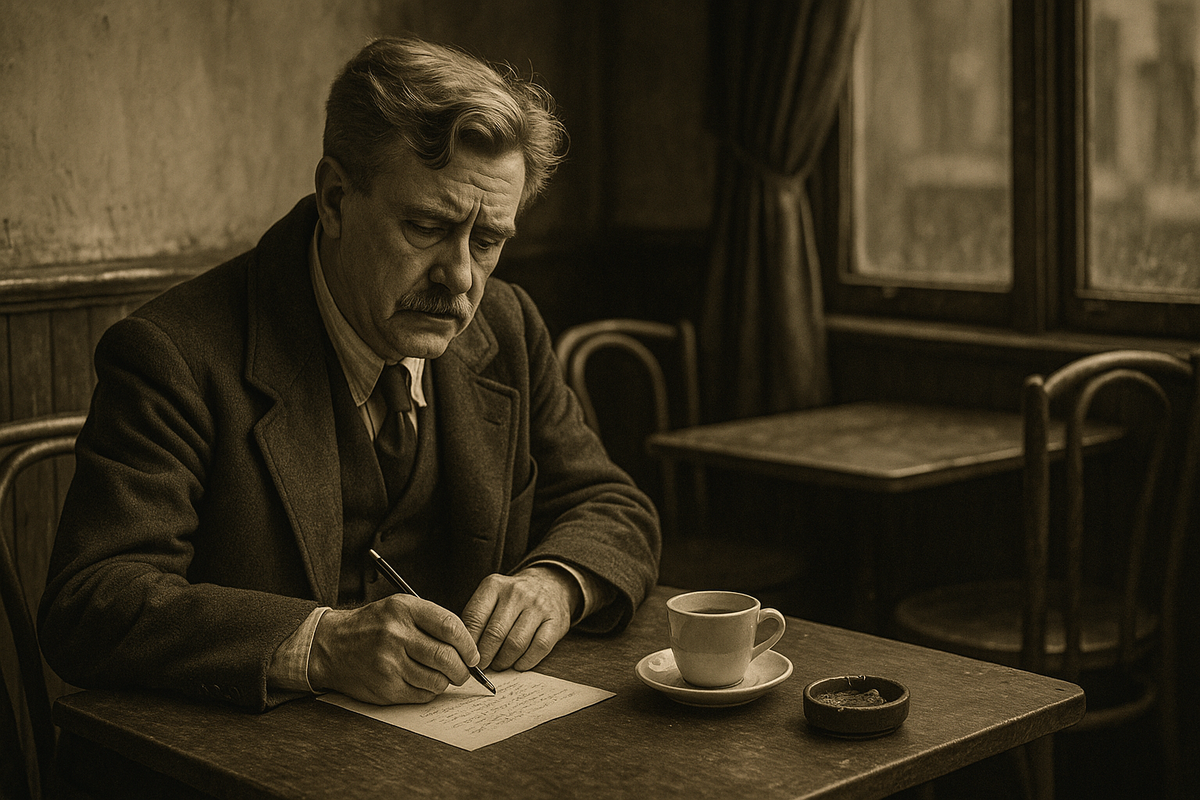
O. Henry's life story was a catalogue of American contradictions: financial ruin, imprisonment for embezzlement, alcoholism, perpetual deadline pressure, and yet—brilliance. Stories written on bar napkins and café tables that captured something essential about American life. A man who lived modestly, died young at 47, and left behind work that endured.
For readers in 1930, facing their own financial catastrophe and uncertain futures, this wasn't nostalgia. It was a roadmap. If genius could emerge from hardship, if art could outlast its creator's struggles—maybe there was hope in the chaos.
The Portrait: O. Henry as The New Yorker Saw Him
The essay painted O. Henry in precise, human strokes. Medium height. Sandy blond hair. Sad blue eyes. A man fundamentally uncomfortable with publicity, shy and awkward in social settings yet oddly at home in the bars and cafes where he did his best work. He favored Scotch and ginger ale. He wrote under crushing financial pressure, finishing stories at the last possible moment to satisfy editors and pay rent.
His characters came directly from the New York streets: bartenders, shopkeepers, wanderers, dreamers. The city's anonymous masses became his muses. He didn't write about society figures or industrial titans—he wrote about the people serving them drinks.
The New Yorker captured all of this with its signature style: affectionate but never sentimental, admiring but never worshipful. The piece acknowledged O. Henry's demons without pathologizing them, celebrated his craft without inflating it. This was a writer being remembered by a magazine that understood what it meant to create under pressure, to find the extraordinary in the ordinary, to speak to readers who lived complicated, contradictory lives.
The contrast with the issue's cover—sailors lounging on a summer yacht, all leisure and lightness—only sharpened the point. The New Yorker could hold both realities at once: the elegant surface and the grinding truth beneath.
What the Article Revealed
Writing Under Pressure
O. Henry didn't compose in quiet studies or maintain disciplined routines—he wrote when he had to, where he could, often finishing stories hours before deadline. Yet this pressure somehow produced masterpieces.
Democratizing Genius
O. Henry made ordinary life feel remarkable not by elevating it but by revealing the drama already present in small moments, small choices, small lives. A shopgirl's sacrifice. A child's ransom scheme. A painted leaf on a wall.
Embodied Contradiction
Shy yet sociable. Witty yet melancholic. Prolific yet perpetually broke. O. Henry was the city he wrote about—New York itself in human form, full of unlikely juxtapositions and hidden depths.
Enduring Legacy
The article made this prediction with confidence: two decades after O. Henry's death, his stories still charmed readers. They would continue charming readers for generations to come. This wasn't hagiography—it was pattern recognition.
The Artifact Today
These magazines endure because they function as time capsules with exceptional fidelity. The July 12, 1930 issue doesn't just tell us about that moment—it is that moment, preserved. The typeface, the advertisements, the cartoons, the tone of the writing—all of it conspires to transport the reader backward.
Modern collectors and historians value these issues precisely because they're unfiltered primary sources. When you read "Recalling O. Henry" in its original context, surrounded by the other content of that specific week in 1930, you understand both the article and its era differently than you would reading a standalone reprint.
You see what surrounded it. What Americans were laughing at, worried about, buying, reading. You see the whole cultural atmosphere.
Why This Issue Commands Collector Interest
Historical Timing
Published at the dawn of the Great Depression, it captures America's psychological state before the full weight of the crisis landed. This is the last moment of uncertainty before clarity—the last summer before everyone knew how bad things would get.
Literary Weight
A major retrospective on O. Henry, one of the most influential short story writers in American literary history, appearing in a magazine that would itself become a literary institution.
Cultural Archaeology
The article's subtext—survival through creativity, genius emerging from hardship—speaks directly to the anxieties of its moment. Reading it today, we can see what The New Yorker's editors saw in 1930: a template for endurance.
Cover Art
The whimsical yacht illustration represents peak early New Yorker aesthetics—sophisticated, seasonal, stylish. It's the kind of cover that looks striking framed on a wall.
Archival Integrity
Issues featuring major literary figures remain among the most sought-after by collectors, scholars, and cultural historians. This isn't speculative value—it's established market reality.
Physical Experience
Whether you're building a serious collection, researching a specific cultural moment, or preserving family history, these magazines offer something digital archives cannot: the tangible experience of holding history.
Explore the Archive
Our collection includes thousands of original New Yorker magazines spanning the 1920s through the 1970s—decades of American intellectual and cultural life documented as it happened.
Browse The New Yorker Magazine CollectionFinal Assessment
The July 12, 1930 issue of The New Yorker stands as one of the magazine's most significant early literary retrospectives. Its feature on O. Henry gave Depression-era readers a framework for understanding their own moment—a reminder that hardship and genius can coexist, that art outlasts adversity, that ordinary lives contain extraordinary stories.
Eighty-five years later, that framework still holds.
For collectors, historians, and anyone who values the intersection of literature and cultural memory, this issue represents more than vintage publishing. It's a document of how Americans processed crisis by looking backward to find inspiration. It's proof that the stories we tell ourselves about artists and survival matter as much as the art itself.
Hold this issue in your hands and you're holding July 1930—the last summer before America fully understood what the next decade would demand. The last moment when looking backward still felt like preparation for moving forward.
That's not nostalgia. That's prophecy.