
When The New Yorker Marched With Tito's Partisans
Inside the April 28, 1945 issue that brought Yugoslav resistance to American breakfast tables
On April 28, 1945, American readers opened their mailboxes to find something extraordinary: a magazine that refused to look away.
While most publications were already drafting victory headlines, The New Yorker was still in the mountains of Yugoslavia, documenting a war that wouldn't fit neatly into Allied propaganda. The final installment of "A Reporter in Yugoslavia: The Long March—III" arrived on American breakfast tables just ten days before Nazi Germany's surrender—a dispatch from the last gasps of occupation, written by someone who had walked alongside the fighters themselves.
This wasn't reporting from a command post. It was witness testimony from the forest floor.
Archive Details
Publication: The New Yorker
Issue Date: April 28, 1945
Feature Article: "A Reporter in Yugoslavia: The Long March—III"
Historical Context: Published 10 days before Germany's unconditional surrender
Subject: Yugoslav Partisan resistance under Josip Broz Tito
The War Within the War
By spring 1945, the Yugoslav Partisans had accomplished what few resistance movements ever managed: they'd built a functioning government while still fighting for survival. Under Josip Broz Tito's leadership, this multiethnic coalition of communists, peasants, and students had been waging mountain warfare since 1941—not just against the Wehrmacht, but against a vision of postwar Europe being negotiated over their heads in Washington and Moscow.
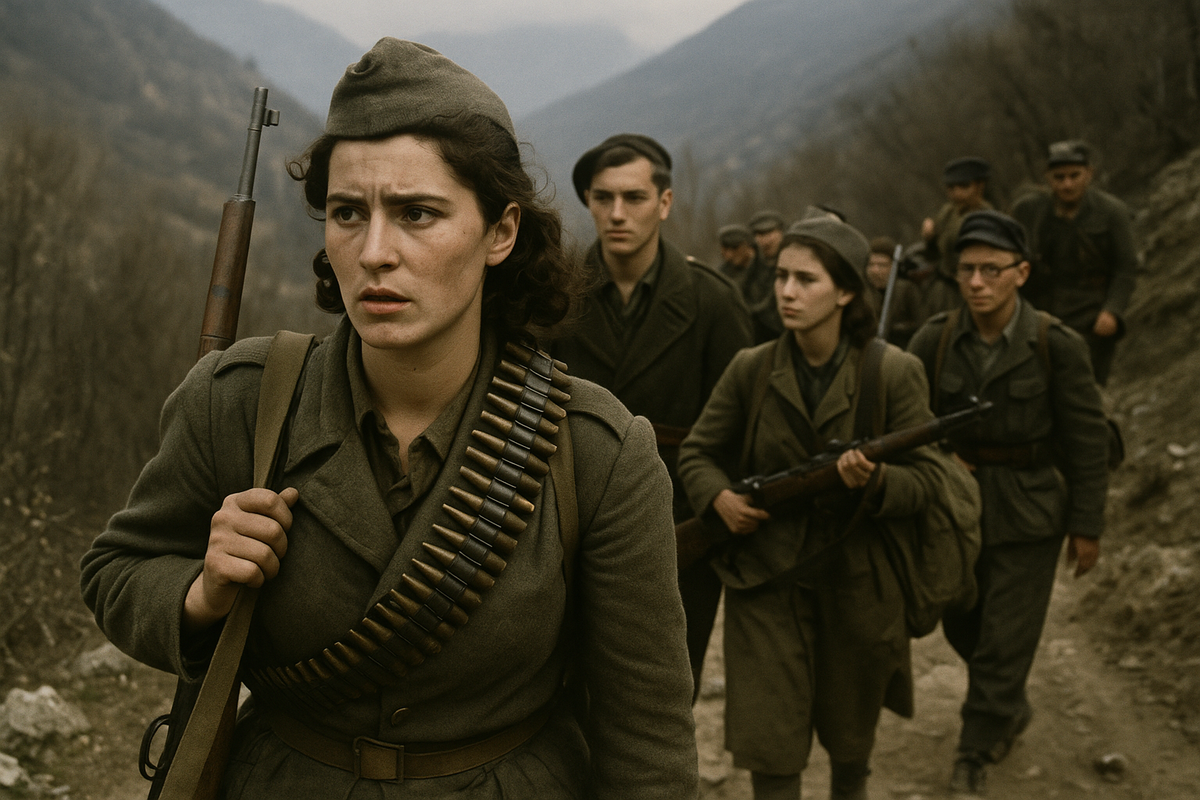
The New Yorker understood what its competitors missed: the real story wasn't troop movements or casualty figures. It was the 19-year-old nurse trudging through snow with a rifle on her back. The bowl of soup that meant survival. The translator who'd traded university studies for partisan encampments.
These were the details that mattered—and The New Yorker had sent someone who knew how to find them.
Literary Warfare
What set this piece apart was its refusal to simplify. Instead of heroic narratives or strategic analysis, the reporter offered something more valuable: texture.
The article moves through the Partisan-controlled territories like the march itself—exhausted, cold, alert to danger. Readers learned what it meant to cross hostile valleys where German patrols still operated. They discovered how young fighters transformed village schools into field hospitals, how an interpreter's fluent English became a lifeline between worlds, how the promise of hot water and soap could sustain morale through another week of uncertainty.
This was The New Yorker at its finest: treating war as a human experience rather than a geopolitical abstraction.
The literary depth served a purpose beyond aesthetics. By the time readers finished the article, they understood something newspapers couldn't convey—that resistance wasn't a single act of defiance, but a daily negotiation between survival and principle, fought by people who looked nothing like Hollywood's version of heroes.
The Long March
A grueling journey through mountains and villages, where the reporter joined Partisan units trudging across hostile territory under constant threat of German patrols.
Youth and Sacrifice
The presence of young fighters, interpreters, and nurses underscored the generational cost of war and resistance.
Moments of Humanity
Bowls of soup, hot showers, and bars of soap became luxuries, described with reverence against the backdrop of hunger and fatigue.
Clash of Worlds
The American observer struggled to reconcile an outsider's perspective with the Partisans' hard realities and political complexity.
The Art of Witnessing
The magazine's cover captured the moment with characteristic restraint. Against a background of Allied flags—American, British, Soviet, French, Chinese—a mass of faces stares forward, anonymous and collective. No triumphalism. No jingoism. Just the weight of what had been endured, rendered in The New Yorker's signature illustrative style.
While competitors published patriotic photography and dramatic battle scenes, The New Yorker chose ambiguity. The faces could be soldiers or civilians, victors or survivors, Americans or Europeans. The flags proclaimed unity while the expressions suggested something more complicated—exhaustion, grief, uncertain hope.
This visual vocabulary separated The New Yorker from every other American publication. Its wartime covers didn't rally; they contemplated. They asked readers to think rather than simply feel.
The Magazine That Refused to Simplify
Where other publications offered clarity, The New Yorker offered complexity. Its wartime issues contain poetry beside political analysis, cartoons alongside eyewitness accounts, fiction that processed trauma through metaphor. This editorial philosophy—treating readers as intellectuals rather than consumers—made each issue a cultural record that transcends its moment.
The April 28, 1945 issue matters because it trusted American readers with an uncomfortable truth: resistance doesn't fit propaganda narratives. It's messy, morally ambiguous, conducted by imperfect people making impossible choices. The Yugoslav Partisans were building a communist state while fighting for liberation—a contradiction that would define the Cold War, but in 1945 was simply the reality on the ground.
The New Yorker reported that reality without flinching.
Why This Issue Endures
Historical Precision
Published during the war's final breath, it captures the atmosphere between certainty and chaos—when victory was inevitable but peace remained unimaginable.
Documentary Value
Few American publications provided ground-level access to Yugoslav resistance. This account remains essential source material for understanding how the Partisans saw themselves.
Cultural Artifact
The issue bridges two distinct historical moments—the immediate experience of wartime and The New Yorker's evolving role as America's most sophisticated cultural arbiter.
Artistic Merit
The cover alone justifies preservation—a visual statement about coalition, sacrifice, and the human cost of ideology that remains one of the magazine's most evocative wartime designs.
Beyond collector value, issues like this serve an archival function. Daily newspapers captured headlines; The New Yorker captured consciousness. Its reportage preserved not just what happened, but how it felt to live through events while their outcomes remained uncertain.
The April 28, 1945 issue of The New Yorker remains what it was in 1945—a refusal to accept easy answers. In an era when most publications were already pivoting to peacetime optimism, it stayed in the mountains with the fighters who'd made victory possible but wouldn't share equally in its rewards.
That's the kind of journalism worth preserving. And worth reading 80 years later.
Archive Access
This issue, along with the magazine's complete wartime run, remains available through original archive collections. Each preserved copy represents a fragment of mid-century intellectual life—the moment when American journalism began treating foreign correspondence as literature.
Browse The New Yorker Magazine Collection