
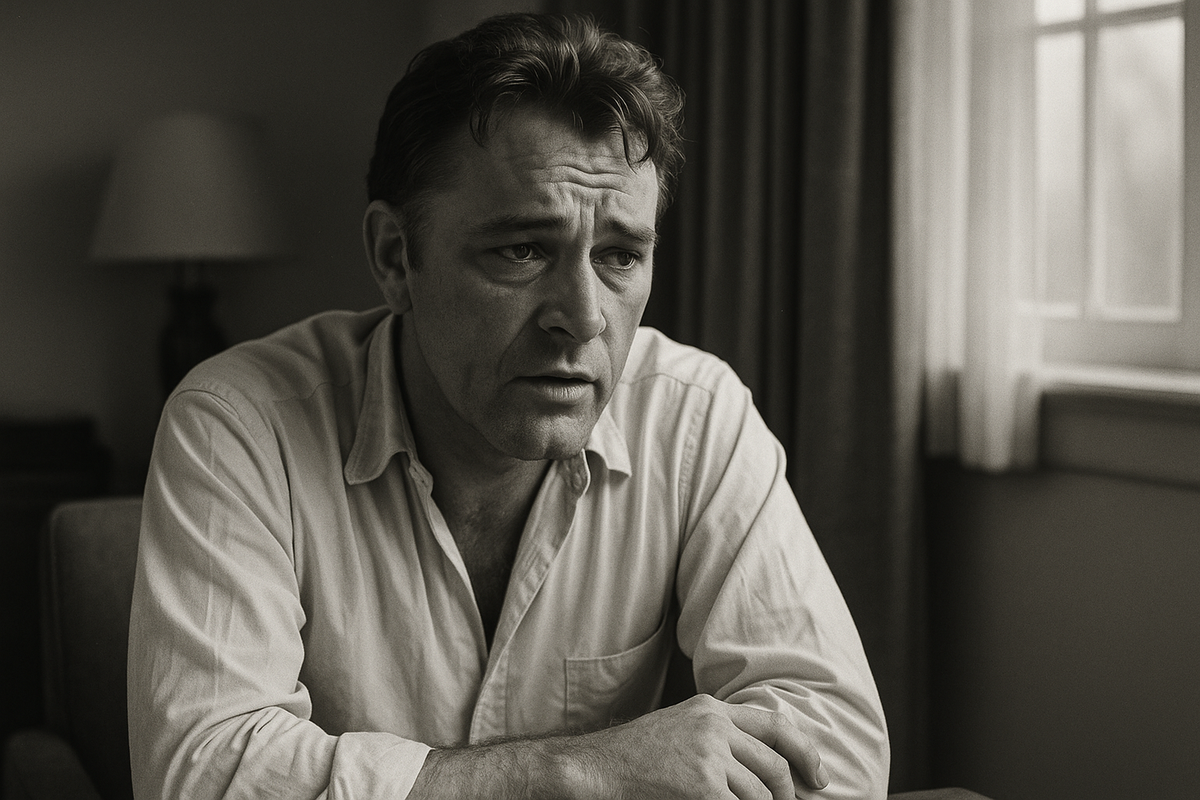
Richard Burton Unmasked: The 1963 Playboy Interview That Shattered the Rules of Celebrity
When the Shakespearean actor sat down with Kenneth Tynan, he did something unthinkable—he told the truth
September 1963. Richard Burton sits across from Kenneth Tynan and does something unthinkable for a man at the apex of global fame: he tells the truth.
Not the carefully managed truth of studio publicity. Not the charming deflections that stars deployed like armor in magazine profiles. The actual truth—about his drinking, his jealousy, his terror of being forgotten, his volcanic affair with Elizabeth Taylor. The interview that emerged in the September 1963 issue of Playboy Magazine wasn't celebrity journalism. It was a controlled detonation.
For American readers, this was a seismic moment. Burton—Shakespearean virtuoso, Hollywood sensation, the man whose romance with Taylor during the filming of Cleopatra had turned him into tabloid combustible—had walked into Playboy's pages and stripped away every protective layer. What remained was raw: a portrait of genius laced with self-destruction, charisma shadowed by doubt.
This wasn't just an interview. It was the birth certificate of modern celebrity confession.
Archive Details
Historical Figure: Richard Burton (1925–1984), Welsh actor and cultural icon
Issue Date: September 1963
Interviewer: Kenneth Tynan, theater critic and cultural commentator
Archive Source: Playboy Magazine Collection
Cultural Context: Published at the height of the Burton-Taylor Cleopatra scandal
The Cultural Faultlines of 1963
The early 1960s were cracking open. The sexual revolution was dismantling postwar moral codes. Censorship in media was losing its grip. The Hollywood studio system—that factory of manufactured glamour—was collapsing under independent productions and runaway budgets. Celebrity culture, meanwhile, was mutating into something more predatory, more invasive. Tabloids chronicled the private lives of stars with surgical precision.
Burton became the emblematic figure of this shift. Born in Wales, classically trained, possessed of a voice that could command any stage, he had conquered both theater and film. By 1963, his name meant two things in equal measure: extraordinary talent and scandalous headlines. His affair with Elizabeth Taylor—launched on the Roman set of Cleopatra—dominated global media and became shorthand for the new voyeurism.
Playboy delivered Burton's voice unfiltered. No studio gatekeepers. No publicist edits. Just the actor, speaking as if the audience had earned his honesty.
Playboy's Unlikely Evolution: From Pin-Ups to Public Intellectuals
By 1963, Playboy had engineered something remarkable: it had become a cultural institution that serious people read for serious reasons. Yes, there were centerfolds. But there was also Ray Bradbury fiction, intellectual commentary, and the Playboy Interview—a format that gave cultural titans space to think out loud.
The Burton interview, conducted by critic Kenneth Tynan, epitomized this mission. Tynan asked real questions. Burton gave real answers. He spoke about his working-class Welsh roots, his crippling insecurities as an actor, his heavy drinking. He described his relationship with Taylor in language both passionate and brutal—admitting to jealousy, volatility, and the fear that fame was a trapdoor he might fall through at any moment.
This was shocking. Readers accustomed to publicity pablum suddenly had access to a celebrity's interior life, presented without makeup or spin. The intimacy felt almost transgressive.
Inside the September 1963 Issue: Glamour Meets Confession
The cover promised "Europe's New Sex Sirens"—a bold, cosmopolitan gesture that signaled Playboy's international sophistication. The design was minimalist, playful, instantly recognizable. Inside, the Burton interview detonated every expectation.
Burton refused polish. He admitted to being "a very burly boy" with arrogance baked in, to jealousy and self-indulgence, to fearing irrelevance despite his stature. He praised and mocked contemporaries—Marlon Brando, Laurence Olivier—with equal candor. He critiqued acting schools. He laid bare his ambivalence about Elizabeth Taylor in language that oscillated between adoration and exasperation.
Unlike profiles padded with studio boilerplate, Playboy delivered a human being in full contradiction: genius and wreck, lover and cynic, artist and celebrity.
The Revelations That Defined the Interview
These weren't soundbites. They were admissions. For readers, the glamour of celebrity suddenly looked different—shot through with fragility, held together by performance.
The Endurance of Confession
The Burton interview endures because it isn't publicity—it's testimony. It reveals a man simultaneously proud and insecure, magnetic and self-destructive. It captures not just an actor but the emergence of a new kind of celebrity: one defined by candor as much as charisma.
Today, when celebrity confession saturates media, Burton's 1963 Playboy interview still startles. The honesty feels earned, not performed. The vulnerability reads as courage, not calculation.
Why Collectors Prize the September 1963 Issue
This isn't simply a magazine. It's a primary source document of cultural transformation.
Explore the Collection
Thousands of original Playboy magazines—from the 1950s through the 1970s—are available in our collection. Trace entire decades of culture, politics, sexuality, and art as they were documented in real time.
Browse Playboy Magazine CollectionFinal Word
The September 1963 Playboy Magazine remains one of the most significant cultural publications of its decade. The Richard Burton interview stripped away the mythology of the untouchable star and replaced it with the voice of a flawed, brilliant, deeply human man.
Holding this issue means holding a turning point—when Playboy's editorial vision reshaped how Americans encountered their icons.
For anyone who values cinema, history, or cultural artifacts, vintage Playboy magazines aren't just collectibles. They are living records of the 20th century.