
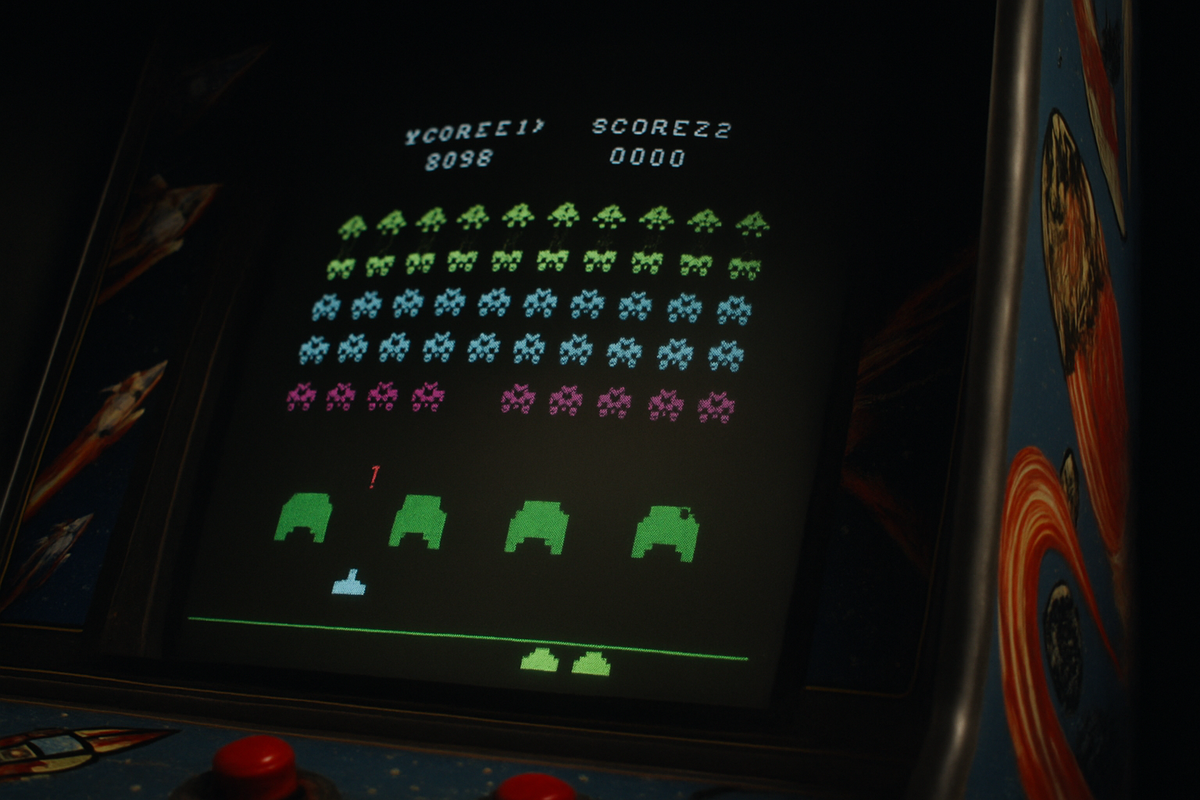
Asteroids vs. Space Invaders: The First Great Rivalry of Video Games
How Electronic Games Magazine chronicled the battle that defined arcade culture
December 1981. A question lands on newsstands that will define a generation.
"Can Asteroids Conquer Space Invaders?"
The headline blazes across the cover of Electronic Games Magazine, and for the first time in history, two video games are being analyzed not as toys or fads—but as cultural forces worthy of genuine debate. This wasn't hyperbole. By the winter of 1981, these two titles had already rewritten the rules of entertainment, transformed the economics of leisure, and turned dimly lit arcades into the proving grounds of a new era.
This single issue captures that inflection point. And for collectors, historians, and anyone who lived through the quarter-fueled nights of the arcade boom, it remains an essential artifact.
The Contenders: Two Philosophies of Play
The rivalry wasn't accidental. It was structural.
In 1978, Japanese designer Tomohiro Nishikado released Space Invaders, and arcades would never be the same. The descending alien ranks, the relentless tension, the hypnotic thump of the soundtrack—it transformed video games from curiosities into obsessions. Thousands of new arcades opened worldwide to meet demand. In Japan, the game created a national coin shortage.
One year later, Atari answered with Asteroids. Where Space Invaders was claustrophobic and rhythmic, Asteroids was open and chaotic. Vector graphics replaced sprites. Physics replaced patterns. Players didn't survive waves—they navigated entropy. The game became so addictive that arcade operators reportedly installed "pause buttons" to accommodate marathon sessions.
By December 1981, the division was clear:
Space Invaders represented immersion through escalation—sound design, progressive difficulty, and instant recognizability. It was the game that made video games mainstream.
Asteroids represented mastery through precision—spatial awareness, reflexes, and unforgiving momentum. It was the game that made gamers prove themselves.
The question wasn't which game was better. It was which philosophy would define the future.
Electronic Games Magazine: The First Chroniclers
Before Electronic Games, video games were covered like novelties—if they were covered at all. Editors Bill Kunkel, Arnie Katz, and Joyce Worley believed something different: that games deserved the same serious attention as film, sports, or literature.
The December 1981 issue proved it.
The feature on Asteroids versus Space Invaders didn't just compare high scores or list cheat codes. It placed both games into economic, technological, and cultural context. Readers learned why Space Invaders machines were pulling in an estimated 10 million quarters a day in 1980. They learned how Asteroids pioneered vector graphics and pseudo-3D depth. They learned that Atari's sponsored Asteroids tournaments were drawing thousands of participants, formalizing competitive gaming before esports had a name.
This wasn't journalism about games. It was journalism that treated games as history in motion.
For a generation raised on pinball and board games, Electronic Games became the bridge to a new medium—and proof that what was happening in arcades mattered beyond the glow of the screen.
Archive Details
Publication: Electronic Games Magazine
Issue Date: December 1981
Featured Article: "Can Asteroids Conquer Space Invaders?"
Key Editors: Bill Kunkel, Arnie Katz, Joyce Worley
Historical Context: Height of the arcade boom, pre-1983 crash
The Cover: A Statement of Intent
The cover of the December 1981 issue understands its assignment.
Against a stark black background, an arcade screen displays the iconic alien ranks of Space Invaders. A sleek spaceship fires a blazing red shot. A player grips the joystick, face lit by the machine's glow, locked in concentration. And above it all: the provocation.
"Can Asteroids Conquer Space Invaders?"
It's bold. It's dramatic. And it signals that this isn't just a magazine—it's the record of a cultural moment. The design choices alone tell you that the editors knew they were documenting something larger than games. They were documenting the birth of a new entertainment industry.
What Made the Rivalry Matter
Inside the issue, the article dissects the competition across multiple dimensions:
Space Invaders machines became revenue juggernauts, fundamentally altering how arcade operators approached their business.
Space Invaders rewarded memorization and endurance. Asteroids demanded reflexes and improvisation. Two philosophies. Two player bases.
Space Invaders became synonymous with "video game" itself. Asteroids became the test of whether you were serious.
Space Invaders introduced continuous sound and escalating tension. Asteroids pioneered vector graphics that would influence everything from Tempest to Battlezone.
Atari's Asteroids competitions legitimized organized gaming years before the concept became mainstream.
The Space Invaders cartridge for the Atari VCS sold millions, proving that home gaming could be more than a novelty—it could be an industry.
Both games spawned countless successors. Galaxian, Defender, and decades of indie homages all trace their DNA back to this rivalry.
This wasn't just about aliens and rocks. It was about defining what video games could be—and who they were for.
The Permanence of Print
Today, gaming news is consumed in seconds—tweets, streams, instant analysis. But in 1981, history was studied slowly. Magazines were passed between friends, saved in collections, reread until the pages wore thin.
That permanence is what makes Electronic Games Magazine so vital for collectors. Each issue is a sealed record of how people understood games in real time—not through retrospective analysis, but through lived experience.
These aren't just magazines. They're time capsules of optimism, competition, and the early belief that something revolutionary was happening in those darkened arcades.
Why Collectors Seek This Issue
Released at the peak of the arcade boom, just before Pac-Man mania reached its zenith and years before the 1983 crash reshaped the industry.
The bold artwork and confrontational headline make it one of the most visually striking issues in the magazine's early run.
It captures the exact moment when video games transitioned from entertainment to cultural phenomenon—and when the press began treating them accordingly.
Early issues of Electronic Games are consistently sought after by retro gaming historians, archivists, and enthusiasts. First-year issues command premium prices.
Owning this issue means holding the same debates that unfolded in arcades, living rooms, and schoolyards across the world in 1981. It's not nostalgia. It's evidence.
Add This to Your Archive
If you're a retro gaming historian, a serious collector, or someone who remembers the arcade boom firsthand, the December 1981 issue of Electronic Games Magazine belongs in your library.
Browse Electronic Games Magazine CollectionWhether you're reliving the glow of your local arcade or discovering these debates for the first time, these magazines offer something the internet never will: the authentic, unfiltered voice of gaming's earliest chroniclers.
The December 1981 issue of Electronic Games Magazine remains one of the most important publications in video game history. Its feature, "Can Asteroids Conquer Space Invaders?", captured a rivalry that defined an era—and forced the world to take games seriously for the first time.
Holding this magazine today is like standing in a crowded arcade in 1981, quarters in your pocket, staring at two glowing cabinets and wondering which to play first.
For collectors and enthusiasts, it's more than reading material.
It's a living artifact of the moment video games became culture.