
The Morning America Turned on Itself
Shirley Jackson's "The Lottery" and the June 26, 1948 New Yorker that sparked a national reckoning
The mailroom at The New Yorker had never seen anything like it.
Within days of the June 26, 1948 issue hitting newsstands, hundreds of letters arrived—furious, frightened, bewildered. Readers canceled subscriptions. Others demanded to know if the events described were real, if such lotteries actually existed in American towns. One reader asked for directions to the village so they could witness it themselves.
They had just read Shirley Jackson's "The Lottery." And America was not prepared.
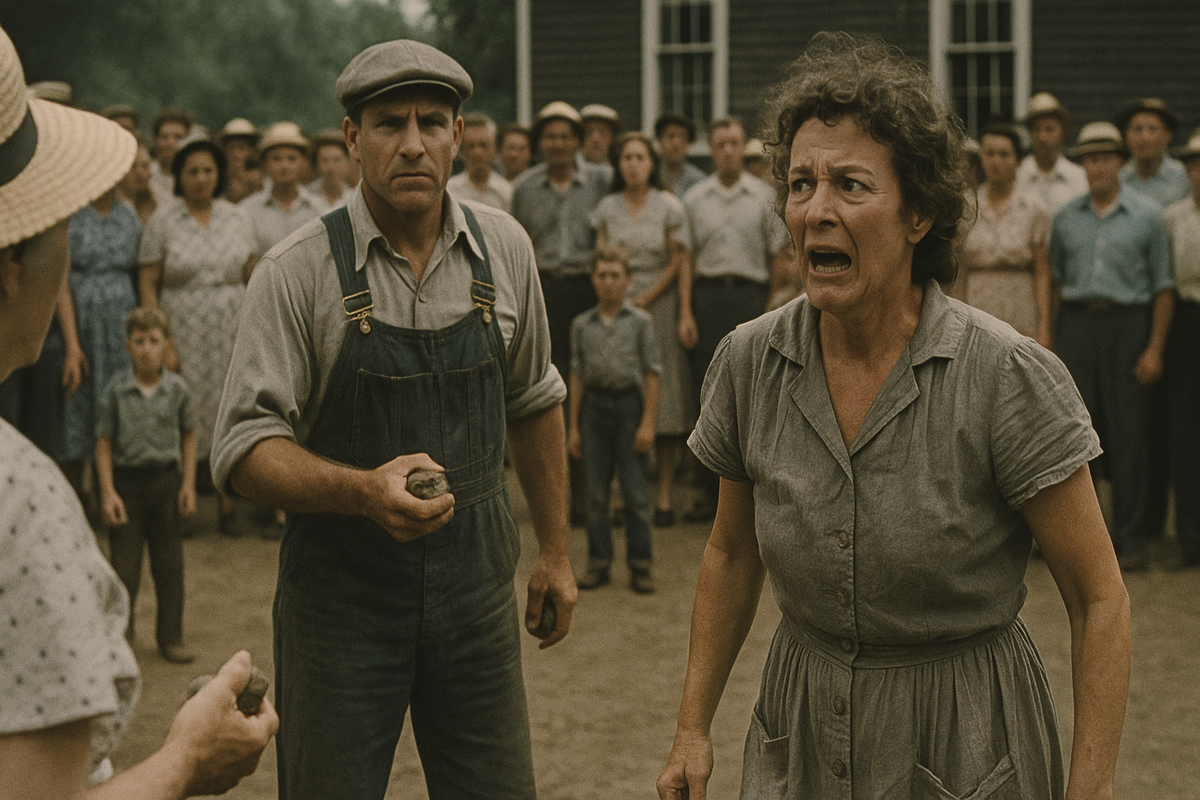
What began as a portrait of small-town ritual on a sunny June morning—children gathering stones, neighbors exchanging pleasantries—ended with a community stoning one of their own to death. No warning. No explanation. Just violence, sanctioned by tradition, carried out by ordinary people.
It remains the most explosive piece of short fiction The New Yorker ever published.
A Story That Arrived Without Apology
The New Yorker offered no preamble, no editorial cushioning. "The Lottery" appeared amid the magazine's typical rotation of cartoons, cultural commentary, and poetry. Readers expecting urbane wit encountered ritual murder instead.
This was Harold Ross's New Yorker at its most confident: fiction needed no disclaimer. The story's calm, almost bureaucratic tone—the way Jackson described the lottery with the same detachment one might use for a church social—made the horror land harder. Ross and fiction editor Gus Lobrano understood what they had. They let it detonate.
The timing was deliberate, even if the backlash wasn't anticipated. June 1948 sat at a cultural inflection point. The war had ended three years prior, but its psychic wounds remained open. The Berlin Blockade had just begun that same month—the Cold War's first direct superpower confrontation. Americans were caught between relief and dread, between rebuilding and bracing for what came next.
Jackson's story crystallized postwar anxiety in 3,000 words. It asked: What separates us from the fascists we just defeated? What violence do we permit because "it's always been done"? How thin is the membrane between civilization and savagery?
These weren't abstract questions in 1948. They were urgent, unhealed, terrifying.
Historical Context
Author: Shirley Jackson
Publication: The New Yorker, June 26, 1948
Editor: Harold Ross (Editor-in-Chief), Gus Lobrano (Fiction Editor)
Cover Artist: Roger Duvoisin
Historical Moment: Three years post-WWII, onset of Berlin Blockade and Cold War escalation
The Architecture of Horror
Jackson's craft was surgical. She built normalcy with obsessive care—weather reports, farming talk, the Black Box's splintering wood—then used that normalcy as a weapon.
The children gather stones. Of course they do. It's summer, they're playing.
The Black Box is "shabby" and "splintered." Nobody remembers when it was made. Nobody questions why it still exists. Tradition, after all, requires no justification.
Tessie Hutchinson arrives late, laughing about the dishes in her sink. When her family draws the marked slip, she protests: "It isn't fair, it isn't right." Her neighbors—people she's known for years—pick up stones. Her children pick up stones.
Jackson never explains the lottery's purpose. That omission is the story's cruelest stroke. Rituals perpetuate not because they work, but because they persist. The lottery happens because the lottery has always happened.
The prose was deceptively plain, almost journalistic. This wasn't Gothic horror with fog and castles. This was a PTA meeting that ended in murder.
Ordinary Beginnings
Jackson lulls readers into false security with children gathering stones, men discussing farming, women exchanging gossip—normalcy as narrative weapon.
The Black Box
Shabby and splintering, the box symbolizes tradition maintained without memory or meaning—ritual for ritual's sake.
Tessie's Protest
"It isn't fair, it isn't right"—words that fall on deaf ears as community, even family, turns executioner.
Violence as Ritual
The climax reveals ordinary people committing brutality when sanctioned by tradition—the story's most chilling truth.
The Backlash and the Canonization
The New Yorker had published controversial fiction before. Nothing compared to the deluge that followed "The Lottery."
Hundreds of subscription cancellations. Letters demanding explanations, apologies, or confirmation that such practices existed in rural America. Some readers accused Jackson of anti-small-town prejudice. Others felt she'd crossed an ethical line—that depicting such violence, even fictionally, was irresponsible.
Jackson received hate mail for years. She also received marriage proposals, scholarly inquiries, and eventually, enduring fame.
Critics recognized the story's power immediately. It won the O. Henry Award. It became required reading in American high schools and universities. Decades later, it remains one of the most taught short stories in the English language.
The initial shock calcified into literary permanence. "The Lottery" didn't just unsettle readers—it changed what short fiction could do, what subjects it could tackle, how it could implicate its audience.
The Cover Nobody Talks About
Roger Duvoisin's illustration for that June 26 issue depicted families fishing by lantern light along a darkened shore. Peaceful. Traditional. Communal.
Place it beside Jackson's story and the image curdles. Both portray communities gathered for ritual. One is benign; the other is slaughter. The juxtaposition—intentional or not—captured The New Yorker's editorial sensibility: irony delivered without commentary, meaning made through contrast.
Duvoisin's cover has become as collectible as the story it inadvertently frames. Together, they form a singular artifact of postwar American culture.
The Magazine That Chose Discomfort Over Approval
The New Yorker could have pulled the story. Ross and Lobrano had weeks of lead time after the letters started arriving. They could have printed retractions, softened future fiction, reassured their subscriber base.
They didn't.
That decision solidified the magazine's reputation as a publication willing to challenge rather than merely entertain. Fiction was meant to provoke thought, even—especially—when that thought was uncomfortable.
"The Lottery" proved that mass-market magazines could publish literature that mattered, that asked difficult questions, that refused easy answers. It demonstrated that readers, despite their initial outrage, would ultimately respect work that took them seriously.
The story's legacy extends beyond Jackson's career. It established a standard: important fiction should unsettle. It should force reflection. It should haunt.
Why This Issue Matters to Collectors
First Publication
You're holding the original appearance of one of the 20th century's most influential short stories—not a reprint, not an anthology, but the publication that sparked a national controversy.
Literary Milestone
This issue documents the moment American literature confronted its own capacity for violence, when mainstream fiction refused to comfort its audience.
Cultural Artifact
Scholars, cultural historians, and literary collectors seek this issue as historical evidence of postwar American anxiety and the power of provocative art.
Complete Package
Duvoisin's evocative cover paired with Jackson's shocking story creates an ironic juxtaposition that exemplifies The New Yorker's editorial brilliance.
A Historical Document You Can Own
The June 26, 1948 New Yorker is more than a collectible magazine—it's a cultural artifact from the moment American literature looked directly at American violence and refused to blink.
Browse The New Yorker Magazine CollectionExplore decades of The New Yorker's fiction, essays, art, and commentary. Each issue a window into 20th-century American culture.
The Story That Won't Let Go
Seventy-seven years later, "The Lottery" still provokes. Teachers still field questions about whether it's "based on a true story." Readers still finish it shaken.
Jackson understood something essential: the violence isn't in the stones. It's in the willingness to throw them. It's in the phrase "we've always done it this way." It's in the moment a community decides that tradition matters more than mercy.
The June 26, 1948 New Yorker captured that understanding in ink and paper. Own it, and you own the moment American fiction stopped looking away.