
When Girl Group Glamour Met Nazi Hate: The Jet Magazine Cover That Defined 1966
How one magazine cover captured the schizophrenic reality of Black life in America's most turbulent decade
September 22, 1966. A newsstand shopper reaches for the latest Jet Magazine and freezes.
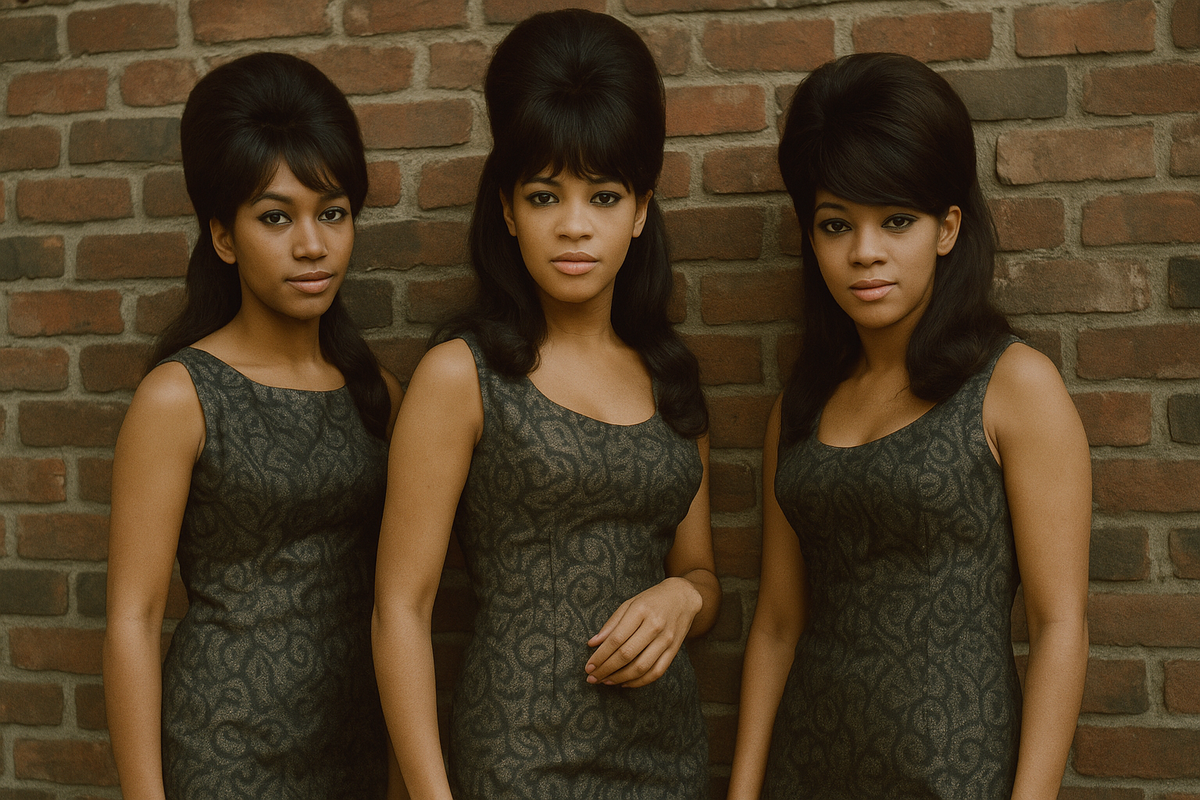
There they are—the Ronettes in full regalia, beehive hairdos towering, eyes lined with precision, embodying everything aspirational about Black American success in the mid-sixties. Then the eye travels upward to the headline slashed across the top: "How Nazi Party Spurs Race Hate in Chicago."
This wasn't an editorial accident. It was a deliberate act of truth-telling that captured the schizophrenic reality of Black life in America's most turbulent decade.
The Magazine That Refused to Choose
Founded in 1951 by publishing titan John H. Johnson, Jet operated on a radical premise: Black readers deserved the full spectrum of their experience in 112 pocket-sized pages. Not sanitized celebrity puff pieces. Not endless trauma porn. Both the roses and the blood.
The September 22, 1966 issue exemplifies this philosophy at its most potent. Inside, readers found a feature on the Ronettes—Ronnie Bennett, Estelle Bennett, and Nedra Talley—tracing their ascent from Spanish Harlem to Phil Spector's Philles Records empire. "Be My Baby" had made them household names three years prior, and by 1966 they represented something powerful: Black creativity forcing its way into white America's living rooms whether white America was ready or not.
But Jet's editors understood something mainstream outlets refused to acknowledge. The same week the Ronettes were headlining concerts, the American Nazi Party was staging rallies in Chicago, exploiting anxieties around housing desegregation and school integration. The Civil Rights Act was two years old. The Voting Rights Act, barely one. Legal victories hadn't translated to safety.
So Jet did what Jet always did—it printed both stories and let the juxtaposition speak for itself.
Archive Details
Featured Artists: The Ronettes (Ronnie Bennett, Estelle Bennett, Nedra Talley)
Issue Date: September 22, 1966
Archive Source: Jet Magazine
Publisher: John H. Johnson, Johnson Publishing Company
Historical Context: Two years post-Civil Rights Act, one year post-Voting Rights Act
Why This Cover Mattered Then
In 1966, mainstream publications—Life, Look, Time—featured African Americans on their covers sparingly, and usually in contexts of conflict or tragedy. A Black face on a magazine cover typically signaled crisis, not celebration.
Jet upended that equation weekly. Its September 22 cover was unapologetically glamorous: the Ronettes styled in matching outfits, photographed with the kind of dramatic flair reserved for white stars in competing publications. The bright orange-and-white masthead popped against the background, impossible to miss on a crowded newsstand.
For a young Black girl flipping through her family's copy, this wasn't just entertainment coverage. It was a mirror. Proof that Black women could command stages, top charts, and look spectacular doing it—even as hate groups marched in northern cities.
The cover's power lay in its refusal to separate triumph from threat. This was the texture of Black life in 1966: making history while dodging hatred, reshaping American culture while fighting for basic dignity.
The Ronettes at the Crossroads
By late 1966, the Ronettes embodied a specific kind of cultural breakthrough. Signed to Spector's label and backed by his "Wall of Sound" production, they'd crossed the color line in ways that made them simultaneously celebrated and vulnerable. Their music reached Black and white audiences at a moment when American youth culture was undergoing seismic shifts—but that crossover success didn't insulate them from the racism still embedded in the industry and the country.
Jet's coverage recognized this complexity. The magazine detailed their rise while anchoring it in the broader story of African American performers redefining popular music—Motown acts like The Supremes and The Temptations, Atlantic Records stars like Aretha Franklin and Otis Redding. These artists weren't just making hits. They were forcing America to reckon with Black genius on a mass scale.
Yet the Nazi Party coverage on the same cover served as a stark reminder: cultural influence didn't equal political safety. Artistic triumph didn't mean the war was won.
What Jet Understood
This issue reveals why Jet became indispensable to its readers and invaluable to historians. The magazine never treated culture and politics as separate beats. It recognized that for Black Americans, they never were.
A reader could celebrate the Ronettes' glamour on one page, then turn to reporting on white supremacist organizing that threatened their community's safety on the next. Jet didn't ask its audience to choose between joy and vigilance. It delivered both, trusting readers to hold the contradiction.
That editorial approach made every issue a time capsule—not just of events, but of how Black Americans processed those events. The advertisements, the gossip columns, the fashion spreads, the political reporting: all of it combined to create an unfiltered record of mid-century Black life that mainstream archives systematically excluded.
The Artifact vs. The Memory
More than fifty years later, the September 22, 1966 issue of Jet stands as evidence of something crucial: progress and peril have always coexisted in Black American history. The same cultural moment that produced "Be My Baby" also produced Nazi rallies in Chicago. The same year that saw African American performers dominating the charts saw white supremacists exploiting northern fears about integration.
Jet refused to look away from either reality.
For anyone building a collection of 20th century African American media, honoring family history, or researching the civil rights era, vintage Jet magazines occupy irreplaceable space. They're not just old pages. They're witnesses.
Collector Significance: Why This Issue Endures
Captures the Ronettes at peak visibility while documenting one of the uglier chapters of northern white backlash, making it a dual artifact of triumph and resistance.
Music historians and Jet collectors both pursue this issue, creating cross-market demand that drives value.
Few single magazines from the era compress so much contradiction into one object: girl group glamour and Nazi rallies, legal civil rights victories and ongoing street-level hate.
Jet's newsprint stock and weekly circulation model meant most copies were read, discarded, and lost. Surviving issues in good condition grow rarer each year.
Build Your Archive
Discover original issues of Jet Magazine and other essential pieces of 20th century Black Americana. Each magazine is a primary source—preserved, authenticated, and ready for your collection.
Browse Jet Magazine CollectionThe Ronettes smiled from that September cover, radiant and defiant. Above them, the headline warned of hate groups mobilizing. Both stories were true. Jet printed them together because that was the only honest way to tell the story of 1966.
And it still is.