
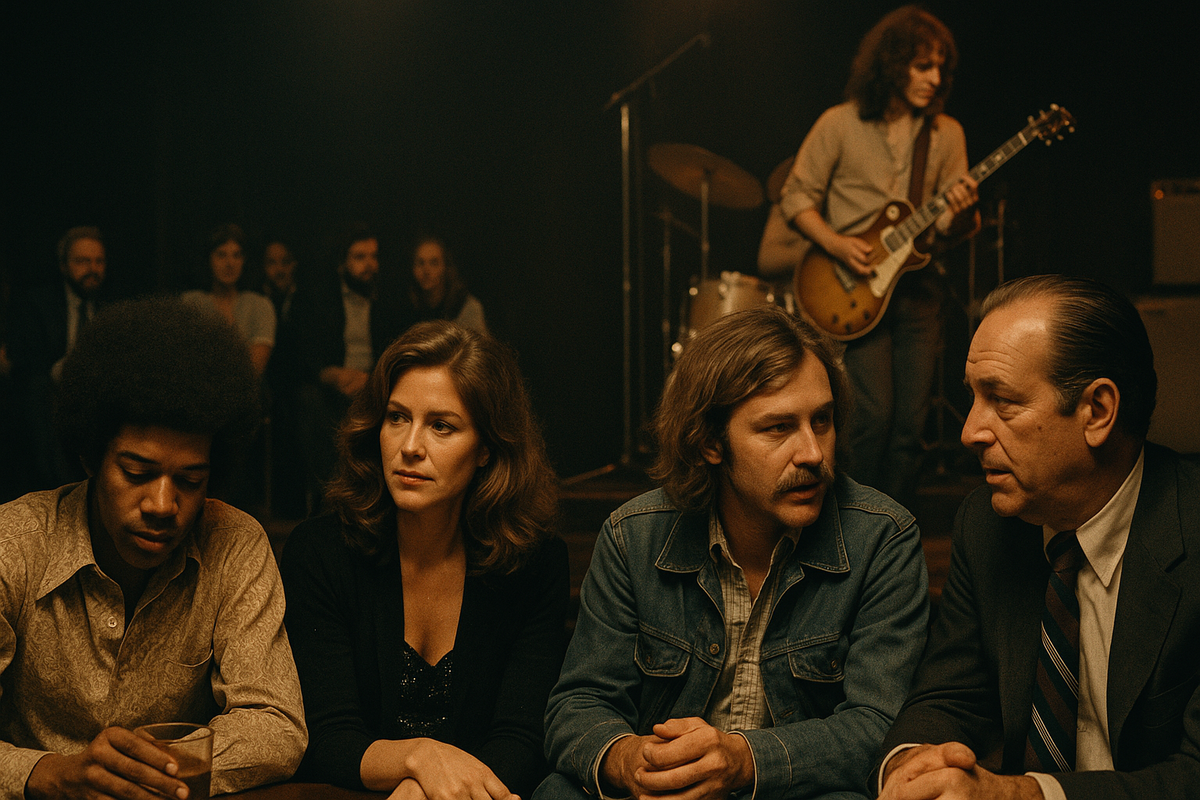
The Directory of Power: Inside Esquire's 1973 Map of the Music Industry
When rock became corporate and one magazine mapped the invisible machinery of fame
September 1973. A reader opens Esquire and finds something unexpected: a grid of faces staring back like a corporate directory. Michael Jackson, still a teenager. The New York Dolls in full glam regalia. Clive Davis, freshly ousted from Columbia Records. Yoko Ono. The Osmonds. Truman Capote.
This wasn't a concert lineup or a fan magazine centerfold. This was "Esquire's Heavy 100"—a ruthlessly democratic layout where superstars and their handlers occupied identical squares, each accompanied by sharp, knowing commentary. The message was clear: if you wanted to understand American music in 1973, you couldn't just listen to the radio. You had to know who owned the contracts, who shaped the images, and who controlled access to the stage.
Fifty years later, this issue remains one of the most revealing documents of its era—not because it celebrated rock stardom, but because it exposed the machinery behind it.
Archive Details
Publication: Esquire Magazine
Issue Date: September 1973
Feature: "Esquire's Heavy 100"
Historical Context: Watergate era, post-counterculture transformation, arena rock ascendancy
1973: The Year Rock Became Corporate
By the time Esquire published its Heavy 100, the idealism of the 1960s had curdled into something harder to define. Watergate consumed Washington. Vietnam was winding down without resolution. The counterculture had splintered into competing visions—some chasing transcendence, others simply chasing money.
Rock music mirrored this transformation. The Rolling Stones, Led Zeppelin, and Pink Floyd had graduated from theaters to stadiums, playing to audiences that numbered in the tens of thousands. Meanwhile, the Allman Brothers were reeling from tragedy: Berry Oakley had died in a motorcycle accident in November 1972, barely a year after Duane Allman's fatal crash. Southern rock was mourning its architects.
Elsewhere, the industry fractured along genre lines. The Osmonds sold millions to teenagers. Joni Mitchell and Kris Kristofferson wrote introspective, politically charged songs for adults. Bette Midler brought cabaret theatricality into the mainstream. The New York Dolls dressed like refugees from a Warhol film and played music that wouldn't be called "punk" for another few years.
It was messy, contradictory, and lucrative. And Esquire saw an opportunity to map the chaos.
Why Esquire Got It Right
Esquire wasn't a music magazine. It was a general-interest publication aimed at educated professionals who wanted to understand culture, not just consume it. By 1973, the magazine had built its reputation on sophisticated long-form journalism—the kind that treated politics, art, and style as interconnected forces.
The Heavy 100 reflected that sensibility. Instead of ranking artists by album sales or chart positions, Esquire constructed a power map:
The Artists
Michael Jackson, years before Thriller, already recognized as a talent destined for something larger. Joni Mitchell and Kris Kristofferson, pushing lyricism into new territory. Bette Midler, proving that performance could be as important as the song itself.
The Insiders
Managers, publicists, and producers—the people who built careers, negotiated deals, and decided which faces would appear on magazine covers.
The Executives
Clive Davis, recently dismissed from Columbia Records, stood as proof that the industry was volatile, political, and unforgiving. His inclusion wasn't nostalgia; it was a warning.
The Provocateurs
The New York Dolls, a band that most mainstream readers had never heard of, signaled something coming—a shift toward glam, chaos, and eventually punk.
The Cultural Crossovers: Truman Capote and Gloria Steinem appeared alongside musicians, reminding readers that music didn't exist in isolation. It was part of larger conversations about politics, gender, and art.
This wasn't fan service. It was reportage.
The Design That Changed the Game
The visual structure of the Heavy 100 was radical in its simplicity. No glossy portraits. No hierarchy. Just a grid of black-and-white headshots, each framed identically, accompanied by brief, incisive captions.
The layout made a statement: fame was fungible. A Grammy-winning artist and an unknown publicist occupied the same visual space because, in the machinery of culture, both mattered. The democracy of the design was its argument.
The captions balanced reverence with bite. Some entries celebrated genius. Others delivered sharp commentary on ego, excess, or declining relevance. All of them signaled that Esquire knew something the reader didn't—and was willing to share it, if the reader paid attention.
This wasn't a celebrity profile. It was a cultural audit.
What the Heavy 100 Reveals About 1973
Reading through the list today feels like opening a time capsule with the hindsight of history:
Michael Jackson was still part of the Jackson 5, years away from redefining pop music.
The New York Dolls would implode within a few years, but their influence would ripple through punk, glam, and alternative rock for decades.
Joni Mitchell and Kris Kristofferson represented the singer-songwriter movement at its peak—artists who treated albums as literature.
Clive Davis, ousted from Columbia, would return to the industry and reshape it again with Arista Records.
Yoko Ono and John Lennon were no longer just musicians. They were performance artists, activists, and cultural lightning rods.
Bette Midler was proving that theatricality belonged in mainstream music, paving the way for everyone from Madonna to Lady Gaga.
The Osmonds reminded everyone that while critics debated authenticity, teenagers were buying records by the millions.
Truman Capote and Gloria Steinem stood as proof that cultural influence crossed media boundaries.
Each entry captured not just who was famous in 1973, but how fame was manufactured, managed, and sold.
The Legacy of the Heavy 100
Half a century later, the Heavy 100 endures because it documented a truth that remains relevant: culture is a business. Artistry matters, but so do contracts, publicity campaigns, and boardroom decisions. The people who control access to audiences—managers, executives, media gatekeepers—shape what we hear, see, and remember.
Esquire understood this in 1973. By placing Michael Jackson beside his manager, by listing Clive Davis alongside the artists he once promoted, the magazine made the invisible visible. It taught readers to look beyond the stage.
Why This Issue Matters to Collectors
Cultural Map
A definitive snapshot of the music industry at a pivotal moment in American culture.
Early Documentation
Features artists like Michael Jackson and the New York Dolls years before they would dominate their respective genres.
Behind-the-Scenes Insight
Rare visibility into the managers, publicists, and executives who shaped careers but rarely appeared in public.
Design Legacy
Classic Esquire editorial design that captures the aesthetic sensibility of early 1970s photography and layout.
Explore the Original Archive
For collectors, historians, and music enthusiasts, the September 1973 issue of Esquire is essential reading. It captures the precise moment when rock music crossed over from rebellion to industry—and when magazines like Esquire were still willing to map that transformation with clarity and wit.
Browse Esquire Magazine CollectionWhether you're researching the rise of Michael Jackson, tracking the evolution of punk through the New York Dolls, or studying the power dynamics of the 1970s music business, this issue offers something no Wikipedia entry can: the primary source, unfiltered and intact.