
The Magazine That Proved Wrestlers Could Be Beautiful—And Changed Everything
Inside Pro Wrestling Illustrated's radical February 1999 feature that captured the Attitude Era at its peak
February 1999. The Monday Night Wars were scorching television ratings. Stone Cold Steve Austin was smashing beer cans and corporate authority in equal measure. The Rock was electrifying millions. And Pro Wrestling Illustrated—the sport's paper of record—did something radical.
They asked wrestling fans to stop counting pinfalls and start counting cheekbones.
"The 50 Most Beautiful People in Wrestling" hit newsstands that month like a folding chair to the head of conventional sports journalism. This wasn't a power rankings list. This wasn't a technical analysis of submission holds. This was PWI acknowledging what millions already knew: professional wrestling had exploded beyond the ring into full-blown celebrity culture, and its stars weren't just athletes—they were icons.
Twenty-five years later, this single issue remains one of the most telling documents of the Attitude Era's cultural conquest.
Archive Details
Publication: Pro Wrestling Illustrated
Issue Date: February 1999
Feature: "The 50 Most Beautiful People in Wrestling"
Cover Stars: Tammy Lynn Sytch, Shawn Michaels, Kevin Nash
Historical Context: Attitude Era peak, Monday Night Wars
When Wrestling Stopped Apologizing for Being Spectacular
By 1999, professional wrestling had shed its regional territory skin and emerged as a two-headed ratings monster. WWF's Raw and WCW's Nitro weren't just competing—they were waging a prime-time war that turned Monday nights into appointment television for over 10 million viewers combined.
The wrestlers themselves had transcended the business. Stone Cold sold millions in merchandise. Sable graced the cover of TV Guide. The Rock was fielding movie offers. Even wrestling's supporting players—managers, valets, international stars from Japan and Mexico—were being recognized as cultural forces rather than carnival curiosities.
PWI's beauty feature arrived at the exact moment wrestling reached maximum mainstream saturation. The magazine wasn't chasing a trend. It was documenting a revolution.
The Lineup: Where Kayfabe Met the Camera
What made the February 1999 feature remarkable wasn't just that PWI ranked beauty—it was how they framed it. Each profile blended character mythology with genuine admiration for physical presence, creating entries that read like casting notes for a blockbuster that was already playing in arenas worldwide.
Shawn Michaels appeared as the eternal "Heartbreak Kid"—part rebel athlete, part pop star, his charisma transcending his injuries and limited ring time.
Sable dominated her section as both glamorous and powerful, embodying late-90s wrestling's fusion of athleticism and sex appeal. By February 1999, she wasn't just WWF's breakout diva—she was outselling male wrestlers in merchandise.
Steve Austin showed up in a tuxedo, somehow looking both formal and unmistakably "Stone Cold." The contrast captured everything about his appeal: blue-collar authenticity wrapped in mass-market iconography.
Dean Malenko proved the list had range. His inclusion celebrated quiet intensity—a reminder that beauty in wrestling could mean calculated menace and technical respect, not just flash.
Ken Shamrock brought UFC legitimacy to the page. "The World's Most Dangerous Man" translated raw fighter credibility into crossover star power.
Elizabeth earned recognition as the "First Lady of Wrestling," her elegance outlasting her peak years managing Randy Savage. PWI honored legacy alongside current heat.
The Rock received a profile dripping with inevitability. Already positioned as one of the best-looking men in the business, his write-up read like a prophecy of the movie stardom waiting just around the corner.
Ric Flair appeared as the "Nature Boy"—timeless, classy, compared to cultural icons. At 50 years old, Flair's inclusion proved beauty wasn't youth. It was confidence, tradition, and knowing how to wear a suit.
The list stretched across gender, nationality, and archetype. International stars like Hayabusa represented wrestling's global reach. Profiles of figures like Evan Karagias (wrestler-turned-model) and Tammy Lynn Sytch showed how wrestling talent moved fluidly between industries.
The Visual Grammar of an Era
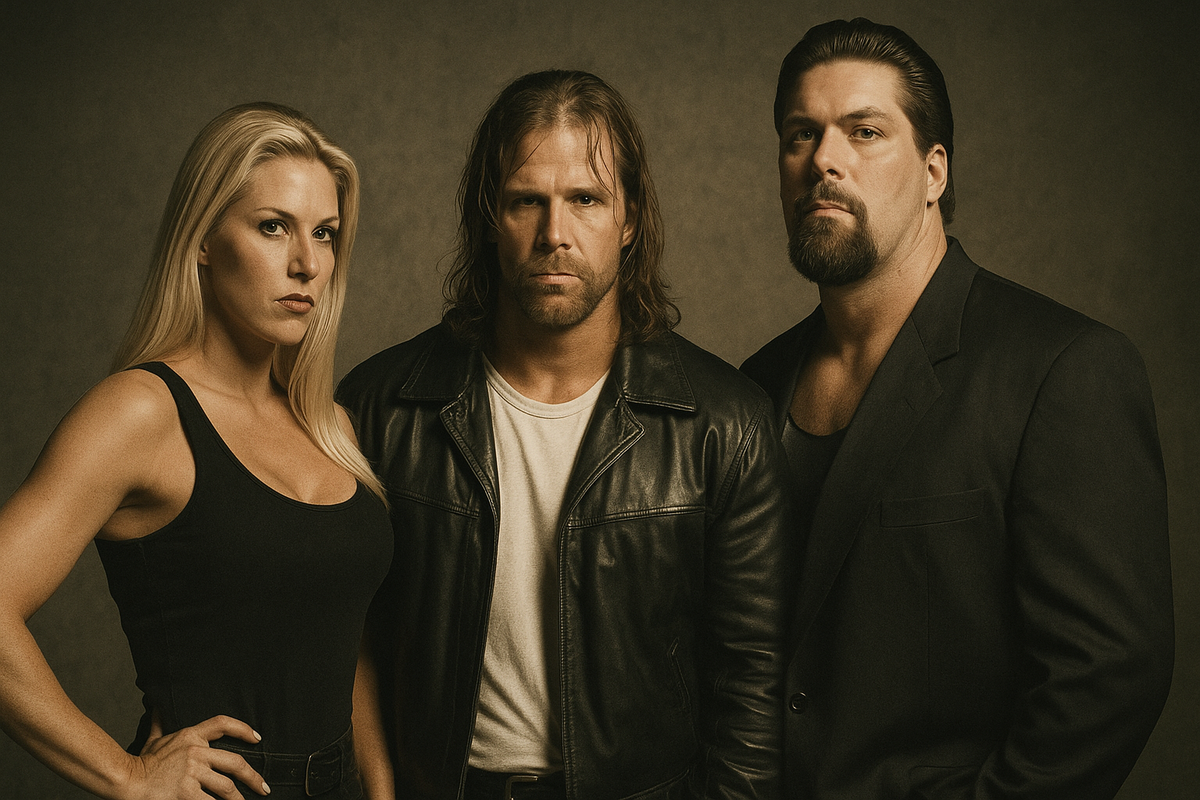
The cover alone—spotlighting Tammy Lynn Sytch, Shawn Michaels, and Kevin Nash—signaled PWI's intent. This wasn't a wrestling magazine trying to look like a beauty magazine. This was a wrestling magazine asserting that its subjects belonged in that visual language.
Inside, the photography ranged from posed glamour (Sable in jeans and a black top) to edgy studio portraits (Shawn Michaels, Hunter Hearst Helmsley) to candid-style shots (Ric Flair adjusting his suit). The editorial voice struck a balance: witty, occasionally tongue-in-cheek, but never cynical. PWI celebrated without mocking.
The result blurred the line between sports journalism and pop culture publication—a genre-bending act that mirrored wrestling itself.
What the Issue Captured That Others Missed
This wasn't PWI's first experimental feature, but it may have been their most culturally astute. By ranking beauty, they documented several seismic shifts happening in real time:
The Mainstreaming of Wrestling Presentation
These weren't grapplers in singlets. These were performers who understood lighting, angles, and image control.
The Rise of Character-as-Brand
Each entry reinforced that a wrestler's value extended far beyond win-loss records. Presence mattered. Charisma mattered. Looking like a star mattered.
Wrestling's Claim on Sex Appeal
For years, wrestling had been dismissed as lowbrow spectacle. This issue said: our performers can stand beside any Hollywood headshot and hold their ground.
International Legitimacy
Including stars like Hayabusa wasn't tokenism—it was acknowledgment that beauty and charisma transcended American wrestling's borders.
The Magazine That Saw Wrestlers as Stars First
Pro Wrestling Illustrated built its reputation on the PWI 500, serious match coverage, and treating wrestling with journalistic respect during decades when few others would. The "50 Most Beautiful" feature didn't contradict that legacy—it expanded it.
The magazine understood that wrestling's power came from spectacle and substance, from legitimate athleticism and theatrical performance. By celebrating beauty alongside technical skill, PWI acknowledged the full scope of what made the Attitude Era unstoppable.
Other wrestling magazines covered storylines. PWI covered culture.
Why Collectors Still Hunt This Issue
Historical Precision
Documents the Attitude Era at peak velocity—before the WCW collapse, before Austin's neck forced his retirement, before The Rock left for Hollywood. Both promotions are featured as equals, which would never happen again.
Unique Editorial Angle
PWI's standard coverage focused on rankings, matches, and storylines. "The 50 Most Beautiful People in Wrestling" stands alone in their archive as a pure celebration of star power.
Cultural Crossover Evidence
Profiles of crossover figures—Shamrock from UFC, Karagias from modeling—prove wrestling wasn't borrowing from mainstream entertainment. It was mainstream entertainment.
Visual Archival Value
The mix of glamour photography and character-based portraits makes this one of PWI's most visually distinctive issues. You can't replicate this aesthetic with digital scans or online archives.
For Collectors and Historians
The February 1999 issue exists as both artifact and analysis—a magazine that didn't just report on wrestling's mainstream explosion but participated in it. Its glossy pages preserve a moment when wrestlers were magazine cover models, when beauty lists included submission specialists and hardcore brawlers, when the entire industry moved with the confidence of an art form that had finally earned its recognition.
For those building collections of 20th-century wrestling history, this issue occupies essential territory: the document that proved professional wrestling's stars could compete for attention on any cultural stage—and win.
Explore the Complete Archive
Browse original Pro Wrestling Illustrated magazines—from the territorial era through the Attitude Era and beyond. These aren't reprints. They're the actual magazines that documented wrestling's transformation from regional attraction to global phenomenon.
Browse Pro Wrestling Illustrated Magazine Collection