
When Life Magazine Showed America That Hitler Could Bleed
How the January 12, 1942 issue documented the first Nazi defeat—and gave a shaken nation proof that the war could be won
The magazine hit doorsteps on January 12, 1942. Pearl Harbor was five weeks old. American mothers were still crying. And inside this issue of Life, splashed across two-page spreads in brutal black and white, was something the world hadn't seen in over two years of war: German guns lying wrecked in the snow.
Not retreating. Wrecked.
For a nation that had just watched its Pacific fleet burn, the timing was everything. Hitler's Wehrmacht—the machine that had rolled over Poland, France, and the Low Countries without breaking stride—was now stalled in the frozen mud outside Moscow. And Life's photographers had been there to document it.
This wasn't propaganda. It was proof.
The Week the Blitzkrieg Stopped
By December 1941, German forces had driven so deep into Soviet territory that forward units could see the spires of the Kremlin through their field glasses. In Washington and London, military planners were already discussing what a Nazi-controlled Moscow would mean for the war. Most assumed it was inevitable.
Then General Georgy Zhukov launched his counteroffensive.
Temperatures dropped to 40 below zero. German tanks wouldn't start. Weapons seized. Supply lines stretched to the breaking point across a thousand miles of steppe. The Panzergruppen that had terrorized Europe found themselves fighting not just the Red Army, but physics itself.
The Battle of Moscow became the first major German defeat of World War II. It didn't end the Eastern Front—three more years of unimaginable carnage lay ahead—but it shattered something more important than territory: the myth that the Wehrmacht was unstoppable.
Life's January 12 issue captured this inflection point almost in real time, while the snow was still fresh on the abandoned equipment.
Historical Context
Issue Date: January 12, 1942
Featured Battle: Soviet Counteroffensive at Moscow, December 1941
Key Figure: General Georgy Zhukov, Soviet Commander
Strategic Significance: First major German defeat of World War II
Archive Source: Life Magazine, Official Wartime Documentation
Why This Issue Changed War Reporting
Before television, before embedded correspondents with satellite uplinks, there was Life Magazine. Its editorial philosophy was radical in its simplicity: show, don't tell. At a time when most Americans had never left their home state, Life's photographers brought the world into their living rooms at 10 cents a copy.
The "Russian Courage and Cold Rout the Nazis" feature was Life at its most essential.
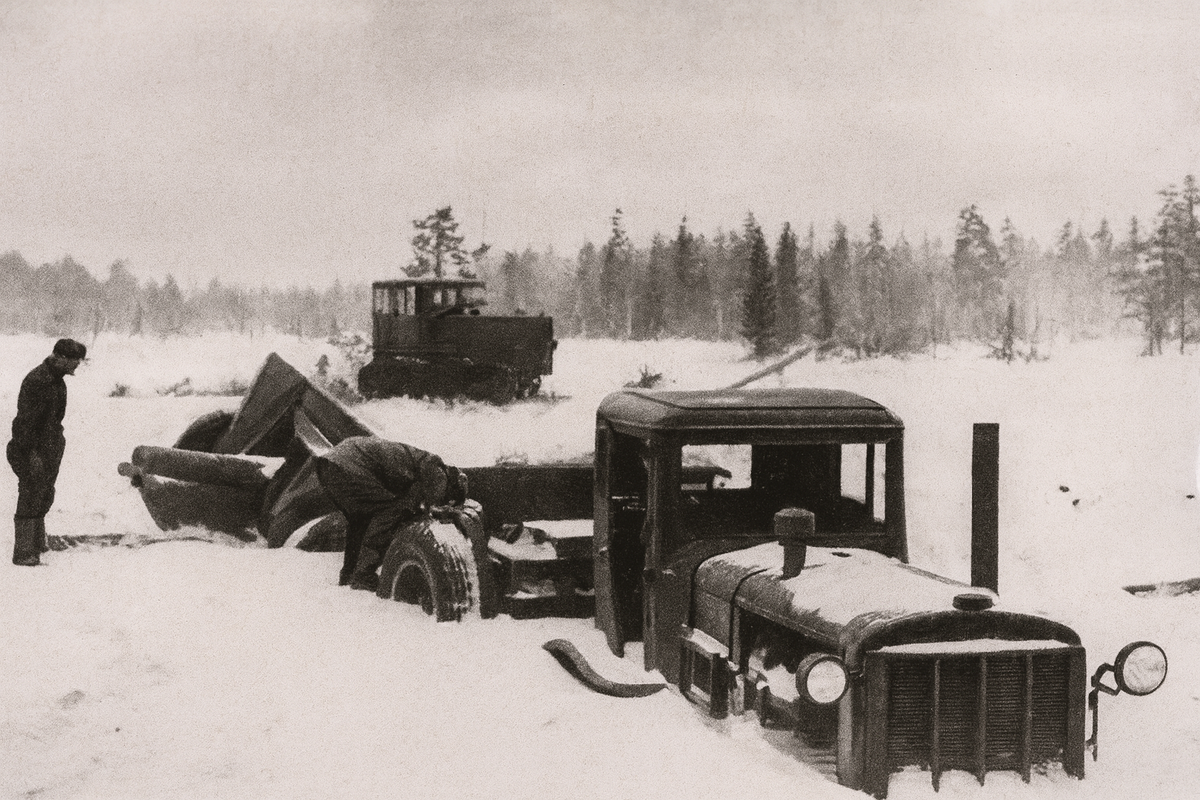
The photography wasn't staged. German 75mm howitzers lay on their sides, treads blown off by Soviet tanks. A Stuka dive bomber nose-down in frozen earth, its swastika still visible on the tail. Anti-tank guns captured intact, now turned against their former owners. These images carried an authority no written dispatch could match.
The human element cut through the propaganda. Soviet cavalry charging across open ground. Artillery crews manning massive 8-inch mortars in positions dug from permafrost. Supply wagons hauling ammunition through waist-deep snow. And in one remarkable shot: Red Army soldiers grinning as they pulled equipment from captured German vehicles, their faces wind-burned but defiant.
The tactical analysis taught as it informed. Life published aerial battlefield diagrams showing exactly how Soviet tank columns had blunted German advances. Readers could trace defensive lines, study artillery placements, understand why winter itself had become a weapon. The magazine treated its audience as intelligent citizens who deserved to understand the mechanics of modern warfare.
For families gathered around kitchen tables in Omaha and Atlanta and Portland, these spreads became a ritual—a way to comprehend a conflict that felt both impossibly distant and terrifyingly close.
The Cover That Set the Tone
The January 12 cover was stark even by Life's standards: snow-covered equipment half-buried in a Russian forest, the landscape reduced to white and shadow. No heroic soldiers. No waving flags. Just the brutal arithmetic of winter warfare, captured in a single frame from November's early blizzards.
It was anti-glamour. It was reality.
Inside, the visual storytelling unfolded across carefully sequenced spreads:
Two-page panoramas of Soviet tanks advancing across ice fields, their silhouettes low and predatory against the winter sky
Close-up documentation of artillery deployment, showing how crews repositioned massive guns under fire
Integrated maps and photographs that transformed abstract military movements into readable narratives
This wasn't the illustrated patriotism of The Saturday Evening Post. Life insisted on unfiltered documentation. The magazine's war coverage operated on a principle that would seem obvious today but was revolutionary in 1942: American citizens could handle the truth.
Ten Elements That Made History
The article's strength lay in its systematic coverage of a chaotic battlefield:
Each element reinforced the others, building a case that transcended individual photographs.
The Permanence of Print
Life's wartime coverage endures because it was designed to last. These weren't disposable news updates—they were deliberate acts of historical documentation.
The photographs function as primary sources, studied by military historians and doctoral students decades later.
The editorial voice captured not just facts but atmosphere: the cold, the fear, the grinding determination of nations fighting for survival.
The physical object itself—glossy pages, substantial paper stock, careful typography—was meant to be kept, stored in attics, passed down through generations.
That permanence makes vintage Life magazines particularly valuable for collectors who understand that history isn't just dates and names. It's the texture of experience, preserved in ink and paper.
Why Collectors Hunt This Issue
Published in the immediate aftermath of Pearl Harbor, it captured the exact moment when the war's momentum began its slow, terrible shift.
These images documented Nazi defeat with a clarity that no government communiqué could provide.
For Americans facing years of rationing and casualty lists, this issue offered the first tangible proof that victory was possible.
World War II issues covering Pearl Harbor, Moscow, D-Day, and V-E Day form the backbone of serious Life collections.
Owning this issue means possessing the same pages your grandparents studied by lamplight, trying to understand a world being torn apart and remade. It's not nostalgia. It's direct connection to the lived experience of total war.
The Larger Archive
The January 12, 1942 issue represents one moment in Life's decades-long project of documenting the 20th century. From the Depression through the Space Age, the magazine was there—at presidential assassinations and Hollywood premieres, civil rights marches and moonwalks.
Browse Life Magazine CollectionWhether you're building a comprehensive collection, researching specific historical periods, or honoring family members who lived through these events, original Life magazines offer something digital archives cannot replicate: the physical artifact of history as it was first understood.
Coda
The January 12, 1942 issue of Life Magazine delivered more than news. It delivered evidence at a moment when evidence mattered desperately.
Through photographs of destroyed German equipment, resilient Soviet soldiers, and the merciless Russian winter, Life provided proof that Hitler's armies could be stopped. Not hoped. Not wished. Proven.
Eight decades later, this issue remains what it was then: a window into history made by ordinary people facing extraordinary darkness. The pages still speak. The images still testify.
For anyone who understands that history lives not in abstractions but in artifacts, this magazine is where the war's mythology first cracked—preserved in black and white, permanent as winter.