
The Last Frontier: When Sam Walton Bet Everything on the Northeast
How Forbes Magazine documented the retail titan's audacious gamble to conquer America's most resistant market—and predicted the future of shopping in 1990
In July 1990, Sam Walton made a prediction so audacious that even seasoned retail analysts raised their eyebrows. Standing before shareholders at Walmart's annual meeting, the 72-year-old founder declared his company's revenues would quintuple to $125 billion within a decade. The forecast wasn't idle boasting—it was a war plan. And Forbes Magazine was there to document the opening salvo.
The July 9, 1990 issue of Forbes captured Walton at an inflection point. His empire, built store by store from a single Bentonville variety shop, had conquered the South and Midwest. Now he was staring down the most formidable retail market in America: the Northeast. New Jersey. Pennsylvania. New York. Whispers even suggested New England. This wasn't expansion—it was invasion.
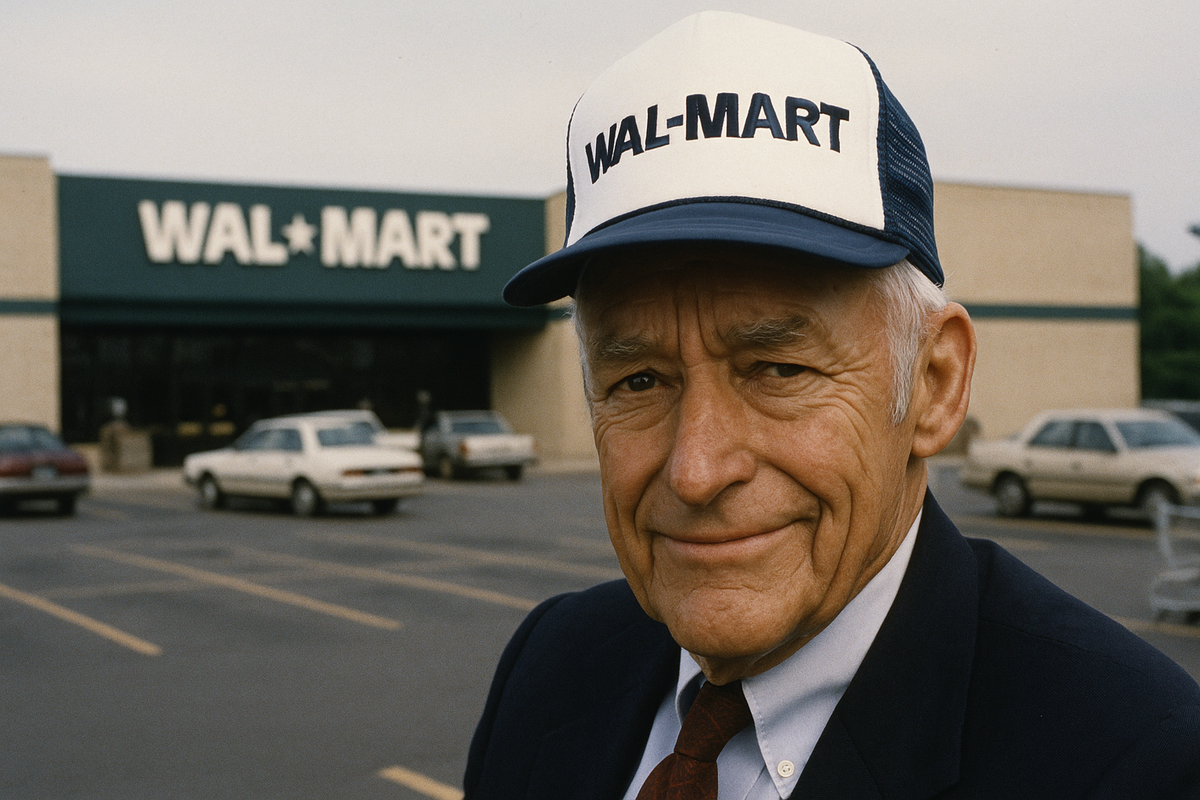
Forbes framed the moment perfectly. In the "Faces Behind the Figures" section, under the clever headline "Expand it again, Sam," the magazine profiled a billionaire who still wore a Walmart cap and drove his own pickup truck. The close-up photograph—weathered smile, determined eyes—captured both the folksy charm and the relentless ambition that made Walton a cultural icon. He looked like your neighbor. He thought like Napoleon.
Historical Record
Historical Figure: Sam Walton, Founder of Walmart
Issue Date: July 9, 1990
Archive Source: Forbes Magazine
Section Editor: Jason Zweig, "Faces Behind the Figures"
Featured Article: "Expand it again, Sam"
Why This Moment Mattered
The timing couldn't have been more precarious or more pregnant with possibility. The United States was sliding toward the 1990-91 recession. Credit was tightening. Consumers were skittish. And across the country, department stores—those once-invincible anchors of American shopping culture—were collapsing like dominoes. Bloomingdale's. Zayre. Their bankruptcies left vacant real estate scattered across prime retail corridors.
Walton saw opportunity where others saw wreckage.
The Northeast had always been fortress territory for traditional retailers—high overhead, entrenched competition, and a cultural resistance to discount shopping that bordered on snobbery. Northeastern consumers shopped at Macy's and Saks, not at stores with "Mart" in the name. Breaking into these markets required more than capital. It required cultural warfare.
But Walton wasn't interested in half-measures. As Forbes reported, this wasn't "just a deal or two." Walmart was securing sites aggressively, snapping up the bones of failed department store chains. Real estate executives confirmed the company's methodical advance across state lines. Construction timelines were set. Regulatory approvals were grinding forward. The machine was in motion.
Forbes' Signature Blend: Numbers and Narrative
What makes this issue valuable to collectors isn't just the subject—it's the execution. Forbes, under the editorial eye of Jason Zweig (who would later become one of Wall Street Journal's most influential voices), practiced a rare form of business journalism. The magazine didn't just report earnings and projections. It humanized capitalism.
The article balanced hard data—revenue forecasts, construction schedules, square footage acquisitions—with Walton's own voice. His quotes crackled with confidence but never tipped into arrogance. He understood the risks. Regulatory delays. Cultural headwinds. The possibility that Northeastern shoppers simply wouldn't embrace his brand of no-frills efficiency.
This blend separated Forbes from competitors like Fortune or BusinessWeek. Where others provided spreadsheets, Forbes provided stories. And in 1990, the story was about an aging maverick refusing to rest on his laurels, betting his legacy on one final conquest.
The Prediction That Proved Prophetic
History vindicated Walton's audacity. By 2000, Walmart's revenues exceeded his $125 billion projection. The Northeast, once considered impenetrable, fell. The discount revolution Walton pioneered didn't just disrupt retail—it redefined American consumer culture entirely.
But in July 1990, none of that was guaranteed. The Forbes article captured the uncertainty, the calculated risk, the sheer force of will required to challenge entrenched powers. That's what makes this magazine issue more than a business profile. It's a snapshot of leadership at its apex—ambition meeting moment, vision colliding with reality.
What the Magazine Reveals
At 72, Walton was outworking executives half his age, proving that vision and energy defy chronology when matched with purpose.
Every bankruptcy became a Walmart expansion site. Forbes documented how retail failures opened doors for aggressive competitors.
The Northeast resisted discount shopping with cultural snobbery, reminding readers that market dominance is never guaranteed.
Bold predictions, when grounded in execution, become self-fulfilling prophecies. Walton's $125 billion forecast proved visionary.
Why Collectors Treasure This Issue
Few entrepreneurs have reshaped American life as thoroughly as Sam Walton. Any primary source documenting his strategic thinking carries immense historical weight.
This issue captures the exact moment Walmart transitioned from regional juggernaut to inevitable national monopoly. You can almost hear the tectonic plates shifting.
Walton's $125 billion forecast offers a masterclass in visionary thinking. Holding this magazine means holding his promise before it came true—when doubt still lingered.
The "Faces Behind the Figures" section represented Forbes at its journalistic peak, blending personality with economics in ways that elevated business reporting to literature.
Published months before recession struck, the issue documents how companies positioned themselves during uncertainty—a lesson that never ages.
For historians studying retail evolution, investors analyzing disruptive strategy, or collectors pursuing artifacts of business culture, this isn't reading material—it's evidence.
Discover the Archive
Browse the full collection of original Forbes magazines and decades of economic history, leadership profiles, and entrepreneurial vision captured in print. Each issue is a time capsule—waiting to reveal the moments when the future was decided.
Browse Forbes Magazine Collection