
The 224-Vote War: When Wrestling Fans Decided the Sport's Future
How the March 1985 Pro Wrestling Illustrated Achievement Awards captured the exact moment wrestling's identity hung in the balance
In March 1985, over 65,000 wrestling fans cast ballots that would never appear in any arena. No referee counted them. No promoter could fix them. And when the results were tallied in the pages of Pro Wrestling Illustrated, the margin of victory was so narrow it could have fit on a single index card: 224 votes.
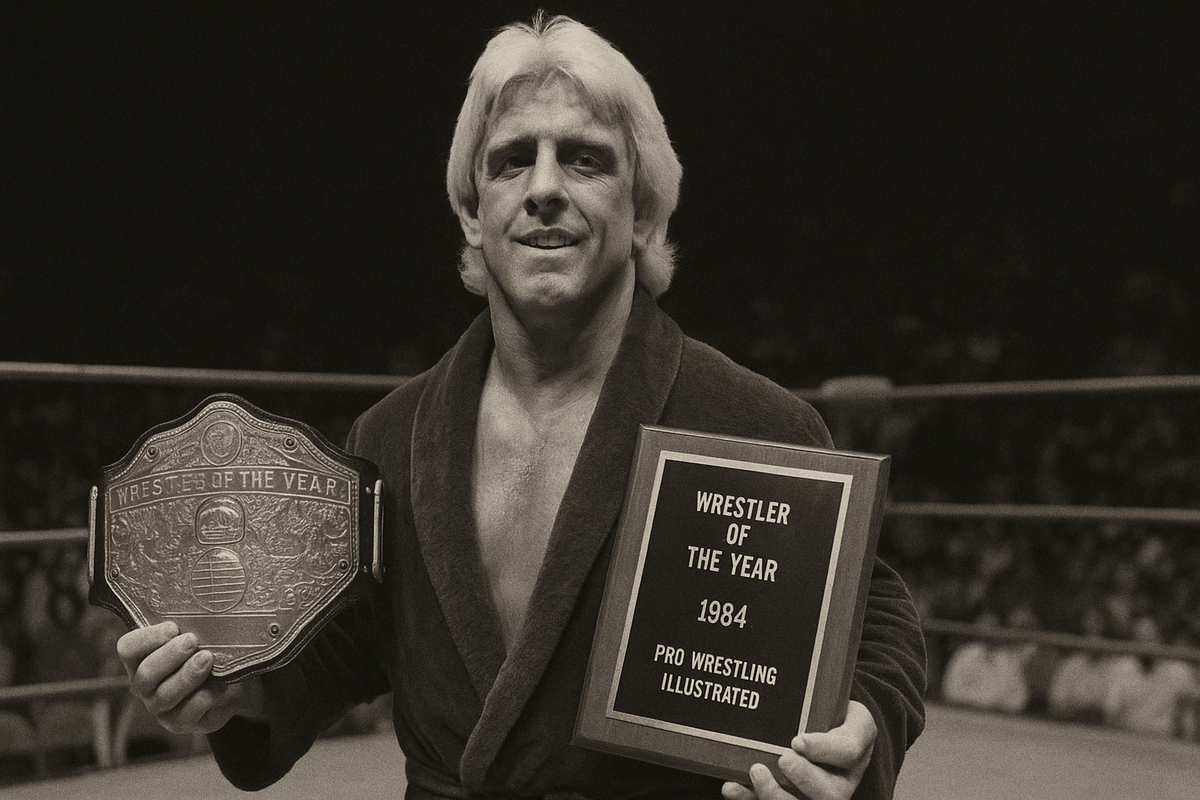
Ric Flair had defeated Hulk Hogan for Wrestler of the Year—but barely. And in that razor-thin margin lay the entire story of professional wrestling's identity crisis.
Archive Details
Publication: Pro Wrestling Illustrated
Issue Date: March 1985
Feature: PWI Achievement '84 Awards
Historical Significance: The closest Wrestler of the Year vote in PWI history
Total Ballots Cast: Over 65,000
The Ballot That Mapped a Civil War
The PWI Achievement '84 Awards weren't just a popularity contest. They were a referendum on what wrestling was—and what it was becoming.
Flair's 12,965 votes represented the NWA's old guard: technical mastery, territorial respect, and champions who bled for the belt. Hogan's 12,741 votes signaled the WWF's insurgency: national television, crossover celebrity, and the rise of Hulkamania as a pop culture phenomenon. Behind them, Kerry Von Erich pulled 11,963 votes—a testament to Texas wrestling's emotional stranglehold on its fans—while Rick Martel's 11,345 votes proved the AWA still had a pulse, even as the ground shifted beneath it.
This wasn't a poll. It was a snapshot of an industry at war with itself.
Ric Flair: 12,965 Votes
The NWA's resilience—technical excellence, territorial respect, and a champion who refused to surrender the belt without a fight.
Hulk Hogan: 12,741 Votes
The WWF's revolution—national reach, mainstream celebrity, and the unstoppable force of Hulkamania.
Kerry Von Erich: 11,963 Votes
Texas wrestling's emotional power—regional loyalty that could still compete with national promotions.
Rick Martel: 11,345 Votes
The AWA's last stand—proof that traditional wrestling still commanded respect, even as its era ended.
Flair's Year: Triumph Through Humiliation
To win by 224 votes is to win on fumes. And Flair's 1984 had been a year of survival, not dominance.
In May, he lost the NWA World Heavyweight Championship to Kerry Von Erich at Texas Stadium in front of a near-religious crowd. Three weeks later, in Japan, he clawed it back. For the rest of the year, he defended the title across territories like a man proving a point—bloodied in one photo spread, triumphant in another, always inches from losing everything.
Fan mail captured the ambivalence. Steve Jackson of St. Louis wrote: "Sure, he lost the title to Kerry Von Erich, but he won it back again three weeks later in Japan. He was determined to regain the title, the mark of a true champion." That single sentence encapsulated Flair's appeal: You didn't have to like him. You had to respect that he refused to quit.
Flair wasn't the most beloved wrestler of 1984. He was the most undeniable.
What the Numbers Revealed
The vote totals weren't just statistics—they were territorial maps.
Hulk Hogan (12,741 votes): His near-miss wasn't a loss. It was a warning shot. Hogan had only held the WWF Championship since January 1984, yet he'd nearly overtaken a man who'd been the face of the NWA for years. The gap wasn't closing—it was already closed.
Kerry Von Erich (11,963 votes): His three-week reign as NWA Champion had been one of the most emotionally charged moments in wrestling history. That he finished third—ahead of the AWA's champion—proved that regional passion could still rival national reach.
Rick Martel (11,345 votes): The AWA World Champion's fourth-place finish was both impressive and ominous. It was the last time an AWA wrestler would place this high in a national poll. The promotion was running on legacy, and the fuel gauge was nearing empty.
Each vote was a proxy for a vision of wrestling's future. And the fans were split almost evenly.
How PWI Made It Feel Real
Pro Wrestling Illustrated understood something crucial: Wrestling fans wanted to believe their opinions mattered. And the March 1985 issue delivered that belief with the seriousness of a presidential election.
The cover treated the Achievement Awards like breaking news. Inside, the photography told competing stories—Flair bloodied and airborne off the turnbuckle in one shot, polished and holding his championship plaque in another. Studio portraits of Hogan, Von Erich, and Martel accompanied their vote totals, presented with the transparency of a sports almanac.
This wasn't hype. It was journalism that respected kayfabe without drowning in it. PWI gave wrestling the aesthetic of legitimacy—and in doing so, made fans feel like stakeholders in the sport's narrative.
Why This Issue Still Matters
Today, the March 1985 Pro Wrestling Illustrated is more than a collectible. It's evidence.
Evidence of the closest Wrestler of the Year race PWI ever recorded. Evidence of the last moment when the NWA, WWF, and AWA commanded relatively equal fan loyalty. Evidence that wrestling's most passionate debates once happened through the mail, not on message boards.
For collectors, this issue captures a crossroads. The world it documented—territorial wrestling, fan-voted legitimacy, champions who worked 300 nights a year—would be gone within five years. Flair's narrow victory wasn't just his triumph. It was the NWA's last stand.
Collector Significance
Historic Voting Race
The closest Wrestler of the Year decision ever recorded by PWI—a 224-vote margin that has never been matched.
Iconic Photography
Images of Flair both bloodied and victorious, capturing the drama and duality of wrestling's golden age.
Cross-Promotion Era
The last time WWF, NWA, and AWA all shared relatively equal fan support—a moment frozen in time.
Primary Source Material
Direct evidence of how wrestling's most passionate audiences shaped the narrative before the internet era.
Own the Crossroads
From Flair's bloodied resilience to Hogan's unstoppable rise, the March 1985 issue doesn't just report history—it freezes the exact moment when wrestling's future hung in the balance.
Browse PWI Magazine Collection