
The Night New York Talked Back
Inside The New Yorker's January 28, 1928 Issue
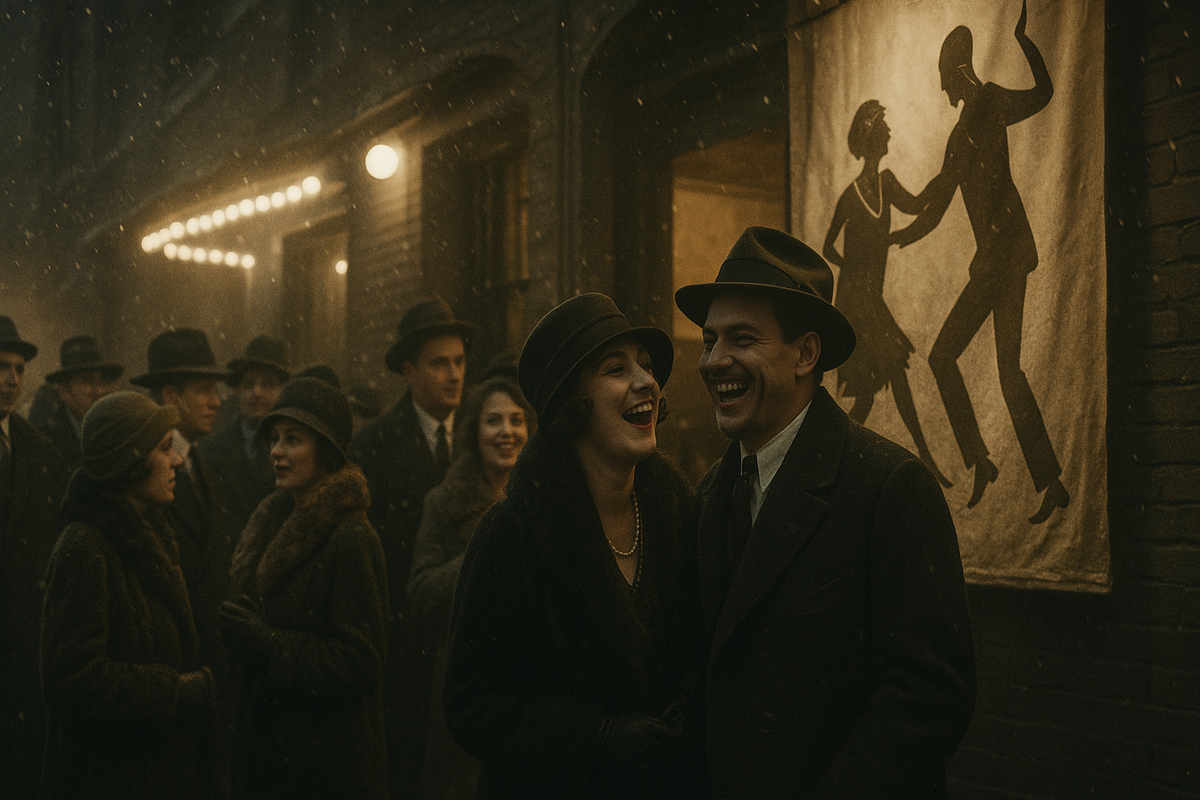
Picture this: It's a bitter January night in 1928. Snow dusts the shoulders of men in overcoats streaming out of speakeasies. Somewhere in Harlem, a trumpet wails. On a Midtown newsstand, a magazine cover stops you cold—revelers dancing in a winter whirl, drawn with the kind of sophisticated irony that makes you feel like you're in on the joke.
You buy it. You open it. And suddenly, you're not just reading about New York. You're inside it.
The January 28, 1928 issue of The New Yorker wasn't journalism. It was eavesdropping elevated to an art form.
When Satire Had a Speakeasy Address
By 1928, The New Yorker had been alive for barely three years, but it had already cracked the code that eluded every other magazine in America: how to make sophistication feel effortless.
This wasn't the moralizing of the old guard literary journals. It wasn't the yellow screech of tabloids. It was something else entirely—a voice that assumed you were clever enough to get the joke, cosmopolitan enough to recognize the reference, and jaded enough to appreciate the irony of modern life.
Founded in 1925 by Harold Ross, the magazine set out to be "not for the old lady in Dubuque"—a mission statement that was equal parts arrogance and aspiration. Ross wanted a publication that captured the rhythm of New York, the city that was remaking American culture in real time. By January 1928, he was succeeding.
The Roaring Twenties were still roaring, but the note had changed. The Harlem Renaissance was rewriting American literature from the inside out. Broadway was a glittering factory of wit. Prohibition had transformed drinking from a habit into a subversive art. And lurking just over the horizon—though no one knew it yet—was the economic cataclysm that would end the party forever.
The New Yorker captured that moment with surgical precision. The January 28, 1928 issue is a time capsule of that precarious exuberance.
Archive Details
Publication: The New Yorker
Issue Date: January 28, 1928
Cover Artist: Haupt
Historical Context: Final years of the Roaring Twenties, one year before the 1929 stock market crash
Signature Section: "The Talk of the Town"
The Architecture of "Talk of the Town"
Flip past Haupt's whimsical cover illustration—that snow-dusted scene of nocturnal revelry—and you land in "The Talk of the Town," the section that became the magazine's signature.
"Talk" didn't report the news. It dissected the mood.
Where newspapers told you what happened, "Talk" told you how people reacted, what they wore while reacting, and what the whole spectacle revealed about the absurdity of being modern. It was gossip without the cruelty, reporting without the tedium, cultural criticism without the lectern.
The January 28 issue delivered exactly this alchemy. The section moved like a cocktail party conversation—darting from overblown theatrical productions to the eccentricities of high society, from publicity stunts gone wrong to the small, telling details of city life. A cab ride. A shop window. An overheard remark.
Every anecdote was brief, but together they formed a mosaic of a city in motion. Readers recognized their own world reflected back with a wink and a raised eyebrow. This wasn't documentation. It was recognition.
The Anatomy of a Moment
What made the January 28, 1928 "Talk of the Town" so potent was its range:
Theatrical Spectacle
Gentle mockery of audiences who took passing entertainments with ponderous seriousness. The city's appetite for drama, both on stage and off, was fair game.
High Society
Prominent figures sketched with affection and acid in equal measure, their eccentricities exposed, their desperate maintenance of public image laid bare.
Everyday Irony
Failed publicity stunts, passing fads, moments that would vanish from memory within a week—all preserved in prose that made them matter.
City Texture
Granular details readers had just experienced themselves, now refracted through The New Yorker's distinctive lens.
This was the literary equivalent of standing on a street corner and watching the whole city perform itself. Witty. Revealing. Unmistakably New York.
Why This Issue Became a Collector's Holy Grail
Nearly a century later, the January 28, 1928 issue of The New Yorker commands serious attention from collectors, and not just because of nostalgia.
It captured the precipice. Published in the final years of the Roaring Twenties, this issue documents the last moments of American optimism before the 1929 crash redrew every map. That historical timing transforms it from a magazine into a witness.
It contains the magazine's DNA. "The Talk of the Town" was already becoming The New Yorker's defining feature—the voice that would influence American magazine writing for the next century. Early issues that showcase this section aren't just collectibles. They're origin documents.
The cover is art. Haupt's illustration represents the visual identity that made The New Yorker instantly recognizable. Early covers are now studied by design historians and sought by art collectors as standalone works.
It's irreplaceable cultural evidence. This issue doesn't just record events. It records how people thought—the jokes they laughed at, the details they noticed, the way they navigated their own modernity. For scholars of modernism, social history, and media, that's invaluable.
Vintage New Yorker magazines aren't just old reading material. They're original artifacts of cultural intelligence.
The Window That Stayed Open
What makes these early issues so compelling in 2026 isn't just their historical importance. It's their vitality.
The voice that Ross and his writers created in 1928 still crackles. The observations still land. The irony still bites. Reading "Talk of the Town" from January 28, 1928 isn't an act of academic archaeology—it's genuinely entertaining.
That's the miracle of great periodical writing: it transcends its moment even as it captures it perfectly.
While newspapers give us the what and when, The New Yorker gave us the how it felt—the texture of lived experience, the sharp edge of satire, the sly recognition that modern life is ridiculous and magnificent in equal measure.
This is why serious collectors pursue these issues. They're not buying nostalgia. They're buying proof that wit, observation, and style are timeless.
Collector Significance
Historical Timing
Published in the final years of the Roaring Twenties, capturing American culture at its zenith before the 1929 crash transformed everything.
Cultural DNA
"The Talk of the Town" was becoming the defining voice of The New Yorker—early issues are origin documents of American magazine writing.
Artistic Value
Haupt's cover illustration represents the visual identity that made the magazine iconic. Early covers are collectible art in their own right.
Research Material
Invaluable primary sources for scholars of modernism, social history, Jazz Age culture, and American media evolution.
For the Collector, the Historian, the Obsessive
If you collect cultural artifacts, study American modernism, or simply recognize that some magazines transcended their medium to become literature, original New Yorker issues from the 1920s deserve your attention.
These aren't reprints or digital scans. They're the physical objects that sat on newsstands in 1928, that were folded into coat pockets, that were read on subway cars by people who didn't know they were living through history.
Each issue is a direct line to the past—a window into the wit and sophistication of Jazz Age America.
Explore the Archive
Whether you're a seasoned collector building a definitive archive, a literature professor hunting primary sources, or someone honoring the cultural memory of a vanished era, these magazines offer something rare: unmediated access to the voice of their time.
Browse The New Yorker Magazine CollectionThe Last Word
The January 28, 1928 issue of The New Yorker remains one of the sharpest artifacts of its era—not because it recorded history, but because it captured consciousness.
It preserved the mood of a city on the edge of transformation. The eccentricities of its people. The contradictions of their lives. The way wit and observation could turn the everyday into art.
Holding this issue is like listening in on 1928 itself—the snowy streets, the knowing laughter, the theatrical excess, the social satire that cut without drawing blood.
That world is gone. But through The New Yorker, it speaks still—with style, irony, and perfect pitch.