
The Instant Death Entered American Living Rooms
How Robert Capa's photograph in the July 12, 1937 issue of Life magazine changed war photography forever and brought the Spanish Civil War into every American home
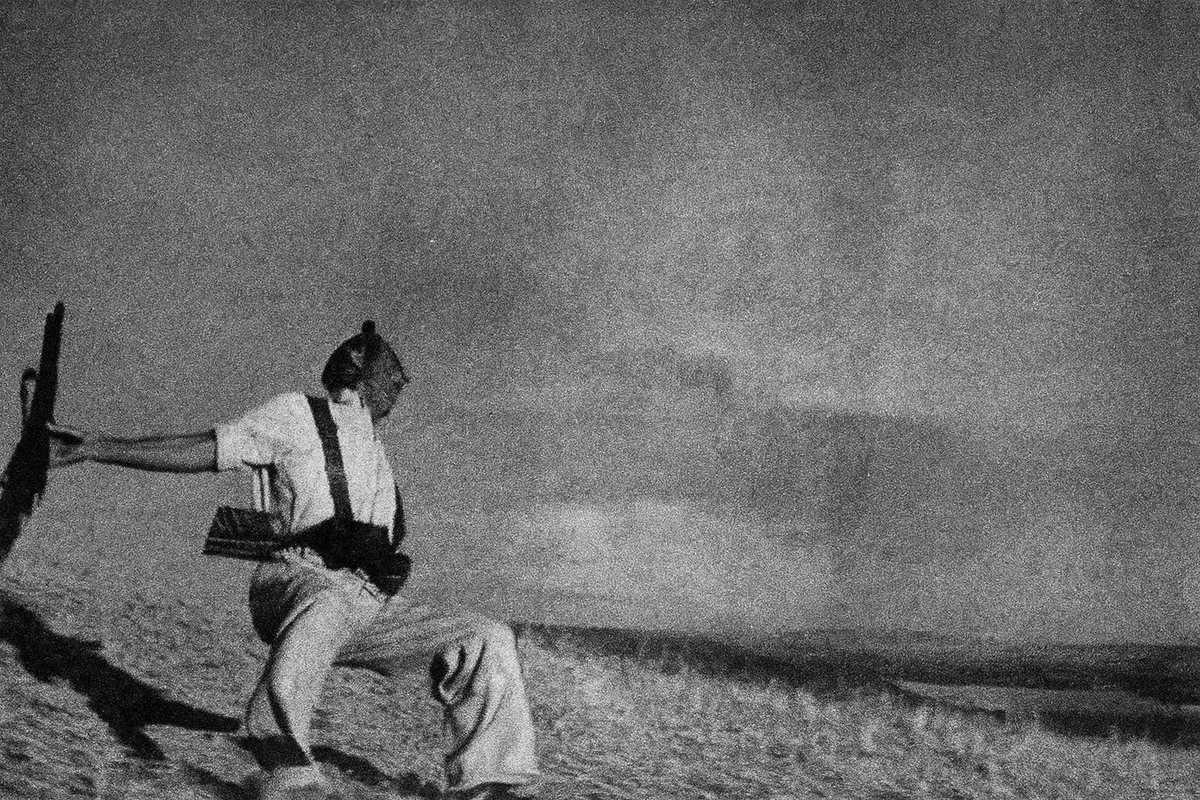
July 12, 1937. A man opens his mailbox, pulls out the newest issue of Life magazine, and carries it to his breakfast table. He turns the cover. A Spanish soldier, rifle slipping from his hand, collapses backward into eternity—captured at the precise moment a bullet ends his life. The photograph offers no warning, no context, no preparation. Just death, unvarnished and immediate.
Robert Capa's lens had done something unprecedented: it froze the instant between life and nothingness. And Life magazine, barely a year old, had placed that instant on every newsstand in America.
For a nation still clinging to neutrality as Europe descended into chaos, the image was a detonation. This wasn't war as Americans had seen it—distant, noble, sanitized. This was war as it actually happened: sudden, brutal, undeniable.
Archive Details
Historical Figure: Robert Capa (photographer)
Issue Date: July 12, 1937
Archive Source: Life Magazine
Historical Context: Spanish Civil War (1936-1939)
Significance: Debut of one of the 20th century's most iconic war photographs
Spain Burns, Europe Watches
By mid-1937, Spain had been tearing itself apart for exactly one year. On July 17, 1936, General Francisco Franco and his nationalist officers launched a military coup against the elected Popular Front government. What they expected to be a swift overthrow became a bloodbath that would consume the country for three years.
The conflict split Spain cleanly: Republicans—a coalition of leftists, workers, intellectuals, and reformers—against Nationalists, backed by conservatives, monarchists, fascists, and most of the military establishment. The July 12, 1937 Life article estimated that in just twelve months, 500,000 lives had been extinguished. Cities like Madrid, Toledo, Bilbao, Irún, and Durango were reduced to rubble. Entire villages ceased to exist. Civilians weren't collateral damage—they were targets.
But Spain's war belonged to more than Spain. Nazi Germany and Fascist Italy funneled weapons, aircraft, and troops to Franco. The Soviet Union armed the Republicans. Volunteers poured in from across the globe, including the American Lincoln Brigade, who saw Spain as the place to stop fascism before it consumed everything. They were right. Spain was the rehearsal. The rest of Europe would soon perform the full production.
Life Magazine and the Birth of Visual Truth
Launched in November 1936, Life had announced itself as something radically different: a magazine that would tell stories through photographs as powerfully as through words. The July 12, 1937 issue wasn't just reporting—it was proving the concept.
"Death in Spain" moved through the conflict almost cinematically. Capa's Falling Soldier on the cover gave way to gutted churches, bombed streets, executed political leaders, and civilians digging through the wreckage of their neighborhoods. The faces of grief, the bodies of the dead, the skeletal remains of buildings—all presented without rhetorical cushioning. The captions alternated between stark factual statements and spare description. A family with nowhere to run, simply dead. Boys scavenging shrapnel after shelling, their desperation and the futility of survival captured in a single frame.
Newspapers buried the war in columns of text. Life forced Americans to look directly at it. For many households, these images were their first encounter with Spain's agony, and the magazine made one thing unmistakably clear: this wasn't a distant European crisis. This was a preview of what happened when democracy failed to defend itself.
The Photograph That Changed Everything
Capa's cover image—the Falling Soldier—violated every convention of war photography. No heroic pose. No carefully composed aftermath. Just the chaotic, blurred instant when a man ceased to exist.
Technically, the photograph was imperfect: motion-blurred, poorly framed by traditional standards. That's exactly what made it devastating. It felt real in a way staged photography never could. Dangerous. Immediate. Alive until it wasn't. Many historians mark this as the turning point in war photography—the moment cameras proved they could capture not just war's consequences, but war itself.
Inside the magazine, the layout amplified the photo's impact. Full-page spreads. High-contrast black-and-white imagery. Matter-of-fact captions that refused to editorialize. The article guided readers from the political origins of the conflict to the human wreckage on the ground. Where other publications leaned on rhetoric, Life let the images speak, blending them with concise text to create something both informative and overwhelming.
This issue established the template Life would use for decades: World War II, Korea, Vietnam. The visual vocabulary of modern war began here.
What the Magazine Told America
The July 12, 1937 issue didn't just show Spain—it explained it. The article detailed Spain's political dysfunction: corrupt landlords, a bloated military with far too many officers, a Catholic Church wielding enormous power over education and politics. It documented mass arrests, executions, and the imprisonment of foreigners for trivial infractions.
The magazine identified Spain's vast mineral wealth—coal, copper, iron, mercury—as a central factor drawing foreign powers into the conflict. Germany and Italy weren't supporting Franco out of ideological solidarity alone. There were resources at stake. Global strategy. The article made explicit what many Americans didn't yet grasp: Spain's tragedy was Europe's warning. The ideological battle between fascism and democracy wouldn't be contained. It was coming for everyone.
500,000 lives lost in just the first year of conflict—a staggering toll that shocked American readers.
Cities like Madrid, Toledo, and Bilbao reduced to ruins, with entire villages erased from the map.
Spain's ruling classes portrayed as bloated and resistant to reform, driving the nation toward civil war.
Germany, Italy, and the Soviet Union turned Spain into a testing ground for the coming world conflict.
Spain's mineral wealth—coal, copper, iron, mercury—identified as a key factor in foreign intervention.
The magazine made clear: Spain's tragedy was a preview of fascism's threat to democracy worldwide.
What Endures
Life didn't just report events—it preserved the moment when Americans first encountered modern war visually. These photographs aren't merely historical records. They're records of how perception changed, how visual media learned to shape understanding before television, before the internet, before the 24-hour news cycle.
Revisiting these pages today means encountering the same images that stunned readers in 1937. They haven't lost their power. They remain haunting, urgent, instructive. Behind every political abstraction are individual lives. A single image can change how the world understands a conflict.
That lesson hasn't expired.
Why Collectors Hunt This Issue
The Falling Soldier remains one of the most famous—and debated—war photographs in history. This issue introduced it to the world.
Published at the one-year mark of the Spanish Civil War, it captured global attention at a decisive moment.
Ernest Hemingway contributed captions for a related feature, linking the issue to both journalism and literature.
This is the issue where photojournalism announced itself as an art form capable of shaping public consciousness.
Owning this issue means holding the exact pages Americans studied in 1937 as Spain burned and Europe prepared for cataclysm.
Issues tied to iconic photography, major wars, and cultural figures consistently rank among the most sought-after vintage magazines.
For Collectors and Historians
If you're drawn to history, war photography, or cultural artifacts that shaped the 20th century, issues like the July 12, 1937 Life magazine represent something rare: direct connection to the past, not as abstraction but as tangible object.
Browse Life Magazine CollectionFrom the 1930s through the 1970s, explore decades of culture, politics, war, and art as they were first reported. Each issue is a time capsule. Each one still has something to say.
Final Word
The July 12, 1937 issue of Life magazine remains one of the most powerful publications of the 20th century. Through Robert Capa's unforgettable photograph and an unflinching photo essay on Spain's agony, it brought modern war into American homes with raw immediacy.
Its coverage fused groundbreaking photojournalism with concise, unsparing reportage, making the scale of human loss impossible to ignore. Today, it endures not only as historical document but as collectible artifact of immense cultural value.
To hold this issue is to hold the moment when modern war photography was born, when Spain's tragedy became the world's warning, and when Life magazine proved that pictures could change how we see the world.
For collectors, historians, or anyone who values preservation of the past, vintage Life magazines aren't simply reading material. They're living history. And through them, the past continues to speak.