
The Lunch That Ended a Friendship
How Truman Capote Destroyed New York Society in Esquire's Pages
November 1975. Americans opened their mailboxes to find the latest Esquire, its cover promising the usual blend of politics and style. Inside, between essays on Nixon's fall and glossy spreads of Manhattan dining, lay a time bomb.
Truman Capote had just published the names.
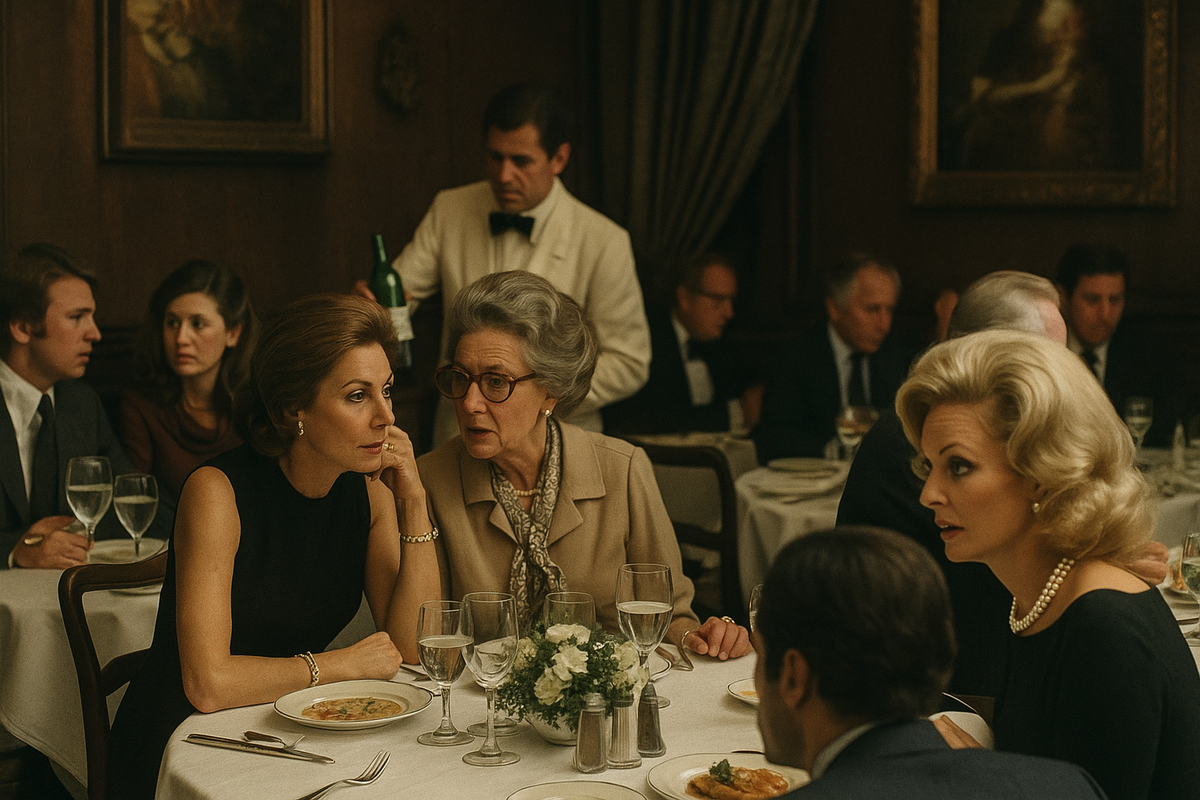
La Côte Basque, 1965 arrived dressed as fiction, but everyone knew better. The thinly veiled characters—wealthy women trading secrets over lunch at Manhattan's most exclusive French restaurant—were instantly recognizable. Babe Paley. Slim Keith. The wives and mistresses of New York's power brokers, their affairs and humiliations now printed in black and white, distributed to hundreds of thousands of readers across America.
By the time society matrons finished reading, Capote's phone had stopped ringing. The invitations ceased. The man who had once been the toast of high society had committed social suicide with a typewriter.
Archive Details
Historical Figure: Truman Capote
Issue Date: November 1975
Archive Source: Esquire Magazine
Cultural Impact: Social scandal that ended Capote's place in New York high society
A Nation Already Cracking
Capote's betrayal landed in a country that had lost faith in secrecy.
Watergate had demolished the presidency just a year earlier. Vietnam collapsed in April 1975, the last helicopters lifting off from Saigon rooftops in images that haunted the evening news. Americans were learning that power protected nothing, that institutions built on discretion could crumble overnight, that behind closed doors lay rot.
Esquire understood this cultural moment perfectly. The magazine had spent decades positioning itself as the sophisticated observer of American life—equal parts literary journal, political commentator, and style arbiter. Its November 1975 issue delivered exactly what readers craved: proof that the wealthy elite were just as compromised, just as vulnerable to exposure, as every other failed institution of the decade.
The scandal wasn't just gossip. It was a mirror.
Esquire's Gamble
By 1975, Esquire had evolved far beyond its origins as a men's fashion magazine. Under editors who believed readers wanted intelligence as much as style, it had become the magazine for Americans who took culture seriously. Politics, literature, photography, food—Esquire wove them into a single, sophisticated package.
The November issue exemplified this fusion. Readers encountered serious political analysis alongside Capote's social demolition, fashion photography by Snowdon next to recipes for steak tartare. The magazine's layout—dense columns of text, striking images, a tone that shifted from deadly serious to wickedly funny—created an editorial experience unlike anything else on newsstands.
Publishing La Côte Basque was pure Esquire: daring, culturally significant, and guaranteed to provoke. The editors knew what they had. This wasn't just another short story. It was an execution.
The Anatomy of Betrayal
Capote set his story during a single lunch at La Côte Basque, the restaurant where New York's wealthiest women gathered to see and be seen. The dialogue crackled with authenticity—gossip delivered in the exact cadence of the social elite, each revelation more shocking than the last.
Affairs. Betrayals. Whispered crimes. Details so specific that readers didn't need a decoder ring to identify the real people behind the fictional names.
The technique was devastating. Capote had spent years cultivating these friendships, collecting confidences, becoming the indispensable companion to women like Babe Paley. They had trusted him with their secrets because he was charming, because he was harmless, because he was Truman.
He repaid them by turning their lives into literature.
The social consequences arrived swiftly. Phone calls went unreturned. Invitations were withdrawn. The women Capote had called his "swans" cut him off completely. He had violated the fundamental rule of their world: discretion above all. Money and power could weather almost any scandal, but only if it stayed behind closed doors.
Capote had opened those doors and invited the entire country inside.
Why This Issue Still Matters
For collectors, the November 1975 Esquire occupies a singular place in magazine history.
It captures a precise cultural moment—post-Watergate disillusionment colliding with New York society at its most vulnerable. The issue represents not just scandal but a shift in how Americans consumed culture, when magazines still shaped national conversations and a single piece of writing could detonate a social circle.
Capote intended La Côte Basque as a chapter in his long-promised novel Answered Prayers. Instead, it became his epitaph. He never finished the book. The scandal accelerated his decline into alcoholism and isolation. By the time he died in 1984, the golden boy of American letters had become a cautionary tale.
The November 1975 issue witnessed all of this in its first moments—the instant when Capote's brilliance and self-destruction merged on the page. For historians, collectors, and anyone fascinated by the intersection of literature and celebrity, it remains essential.
Original copies grow scarcer each year. What survives offers something increasingly rare: direct access to a cultural earthquake, preserved exactly as it first detonated.
Collector Significance
Historical Timing
Published at the intersection of political disillusionment and cultural transformation, capturing the precise mood of mid-1970s America.
Literary Infamy
Contains Capote's most notorious work—brilliant writing that doubled as personal betrayal and marked the end of his career.
Cultural Artifact
Reflects how magazines simultaneously shaped conversations on politics, fashion, and literature at the height of print media's influence.
Increasing Rarity
Original copies of milestone Esquire issues become scarcer with each passing year, making them prized possessions for serious collectors.
Where Literature Meets Legacy
Vintage Esquire magazines function as time machines. Each issue captures not just what people read but how they understood their world—the arguments they had, the styles they wore, the celebrities they worshipped, the scandals they whispered about.
The November 1975 issue delivers all of this through the lens of Capote's betrayal. It's a magazine that changed American culture, one lunch at a time.
Browse Esquire Magazine CollectionEach issue is a cultural artifact—unfiltered voices and images from the decades that shaped modern America. Whether you collect for investment, research, or the simple pleasure of holding history in your hands, vintage Esquire magazines offer something digital archives never can: the physical evidence of the moment when everything changed.