
When Time Magazine Forced the World to Confront Nazi Gold
How a single 1997 issue exposed fifty years of Swiss banking silence and transformed Holocaust memory forever
The envelope arrived at American doorsteps on February 24, 1997, carrying a magazine that would detonate fifty years of silence.
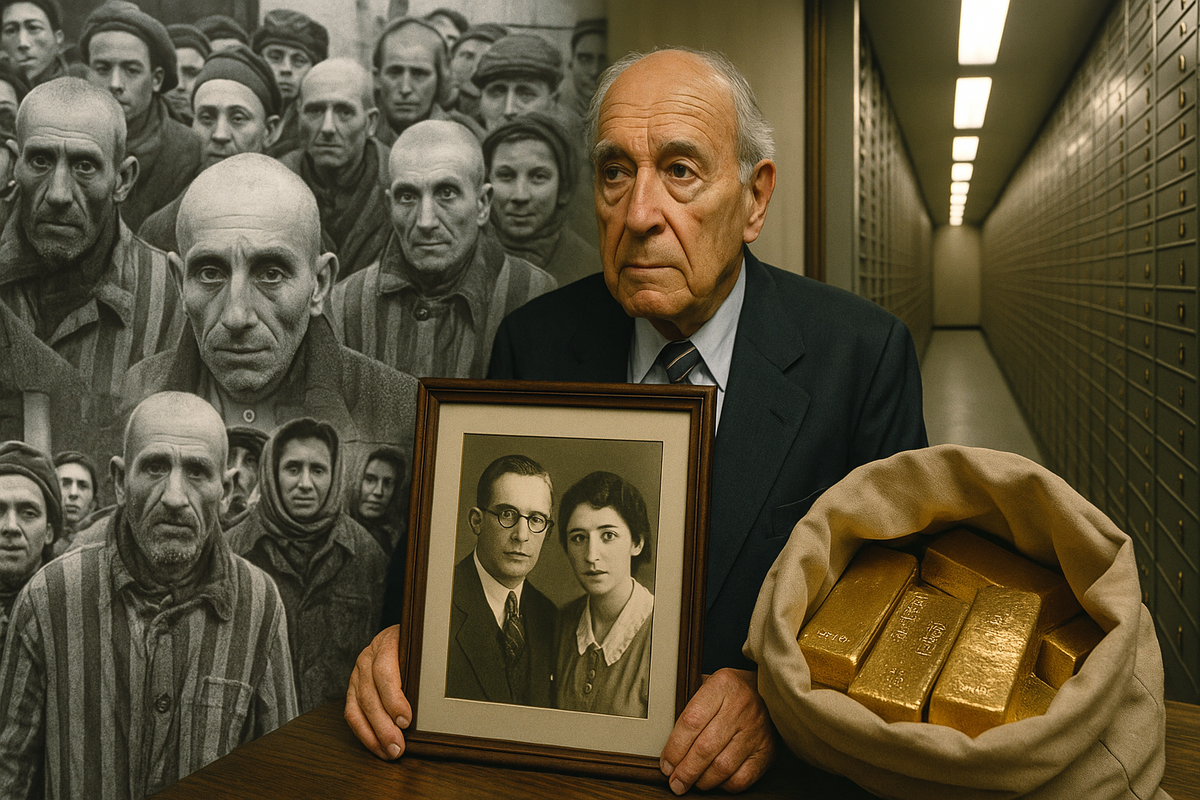
On the cover of Time, a single phrase cut through the clutter of late-nineties optimism: "Echoes of the Holocaust." Below it, images that made the comfortable squirm—vault doors, gold bars, the unfinished arithmetic of genocide. This wasn't nostalgia. This was a reckoning.
For Holocaust survivors and their descendants, the 1990s had become an unexpected battlefield. The enemy wasn't armies or dictators, but something more insidious: institutional amnesia wrapped in Swiss banking secrecy. Time's February 24, 1997 issue didn't just report this story. It weaponized journalism to force a moral confrontation that banks, governments, and even comfortable readers had spent decades avoiding.
This issue remains one of the most significant artifacts of postwar Holocaust memory—not for what it commemorated, but for what it refused to let die.
Issue Details
Publication: Time Magazine
Issue Date: February 24, 1997
Cover Story: "Echoes of the Holocaust"
Historical Context: 1990s Swiss Banking Restitution Scandal
Archive Source: Original Time Magazines Collection
The Scandal That Wouldn't Stay Buried
By the mid-1990s, the world thought it had moved on. The Berlin Wall had fallen. The Cold War was over. History felt safely archived.
Then the documents started surfacing.
During World War II, thousands of European Jews had done what any rational person facing persecution would do: they moved their assets to neutral Switzerland, trusting that Swiss banks would safeguard their families' futures. When the gas chambers and firing squads finished their work, those accounts became orphaned—billions in deposits with no one left to claim them.
The postwar decades brought a cascade of bureaucratic cruelty. Survivors who approached Swiss banks seeking their families' money were met with demands for death certificates from Auschwitz, account numbers from burned ghettos, paperwork from lives that had been systematically erased. The banks claimed ignorance. They claimed compliance. Mostly, they claimed nothing could be done.
By 1997, new evidence had shattered that fiction. Wartime documents revealed the scale of deposits. Survivor testimony accumulated into an undeniable archive. Photographs emerged showing Nazi gold shipments—looted wedding rings, melted fillings, stolen treasuries—sitting in Swiss vaults long after liberation.
Time arrived at the precise moment when silence became impossible.
Why This Issue Mattered
Time Magazine in 1997 still commanded cultural authority that today's fractured media landscape can barely imagine. When its editors decided to make Holocaust restitution a cover story, they weren't chasing clicks or engagement metrics. They were declaring that this story was essential—that readers needed to confront it whether they wanted to or not.
The editorial execution was surgical. "Echoes of the Holocaust" didn't bury readers in financial minutiae or legal abstraction. It made the theft visceral.
The photography alone justified the cover price. Black-and-white images of liberation-era vaults showed sacks of confiscated Nazi assets—not archived history, but physical evidence still sitting in storage. Modern color photographs captured the sterile, infinite rows of Swiss safety deposit boxes, bathed in cold orange light, each one a locked secret. Portraits of survivors' descendants—people in their fifties and sixties still fighting for justice their murdered parents never received—transformed bureaucratic obstruction into human cost.
Time understood what made this story burn: it wasn't about the past. It was about the present's refusal to acknowledge what the past had stolen.
The Pressure Campaign That Changed History
The Swiss banking scandal of the 1990s succeeded because it became impossible to ignore. American senators launched investigations. Jewish organizations coordinated international pressure. Holocaust survivors, many in their final years, testified before governments and cameras.
Time's coverage captured this coalition at its peak. The magazine documented how post-Cold War politics had opened new possibilities for historical redress—archives were accessible, diplomatic relationships had shifted, and the language of human rights carried new weight.
The article underscored the moral absurdity at the scandal's core: Swiss banks had profited from holding assets that belonged to murdered Jews, then spent fifty years hiding behind procedures designed to protect perpetrators rather than victims. This wasn't financial complexity. It was theft with compound interest.
The repeated imagery of Nazi gold functioned as the story's central metaphor. Those bars and sacks, photographed and catalogued, represented something beyond wealth. They were memory itself—buried but never erased, waiting in darkness for someone to force the vault doors open.
Unfinished Business
The Holocaust didn't end in 1945 for survivors who lost family, homes, businesses, and savings. The scandal forced acknowledgment that restitution remained incomplete.
Moral Reckoning
Holding wealth that belonged to murdered Jews wasn't just financial theft—it was a continuation of injustice that demanded confrontation.
Global Pressure
American senators, Jewish organizations, and world leaders joined survivors in demanding accountability, illustrating how post-Cold War politics enabled historical redress.
Symbolism of Gold
Images of Nazi gold—seized, stored, hidden—became metaphors for memory itself: buried but never erased, waiting to be confronted.
What Made This Issue Unforgettable
Half a century after liberation, Time forced a question that institutions had spent decades avoiding: What does justice look like when the victims are dead and the thieves are banks?
The magazine's answer was unflinching. It wasn't enough to express regret. It wasn't enough to cite legal technicalities. The only acceptable response was transparency, restitution, and acknowledgment that the Holocaust's crimes had extended far beyond 1945.
This editorial stance—choosing moral clarity over diplomatic hedging—is what separates landmark journalism from routine reporting. Time made readers uncomfortable. It made banks defensive. It made governments squirm. That discomfort was the point.
At a moment when the internet was beginning to accelerate news cycles and fragment attention, this print issue demanded something radical: sustained focus. Readers couldn't scroll past. They had to sit with the photographs, absorb the survivor testimony, confront the implications. The medium enforced the message.
The Permanence of Print
What separates this Time issue from the thousands of articles, blog posts, and digital analyses that followed is its permanence. The magazine exists as a fixed object from a fixed moment—February 1997, when the world was finally listening.
You can hold it. You can study the photographs at your own pace. You can return to specific passages. The digital age has given us speed and volume, but it's taken something away: the ability to sit with history long enough to feel its weight.
That's the enduring value of vintage magazines. They're not just reading material. They're time capsules that refuse to be updated, edited, or memory-holed.
Why Collectors Seek This Issue
Historical Timing
Captured the 1990s restitution debates that fundamentally reshaped international accountability for wartime crimes and Holocaust memory.
Iconic Photography
Vault images and survivor portraits remain genuinely striking—visual documentation that transformed bureaucratic battles into human stories.
Cultural Significance
Stands as proof that major newsweeklies could still command attention for complex moral arguments at the dawn of the digital age.
Moral Documentation
Exists at the intersection of journalism, memory, and justice—a physical artifact from the moment institutions were forced to answer for complicity.
Where History Lives
The February 24, 1997 issue of Time Magazine—"Echoes of the Holocaust"—belongs in any serious collection documenting twentieth-century moral reckonings. From the 1930s through the 2000s, these issues trace entire decades of conflict, culture, and conscience.
Browse Time Magazine CollectionThe Holocaust didn't end in 1945. It echoed through courtrooms, bank vaults, and family histories for decades afterward. The February 24, 1997 issue of Time Magazine captured one of those echoes at its loudest—when silence finally broke, and institutions were forced to answer for what they'd hidden.
Holding this issue today means holding a piece of that confrontation. It's a reminder that justice delayed is not justice denied if someone refuses to stop demanding it.